1. Home
  2. Cars
  3. News

The AM-RB 001 supercar will corner at 4G and makes 4,000 pounds of downforce

Add as a preferred source on Google

Something wicked this way comes, courtesy of Aston Martin and Red Bull Racing. Their co-developed supercar has been hyped for some time now, but the full measure of its power had not yet been realized.

The Wall Street Journal spoke with project engineer David King to understand the caliber of car under construction and the revelations are staggering. Due to its sophisticated aerodynamic design, the AM-RB 001 will generation 4,000 pounds of downforce. That’s enough for the track-specific variant to drive upside down (assuming the right speed is achieved). Road going examples won’t make quite as much downforce, but they’re still certain to hold fast to the pavement.

Recommended Videos

“Nothing remotely like it has ever been tried on a road car,” said King. The amount of downforce will be controlled by an active suspension system based on driving conditions. In addition to the air-flow pressure, the supercar will corner at 4.0G, roughly equivalent to modern Formula 1 cars.

So it will grip very, very well. What about acceleration? With just 2,200 pounds to get moving and a 1,000-horsepower V12 providing thrust, speed won’t be an issue. Reportedly, the AM-RB 001 will go from a standstill to 200 mph in just 10 seconds. For reference, the 1,341hp Koenigsegg One:1 supercar hustles to 186 mph in 11.92 seconds. Power to weight ratio rules all, kids.

Thought we’re talking about the AM-RB as if it’s right around the corner, production is still a few years off, and when models are assembled, all will certainly have been spoken for. Only 175 road cars and 25 track cars are planned, each with a price tag of at least $3 million. While that may sound like a lot, consider that the collaboration car will almost certainly be the quickest vehicle on the market when it goes on sale. The ultra wealthy tend to fork over small fortunes for that kind of prestige.

Miles Branman
Miles Branman doesn't need sustenance; he needs cars. While the gearhead gene wasn't strong in his own family, Miles…
A new AI model wants self-driving cars to think before they swerve
Forget guessing games, this self-driving AI actually shows its work.
Self driving car

Self-driving cars have gotten pretty good at driving. The harder problem is teaching them to drive safely in situations nobody planned for. We have heard horror stories of self-driving cars, behaving erratically in emergency situations, often times delaying first responders from reaching the scene.

A team at Seoul National University, led by professor Jun Won Choi from the Department of Electrical and Computer Engineering, thinks they have cracked part of that puzzle with a new AI model called SafeDrive. The research was recently selected as a highlight paper at CVPR 2026, a distinction that goes only to roughly 3% of all submissions.

Read more
Your next car’s software update could become its biggest security risk
Your next car could receive updates like your smartphone. That's also becoming a cybersecurity nightmare.
OTA technology allows manufacturers to remotely deliver software updates.

Modern cars are no longer machines that stay the same after they leave the showroom. Increasingly, they're becoming software-defined vehicles that receive new features, bug fixes, and security patches wirelessly, much like smartphones. But while over-the-air (OTA) updates have made vehicle maintenance easier and cheaper, cybersecurity experts are warning that the same technology could also become one of the automotive industry's biggest security challenges.

Researchers and policymakers are now calling for stronger oversight as connected vehicles become increasingly dependent on remote software updates. Their concern isn't just about hackers stealing personal data. It's about someone potentially interfering with the operation of a moving vehicle.

Read more
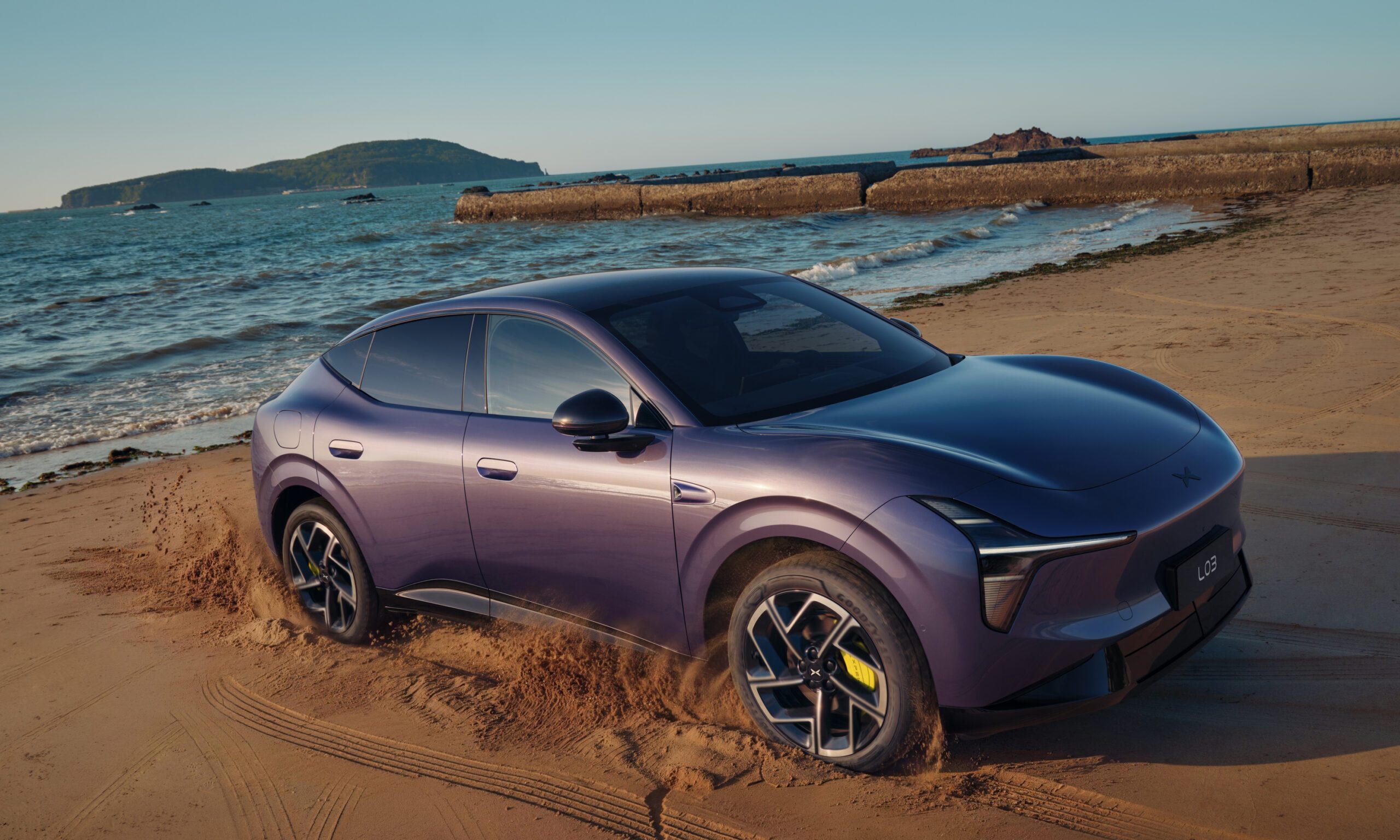
This sleek Chinese EV pairs supercar styling with three AI brains
The Xpeng L03 is an AI supercomputer disguised as a stylish family SUV
Xpeng L03

Xpeng’s latest electric vehicle carries enough processing power to make the term "smart car" actually sound more realistic than it actually is. The new Xpeng L03 debuted simultaneously in Europe and China on July 16, with the company presenting it across 65 markets. Available as a fully electric vehicle and an L03 Power X range-extender, the coupe-SUV is Xpeng’s most internationally focused model so far. Market-specific prices and sales dates remain unannounced.

Three AI chips and Google Maps built right in

Read more