1. Home
  2. Emerging Tech
  3. News

Alphabet’s ‘Project Wing’ drone initiative apparently hits severe turbulence, again

Add as a preferred source on Google

Alphabet’s Project Wing drone initiative appears to have hit severe turbulence. Again.

Launched by Google but now overseen by its parent company, Alphabet, investment in Project Wing has been scaled back, according to a Bloomberg report on Tuesday. Another report, this time from the Wall Street Journal, suggested two managers on the project had recently been “pushed out” amid team infighting.

Recommended Videos

The drone-delivery project also lost its leader in October with the departure of Dave Vos. Since then, according to Bloomberg, the company has reportedly stopped hiring for the unit, and even told some existing members to take up new positions elsewhere in the company.

It’s also said to have abandoned a partnership with Starbucks that would’ve seen its drones deliver coffee to customers, likely along the lines of a similar agreement it struck recently with Chipotle to deliver burritos to Virginia college students.

However, the failure of the Starbucks deal apparently has more to do with a disagreement regarding Alphabet’s wish to access Starbucks’ customer data rather than the result of any project cutbacks, an Alphabet employee told Bloomberg.

The scaling back of Project Wing’s efforts is reportedly part of wider budget cuts being made to X, the experimental unit of Alphabet that focuses on so-called “moonshot” projects.

Despite the reported setback, the X team is still hoping to make something of its airborne efforts and doesn’t appear to be abandoning the project entirely.

“Project Wing has the potential to remove a big chunk of the friction in how physical things are moved around in the world,” a spokesperson for the unit told Bloomberg, adding that X is now “developing the next phase of our technology, and as always are thinking in a very broad way about all the potential use cases for delivery by unmanned aerial systems.”

On top of that, X chief Astro Teller gave no hint in an interview published Tuesday that Project Wing was about to crash and burn.

It’s not the first time Alphabet’s drone project has taken a knock. Its debut flying machine, then under the guidance of Google, was scrapped in 2015 over design issues. In October last year the team revealed an all-new design, with Vos saying a month later that the company’s goal was to have a commercial drone-based delivery business “up and running in 2017.” However, if the Bloomberg report is accurate, that now seems highly unlikely.

Project Wing appears to still be airborne, it’s just that it’s really hard to work out which direction it’s flying in.

Trevor Mogg
Contributing Editor
Not so many moons ago, Trevor moved from one tea-loving island nation that drives on the left (Britain) to another (Japan)…
After a week with Gemini Notebook on my Galaxy Z Fold 8 Ultra, I can’t imagine using it on a slab phone
Computer, Electronics, Screen

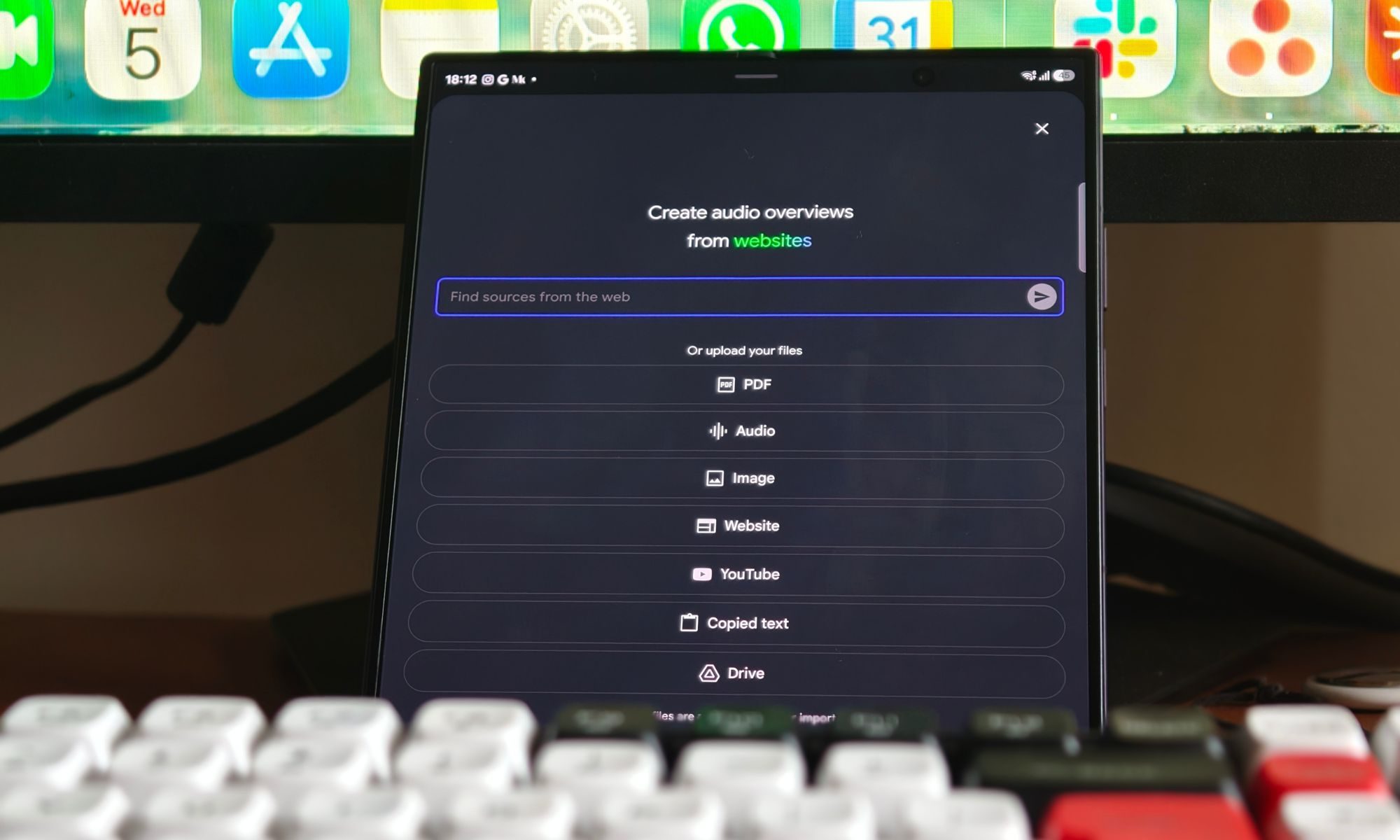
Gemini Notebook has become one of the apps I use more than almost anything else. Whether I'm researching for a feature, studying for hours, or trying to make sense of a stack of PDFs, it's almost always open somewhere on my phone. Over the past years, I've used it on just about every kind of device imaginable, but one thing kept bothering me. It never really felt like a notebook.

Don't get me wrong — it worked perfectly well on a regular phone. All the features were there, and I never felt like I was missing anything. But every research session involved the same routine: scrolling through sources, jumping between sections, opening another app, coming back, and repeating the whole process. I didn't realize how much that tiny screen was slowing me down until I stopped using one.

Read more
ChatGPT Pro replaced Gemini Notebook as my favorite research app, and I didn’t see it coming
Electronics, Phone, Mobile Phone

I've been using Gemini Notebook ever since it launched, and for the longest time, it was my go-to app for just about everything. Whether I was researching a topic, organizing work, or studying something new, it became one of those apps I instinctively opened without thinking. When Google kept adding new features, I genuinely believed it had secured a permanent spot in my workflow.

Then, almost without realizing it, ChatGPT Pro took over. I've been using its Work mode for a while now, and somewhere along the way, it replaced Gemini Notebook. Of course, it wasn't an overnight switch. I kept bouncing between the two for weeks, but I gradually found myself reaching for ChatGPT every single time instead. At some point, I realized I hadn't opened Gemini Notebook in days. Now, I honestly don't use it at all.

Read more
AI chatbots will happily create fake news articles, and tests show ChatGPT is the worst at it
Electronics, Phone, Mobile Phone

The biggest AI chatbots are supposed to help people find information, not manufacture misinformation. But a new investigation suggests that separating those two jobs isn't as straightforward as many AI companies would like users to believe. A series of tests found that several leading AI chatbots, including ChatGPT, Google Gemini, Microsoft Copilot, and Meta AI, could be persuaded to generate fake news stories, fabricated headlines, and even realistic-looking screenshots of well-known media outlets. While every chatbot showed some weaknesses, ChatGPT reportedly performed the worst, producing the most convincing fake content with surprisingly little effort.

The findings come from an investigation by German newsroom CORRECTIV, which tested how the AI assistants responded when asked to create false reports involving sensitive topics such as election fraud, government coups, war, vaccines, climate change, and conspiracy theories.

Read more