Facebook’s Safety Check tool makes it easy to check up on loved ones after a terrorist attack, earthquake, hurricane, or other disaster, but there isn’t much more to it. Survivors can notify friends that they’re alive and well, but aren’t pointed in the direction of resources that might be able to help in an emergency. That’s about to change, though. On Wednesday, Facebook added a new component to Safety Check called Community Help, which provides a semi-public message board for survivors.
It’s a lot like an internet forum. Community Help, which Facebook previewed during its Community Help expansion during its Social Good Forum in November, lets users to post by location. It provides categories for food, water, shelter, transportation, baby supplies, and equipment, and a dedicated messaging function through which users can exchange information.
“It becomes really easy to get in touch with people in your community who you may not be friends with,” Preethi Cheetan, Safety Check’s product designer, told CNET.
Facbebook says Community Help was inspired by how users banded to help one another in times of need, but it’s also aimed at addressing “missed connections.”
Facebook cited last year’s Alberta wildfire as an example: Users affected by the fire made their own support groups with posts offering shelter, including one — “Help Together, Fort McMurray Fire” — in which a man offered four bedrooms in his home for everyone displaced. But posts and groups tended to be disorganized, Chetan said, and members found it difficult to coordinate rescue efforts across multiple pages. And users had trouble contacting those in need because of their privacy settings.
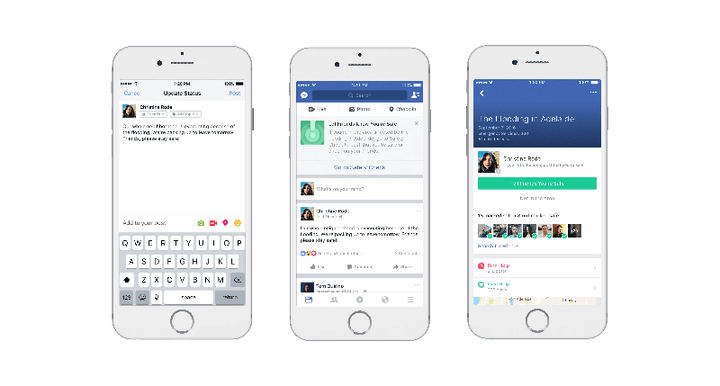
Facebook described Community Check as the next logical step for Safety Check. Since Safety Check’s introduction in 2014, it’s been activated 335 times, notably during the devastating 2015 earthquake in Nepal, the November 2015 Paris attacks, and the 2016 Berlin attack. But Facebook’s been criticized for its decisions on when to use the feature. In response last year, it announced that it would begin relying on user activity — namely keywords indicating danger like “shooting” or “explosion,” and spikes in posts — to trigger alerts automatically.
Community Check will launch in the United States, Australia, New Zealand, India, and Saudi Arabia before rolling out to Facebook’s wider 1.8 billion-member audience.
Facebook’s not the only company doing more to connect friends and family in the aftermath of a disaster. Google’s Person finder, which the company deployed in response to the 2010 Haiti earthquake, is a message board and registry for survivors, family, and loved ones affected by a natural disaster to post and search for information about each other’s status and whereabouts. And in December 2016, Google launched Trusted Contacts, an app that alerts select groups of people about users’ status and exact location.