1. Home
  2. Cars
  3. News

Pagani's Huayra Roadster may be the most beautiful drop-top supercar ever

Add as a preferred source on Google

We’ve been waiting a long time for this one, but it was worth every minute of the delay.

If you can believe it, the Pagani’s successor to the Zonda supercar began production in 2012, meaning we’ve had to sit on our hands for five years while the Italian automaker crafted its Huayra Roadster.

Recommended Videos

Now, finally, we have a clean look at what may be the most beautiful drop-top supercar ever built. Designed from the ground-up as a convertible, rather than simply re-engineering the coupe’s roof, the Huayra Roadster has distinct styling and a re-worked powertrain.

Replacing the fixed roof is a choice of a carbon fiber or fabric top. Unlike most convertibles, the Huayra Roadster is actually 176 pounds lighter than the coupe and makes 34 more horsepower. Like the coupe, a Mercedes-AMG 6.0-liter twin-turbocharged V12 is found behind the rear seats, but it develops 754 hp, which is even more than the hardcore Huayra BC. More power and less weight (about 2,800 pounds total) mean the Roadster will be noticeably quicker than its fixed-roof counterpart.

Weight savings are due largely to a “Carbo-Titanium” and “Carbo-Triax” monocoque chassis. Pagani says the material used in its platform is more advanced than Formula 1 cars and is 52 percent stiffer than the coupe’s architecture. Add to that a dual-clutch transmission that’s 40 percent lighter than similar systems and an aluminum-alloy suspension that shaves 25 percent from the coupe’s setup, and you can see what we mean about this being more than just a restyling.

Peak torque of 738 lb-ft. is available earlier than in the coupe, at 2,400 rpm. Brembo brakes — six-piston front and four-piston rear — haul the supercar down, and Pirelli P Zero Corsa tires help it achieve an astounding 1.8g of lateral grip.

Each of the 100 production cars has already been allocated to a customer for $2.89 million a pop.

Miles Branman
Miles Branman doesn't need sustenance; he needs cars. While the gearhead gene wasn't strong in his own family, Miles…
Waymo’s driverless cars keep getting parking tickets in Austin, and humans aren’t the only ones complaining
Waymo vehicles have collected $9,325 in Austin fines as repeated parking mistakes turn into a fleet-wide operational problem
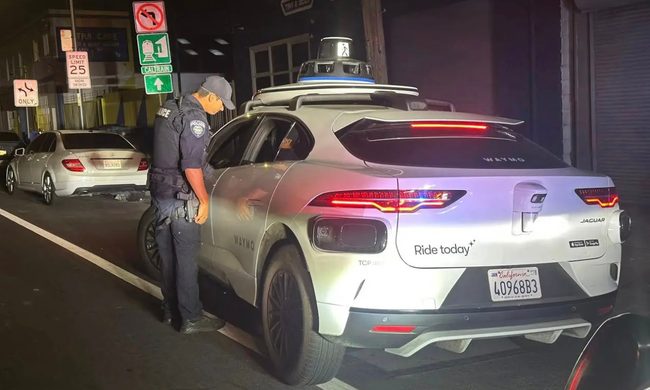
A police officer investigating an empty Waymo car.

Waymo’s 83 parking citations in Austin don’t amount to a financial crisis. They do reveal what happens when the same driving decisions are repeated across an autonomous fleet.

City records obtained by The Wall Street Journal show that Waymo vehicles have accumulated $9,325 in fines since arriving in 2024. The company has paid most of them, but the more revealing detail is how often its cars have made the same mistake.

Read more
Google Maps’ biggest Android Auto upgrade is reaching more users
Google Maps is finally giving Android Auto users directions with a little more drama.
Electronics, GPS, Car

Google is widening the rollout of two long-awaited Google Maps features for Android Auto users: Immersive Navigation and a built-in live speedometer. After months of limited availability, reports suggest both features are now reaching a broader group of users, including people running stable versions of Google Maps instead of beta builds.

The update is part of Google's ongoing effort to modernize the Android Auto navigation experience. While the company unveiled Immersive Navigation earlier this year as one of the platform's biggest upgrades in years, the feature has been trickling out slowly, leaving many users without access. That appears to be changing, with more devices now receiving the update through a server-side rollout.

Read more
Tesla’s hidden door problem might end up fixing every car in America
This could permanently change how emergency exits are designed in American passenger vehicles.
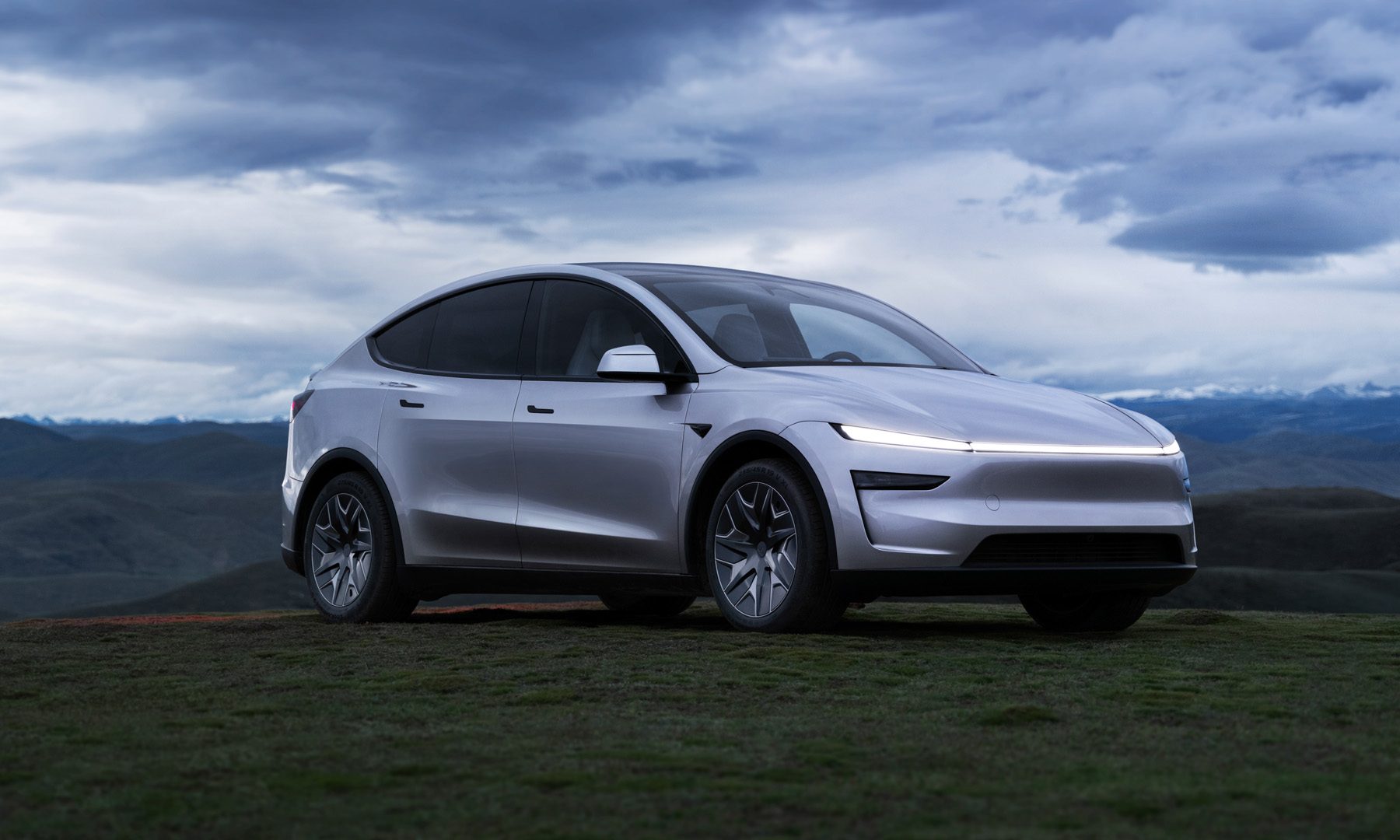
Tesla Model Y Long Wheelbase Featured

Tesla's electronic door handles have been a safety talking point for years, mostly on Reddit threads and EV forums where people debate whether sleek design is worth the tradeoff when a car is on fire and power is out. 

Now the US government has formally weighed in (via The Washington Post). The outcome, I’d say, is bigger than most people think.

Read more