1. Home
  2. Cars
  3. News

Roborace unveils its self-driving race car, dubbed ‘Robocar’

Add as a preferred source on Google
MWC 2026
Read our complete coverage of Mobile World Congress

Will racing still be exciting if human drivers are taken out of the equation? Roborace aims to find out.

Billed as the first race series for self-driving cars, Roborace unveiled its autonomous race car at the 2017 Mobile World Congress in Barcelona. Dubbed “the Robocar,” It will hit the track in demonstrations later this year, although it’s still unclear when the green flag will drop on the Roborace series itself.

Recommended Videos

The car was designed by Daniel Simon, who previously designed futuristic vehicles for movies, including Tron: Legacy and Oblivion, and now has the title of chief design officer at Roborace. The finished product looks similar to the concept images released by Simon last year, with a design dramatically different from that of any human-driven race car.

While it doesn’t have any room for a driver, the Robocar carries plenty of sensors, which it uses to “see” the environment. The total complement includes five lidar units, two radar units, 18 ultrasonic sensors, two optical speed sensors, six cameras, and a GPS unit. The car’s “brain” is Nvidia’s Drive PX 2 platform, which has also been adapted by Volvo for use in its prototype self-driving cars. In addition to Nvidia, Roborace is partnering with Charge (a U.K.-based electric truck company) to supply certain vehicle components, while Michelin will be the series’ tire supplier.

Just being able to drive itself isn’t enough to make the Robocar a real race car, though. Roborace claims the car will be fast, quoting a top speed of over 320 kph (198 mph). It says the car weighs 975 kilograms (2,149 pounds), and is powered by four electric motors, each producing 300 kilowatts (402 horsepower).

Robotic cars won’t be circulating the world’s racetracks at nearly 200 mph just yet, though. Roborace will continue to conduct demonstrations with its DevBot prototypes, which drove together on a track for the first time during the Formula E race in Buenos Aires earlier this month. Two Robocars will also run on a track together later this year.

Stephen Edelstein
Stephen is a freelance automotive journalist covering all things cars. He likes anything with four wheels, from classic cars…
BMW could finally be building the electric convertible fans have always wanted
Good things come to those who wait, and apparently that means until 2028.
BMW convertible

There have been whispers about a two-door BMW i4 for years, and according to a new report from BMWBlog, at least one version is actually in the works. The outlet's sources close to BMW claim the automaker is readying an i4 Convertible under the internal codename NA3.

Why is BMW waiting until 2028 to launch it?

Read more
Waymo’s driverless cars keep getting parking tickets in Austin, and humans aren’t the only ones complaining
Waymo vehicles have collected $9,325 in Austin fines as repeated parking mistakes turn into a fleet-wide operational problem
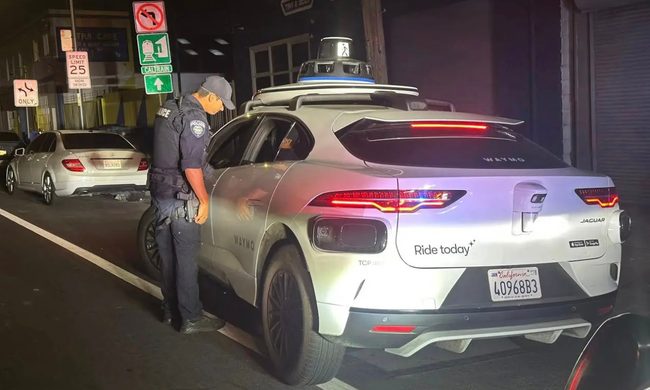
A police officer investigating an empty Waymo car.

Waymo’s 83 parking citations in Austin don’t amount to a financial crisis. They do reveal what happens when the same driving decisions are repeated across an autonomous fleet.

City records obtained by The Wall Street Journal show that Waymo vehicles have accumulated $9,325 in fines since arriving in 2024. The company has paid most of them, but the more revealing detail is how often its cars have made the same mistake.

Read more
Google Maps’ biggest Android Auto upgrade is reaching more users
Google Maps is finally giving Android Auto users directions with a little more drama.
Electronics, GPS, Car

Google is widening the rollout of two long-awaited Google Maps features for Android Auto users: Immersive Navigation and a built-in live speedometer. After months of limited availability, reports suggest both features are now reaching a broader group of users, including people running stable versions of Google Maps instead of beta builds.

The update is part of Google's ongoing effort to modernize the Android Auto navigation experience. While the company unveiled Immersive Navigation earlier this year as one of the platform's biggest upgrades in years, the feature has been trickling out slowly, leaving many users without access. That appears to be changing, with more devices now receiving the update through a server-side rollout.

Read more