1. Home
  2. Emerging Tech
  3. Business
  4. Computing
  5. Mobile
  6. Smart Home
  7. News

Walmart invites its employees to deliver packages to customers’ homes

Add as a preferred source on Google

Looking to expand upon its no-membership-needed two-day shipping option, Walmart is calling upon its own employees to deliver packages to customers. Participation by store employees is completely voluntary, and is being presented as a way to make additional money.

Right now, the service is only active in two stores in New Jersey and a third store in northwest Arkansas. Essentially, an employee tells their home store how they commute home, with the option to also add other after-work destinations. A proprietary system then matches the employee’s travels with potential deliveries, which he or she can choose to fulfill.

Recommended Videos

Special algorithms ensure that any delivery is not too far off the employee’s typical commute. This suggests that the company is attempting to make employee participation as attractive as possible by minimizing the inconvenience of delivery. A special app will navigate the employee from delivery to delivery to optimize their route.

“It just makes sense: We already have trucks moving orders from fulfillment centers to stores for pickup,” Walmart ecommerce president and CEO Marc Lore says. “Those same trucks could be used to bring ship-to-home orders to a store close to their final destination, where a participating associate can sign up to deliver them to the customer’s house.”

Walmart requires that employees pass additional background checks and motor vehicle inspections, and provide proof of insurance. However, the employee can control what type of deliveries they’re comfortable with, including how many packages they’re willing to deliver and maximum size and weight.

In terms of scale, such an effort could be substantial if Walmart can get enough employees to participate. Lore says 90 percent of the U.S. population lives within 10 miles of a Walmart location. The speed of the Walmart distribution system itself could even get packages to online customers the next day — something that no online or brick-and-mortar retailer can do at no cost to the consumer.

Indeed, Lowe sees the move as game-changing, even hinting at same-day deliveries if the system works well. But don’t expect Walmart employees to make a substantial amount of money through the new offering: TechCrunch reports that employees that participate do so at their typical hourly rate.

Given that the cost of gas and wear and tear to an employee’s vehicle are factors that are similar to driving for Uber and Lyft, that is one area where Walmart’s plans might need a little work — even if employees are benefiting from the fact that they’re actual employees, not contractors as is the case with some other local carrier options and ridesharing services.

Ed Oswald
For fifteen years, Ed has written about the latest and greatest in gadgets and technology trends. At Digital Trends, he's…
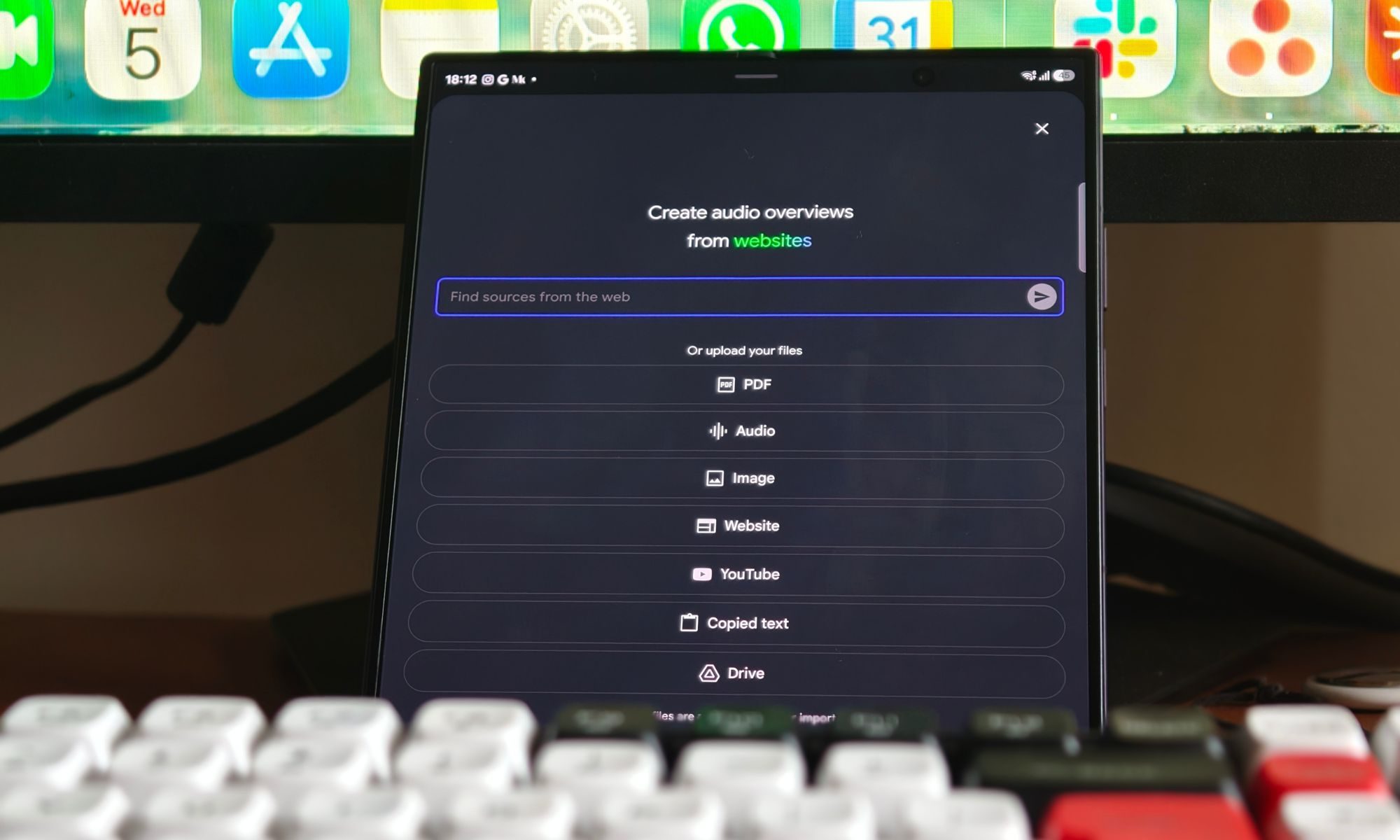
After a week with Gemini Notebook on my Galaxy Z Fold 8 Ultra, I can’t imagine using it on a slab phone
Computer, Electronics, Screen

Gemini Notebook has become one of the apps I use more than almost anything else. Whether I'm researching for a feature, studying for hours, or trying to make sense of a stack of PDFs, it's almost always open somewhere on my phone. Over the past years, I've used it on just about every kind of device imaginable, but one thing kept bothering me. It never really felt like a notebook.

Don't get me wrong — it worked perfectly well on a regular phone. All the features were there, and I never felt like I was missing anything. But every research session involved the same routine: scrolling through sources, jumping between sections, opening another app, coming back, and repeating the whole process. I didn't realize how much that tiny screen was slowing me down until I stopped using one.

Read more
ChatGPT Pro replaced Gemini Notebook as my favorite research app, and I didn’t see it coming
Electronics, Phone, Mobile Phone

I've been using Gemini Notebook ever since it launched, and for the longest time, it was my go-to app for just about everything. Whether I was researching a topic, organizing work, or studying something new, it became one of those apps I instinctively opened without thinking. When Google kept adding new features, I genuinely believed it had secured a permanent spot in my workflow.

Then, almost without realizing it, ChatGPT Pro took over. I've been using its Work mode for a while now, and somewhere along the way, it replaced Gemini Notebook. Of course, it wasn't an overnight switch. I kept bouncing between the two for weeks, but I gradually found myself reaching for ChatGPT every single time instead. At some point, I realized I hadn't opened Gemini Notebook in days. Now, I honestly don't use it at all.

Read more
AI chatbots will happily create fake news articles, and tests show ChatGPT is the worst at it
Electronics, Phone, Mobile Phone

The biggest AI chatbots are supposed to help people find information, not manufacture misinformation. But a new investigation suggests that separating those two jobs isn't as straightforward as many AI companies would like users to believe. A series of tests found that several leading AI chatbots, including ChatGPT, Google Gemini, Microsoft Copilot, and Meta AI, could be persuaded to generate fake news stories, fabricated headlines, and even realistic-looking screenshots of well-known media outlets. While every chatbot showed some weaknesses, ChatGPT reportedly performed the worst, producing the most convincing fake content with surprisingly little effort.

The findings come from an investigation by German newsroom CORRECTIV, which tested how the AI assistants responded when asked to create false reports involving sensitive topics such as election fraud, government coups, war, vaccines, climate change, and conspiracy theories.

Read more