1. Home
  2. Emerging Tech
  3. Health & Fitness
  4. News

This chip will reveal to doctors exactly where smart pills are in the human body

Add as a preferred source on Google

“Smart pills” that are able to diagnose and treat diseases in a way that is unimaginable to us today are just around the corner. However, in order for them to be effective, they will need a way of relaying their location in the body to medical personnel. Because of the tiny microscale of such smart pills, that’s easier said than done — although researchers at the California Institute of Technology think they may well have cracked it.

What they developed is a unique creation called ATOMS, standing for Addressable Transmitters Operated as Magnetic Spins. ATOMS is a silicon chip that relies on the same principles as magnetic resonance imaging (MRI) to determine where in the body it is located at any given time.

Recommended Videos

“To solve the problem of localizing microscale devices in the body, we borrowed some principles from nuclear magnetic resonance and embodied them in a silicon integrated circuit,” Mikhail Shapiro, an assistant professor of chemical engineering at Caltech, told Digital Trends. “Nuclear spins in atoms resonate at certain frequencies, which scale linearly with the strength of the magnetic field to which they are exposed. MRI is based on the idea of applying a magnetic field gradient, so that spins at two different locations resonate at two different frequencies. We can look at these frequencies and determine the locations of these spins, all at the same time. In our device, we have the same principle, but instead of a natural atom, we have a silicon chip that mimics its behavior by sensing the magnetic field and changing its resonance frequency. This allows us to figure out the chip’s location just by applying a magnetic field gradient and looking at the frequency that comes out.”

Shapiro and Emami Labs/Caltech

The research is still at a preliminary stage, but one day the hope is that the device could be deployed in settings like patients’ gastrointestinal tract, blood, or even their brain. Once there, it could measure for information such as pH levels, temperature, pressure, or sugar concentrations, and wirelessly transmit this data to doctors. At present, a final prototype chip — measuring just 1.4 square millimeters — has been demonstrated in mice.

“Ultimately, we envision a flotilla of tiny microchips circulating inside our bodies, taking measurements for diagnosis or releasing energy or drugs for therapy,” Shapiro continued. “The ATOMS technology will be integrated into these chips so we can see where they are and what they’re doing, and tell them what to do.”

A paper describing the work was recently published in the journal Biomedical Engineering.

Luke Dormehl
I'm a UK-based tech writer covering Cool Tech at Digital Trends. I've also written for Fast Company, Wired, the Guardian…
Yet another study says AI is bad for elections, and the rabbit hole gets worse
AI may be an election bomb waiting for someone to light the fuse
Voters cast their ballots on Election Day

Another election, another study has concluded that asking an AI chatbot for political guidance is a spectacularly bad idea. Research conducted during Hungary’s 2026 parliamentary election found that ChatGPT and Google Gemini offered not just inaccurate but also inconsistent and unreliable voting advice. The chatbots misclassified voter profiles, overlooked relevant parties, recommended parties absent from the ballot, and sometimes produced materially different answers when given the same information repeatedly.

AI keeps failing the voter test

Read more
Samsung’s humanoid robot ambitions are real, but factories come first
Samsung’s new robotics division has humanoids in its sights, although its immediate business is far more practical factory automation
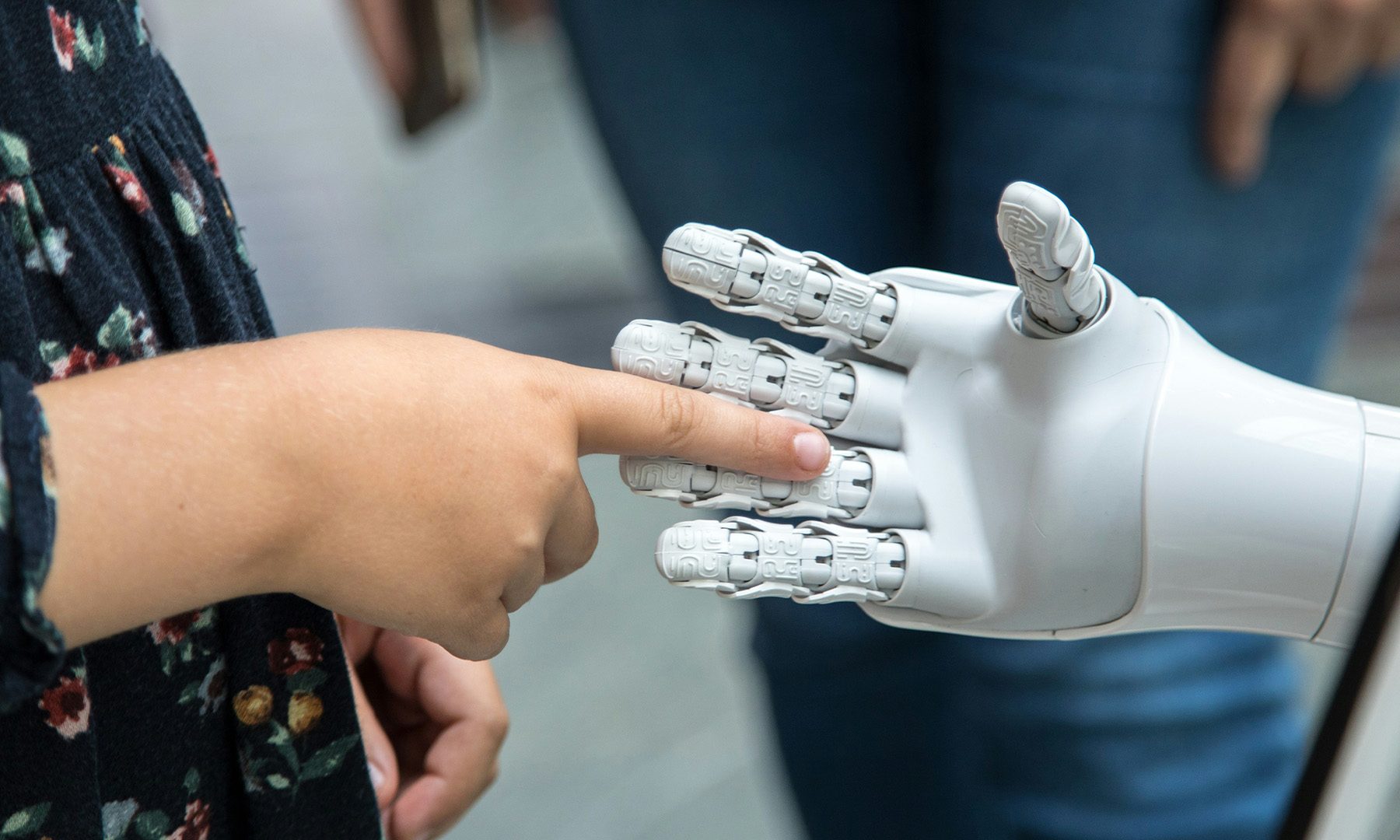
Robot Touch Human Finger

Samsung wants a place in the humanoid race, but its new robotics push begins with machines built for factories rather than homes.

The CEO-led RX robotics division will initially focus on manufacturing robots. Samsung has separately identified humanoids as a priority, although it hasn’t announced a commercial model or explained where one fits into the division’s immediate plans.

Read more
The future of AI may depend on this one behind-the-scenes change
Running Claude on Android.

Whenever a new AI model arrives, it's easy to get caught up in the bells and whistles. We talk about how much smarter it is, how quickly it answers questions, or how realistic its images have become. But here's the thing: none of that matters much if the AI can't reliably work with the apps and services people use every day.

That's why an upcoming update to the Model Context Protocol (MCP) caught my attention. It isn't a new chatbot or a fancy AI model. In fact, most people will never even know it's happening. But it could quietly make the AI ecosystem a lot healthier. If you've never heard of MCP before, don't worry. Think of it as a shared language that lets AI assistants safely talk to apps like Gmail, Slack, calendars, databases, and countless other services. Instead of every company inventing its own way to make those connections, MCP gives everyone a common rulebook.

Read more