1. Home
  2. Cars
  3. Outdoors
  4. News

Jaguar Land Rover made a surfboard out of recycled plastic

Add as a preferred source on Google

You probably know Jaguar Land Rover (JLR) for its sedans and SUVs, but would you ride a surfboard made by this venerable British car firm?

JLR made a surfboard completely from recycled plastic to demonstrate its commitment to reducing waste. An estimated 8.8 million tons of plastic is dumped in the ocean every year, the automaker claims, and that waste can take hundreds of years to decompose. The surfboard is a creative potential use for recycled plastic from JLR’s own design studios.

Recommended Videos

The board was created in concert with SkunkWorks Surf Co. and tested by Lucy Campbell, an English Women’s Open Surfing Champion surfer. It features carbon fiber rails beginning at the nose, and a carbon fiber strip at the tail, for added strength. Campbell tested it in the waters of Whiterocks Beach, Northern Ireland. The board was unveiled to the public at JLR’s Tech Fest in London earlier this month.

The main body of the surfboard was made from polyurethane, which is used in the construction of mockups at JLR’s design studios. In the car-design process, full-scale models are made from clay so that designers and executives can evaluate styling features. The clay is heaped onto polyurethane frames and then sculpted by hand into the shape of a car.

When the model is no longer needed, the clay is recycled for later reuse by the studio, but the plastic frame is usually discarded. JLR used some of that material for its prototype surfboard, showing one possible use for the refuse of the automotive design process.

Don’t expect JLR to get into the surfboard business full time, but the project highlights an important issue for automakers. Like other large corporations, automakers produces a lot of waste, which needs to be factored into their overall environment impact.

Waste and emissions from the production process will likely get more attention as automakers adopt electrified powertrains. With tailpipe emissions reduced or eliminated, pollution from the production process will make up a bigger portion of a car’s overall carbon footprint. So as cars get greener, the process of making them needs to get greener, too.

Stephen Edelstein
Stephen is a freelance automotive journalist covering all things cars. He likes anything with four wheels, from classic cars…
BMW could finally be building the electric convertible fans have always wanted
Good things come to those who wait, and apparently that means until 2028.
BMW convertible

There have been whispers about a two-door BMW i4 for years, and according to a new report from BMWBlog, at least one version is actually in the works. The outlet's sources close to BMW claim the automaker is readying an i4 Convertible under the internal codename NA3.

Why is BMW waiting until 2028 to launch it?

Read more
Waymo’s driverless cars keep getting parking tickets in Austin, and humans aren’t the only ones complaining
Waymo vehicles have collected $9,325 in Austin fines as repeated parking mistakes turn into a fleet-wide operational problem
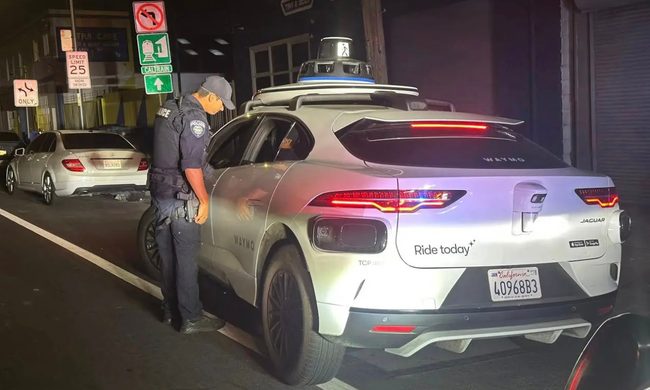
A police officer investigating an empty Waymo car.

Waymo’s 83 parking citations in Austin don’t amount to a financial crisis. They do reveal what happens when the same driving decisions are repeated across an autonomous fleet.

City records obtained by The Wall Street Journal show that Waymo vehicles have accumulated $9,325 in fines since arriving in 2024. The company has paid most of them, but the more revealing detail is how often its cars have made the same mistake.

Read more
Google Maps’ biggest Android Auto upgrade is reaching more users
Google Maps is finally giving Android Auto users directions with a little more drama.
Electronics, GPS, Car

Google is widening the rollout of two long-awaited Google Maps features for Android Auto users: Immersive Navigation and a built-in live speedometer. After months of limited availability, reports suggest both features are now reaching a broader group of users, including people running stable versions of Google Maps instead of beta builds.

The update is part of Google's ongoing effort to modernize the Android Auto navigation experience. While the company unveiled Immersive Navigation earlier this year as one of the platform's biggest upgrades in years, the feature has been trickling out slowly, leaving many users without access. That appears to be changing, with more devices now receiving the update through a server-side rollout.

Read more