1. Home
  2. Cars
  3. News

Watch Renault’s self-driving car dodge obstacles like a pro racer

Add as a preferred source on Google

It might at first glance look as if the car is being driven by a maniac trying to escape from law enforcement, but it’s actually far more impressive than that.

The speeding vehicle in the video above has no driver at all, and is responding automatically to obstacles suddenly appearing in its path.

Recommended Videos

Renault says the technology, which it unveiled on Tuesday, is the first of its kind that’s able to handle “challenging” driving scenarios, adding that its obstacle avoidance capabilities can perform “as good as professional test drivers.”

In fact, such pro test drivers, which Renault describes as “the best of the best,” served as an inspiration for the technology showcased by the car, a modified Renault Zoe called Callie. It certainly looks very effective in the demonstration video.

Renault’s technology is the result of a collaboration between its Open Innovation Lab in Silicon Valley and nearby Stanford University.

Describing Renault’s latest efforts in the self-driving space, Simon Hougard, director of the Open Innovation Lab, wrote in a post: “Despite all the recent technological improvements, in some challenging scenarios humans can still compete with many of today’s autonomous driving systems.”

He went on: “This is why we test against professional test drivers. To our engineers, they are an inspiration and a benchmark, teaching us new ways to think about a problem, and setting the bar on the performance we need to demonstrate.”

If autonomous vehicles are ever going to become a regular feature on our streets, this kind of high-level performance is absolutely vital for passenger safety, and could also save the lives of people, or indeed animals, that suddenly find themselves in the path of a driverless car.

Hougard said that thanks to Renault’s strategic alliance with Nissan and Mitsubishi, more than 50 different vehicle models, which currently have different levels of autonomous driving capability, could incorporate elements of its latest technology to improve their safety in extreme driving situations.

France-based Renault and its two Japan-based partners are aiming to launch 10 autonomous cars by 2020. The plan is to release the vehicles in stages over the coming years, with each one increasing the level of autonomy. In 2020, it hopes to introduce a car capable of driving itself fully autonomously, though initially this is likely to be at slower speeds.

Trevor Mogg
Contributing Editor
Not so many moons ago, Trevor moved from one tea-loving island nation that drives on the left (Britain) to another (Japan)…
Two Indian automakers just beat Tesla at the one thing you’d expect it to own
Two Indian automakers, Tata Motors and Mahindra, just topped a global EV efficiency ranking ahead of Tesla and BYD.
Car, Suv, Transportation

I'll admit, Tesla topping an efficiency ranking felt like a foregone conclusion until I actually saw the numbers. Turns out two Indian automakers just embarrassed both Tesla and the world's biggest EV maker at their own game. 

The first time I read the report, I couldn’t believe it, and I’ve been following the Indian automobile industry for a couple of years now.  

Read more
BYD’s new Racco is Japan’s first electric kei car with over 300 km range
The Racco also undercuts Nissan's Sakura on price before taxes and incentives, which packing in features rarely seen in the kei car segment.
BYD Racco

BYD has entered the Japanese kei car market with the Racco, an electric car built specifically for the country's compact car segment. Its top trim delivers 320 km of range, making it the first compact electric car in the market to pass 300 km, according to ITHome.

Kei cars are a Japanese vehicle class with strict size and power limits, and the segment has long been dominated by domestic automakers such as Honda, Nissan, Suzuki, and Daihatsu. The Racco is BYD's first attempt to compete in that space.

Read more
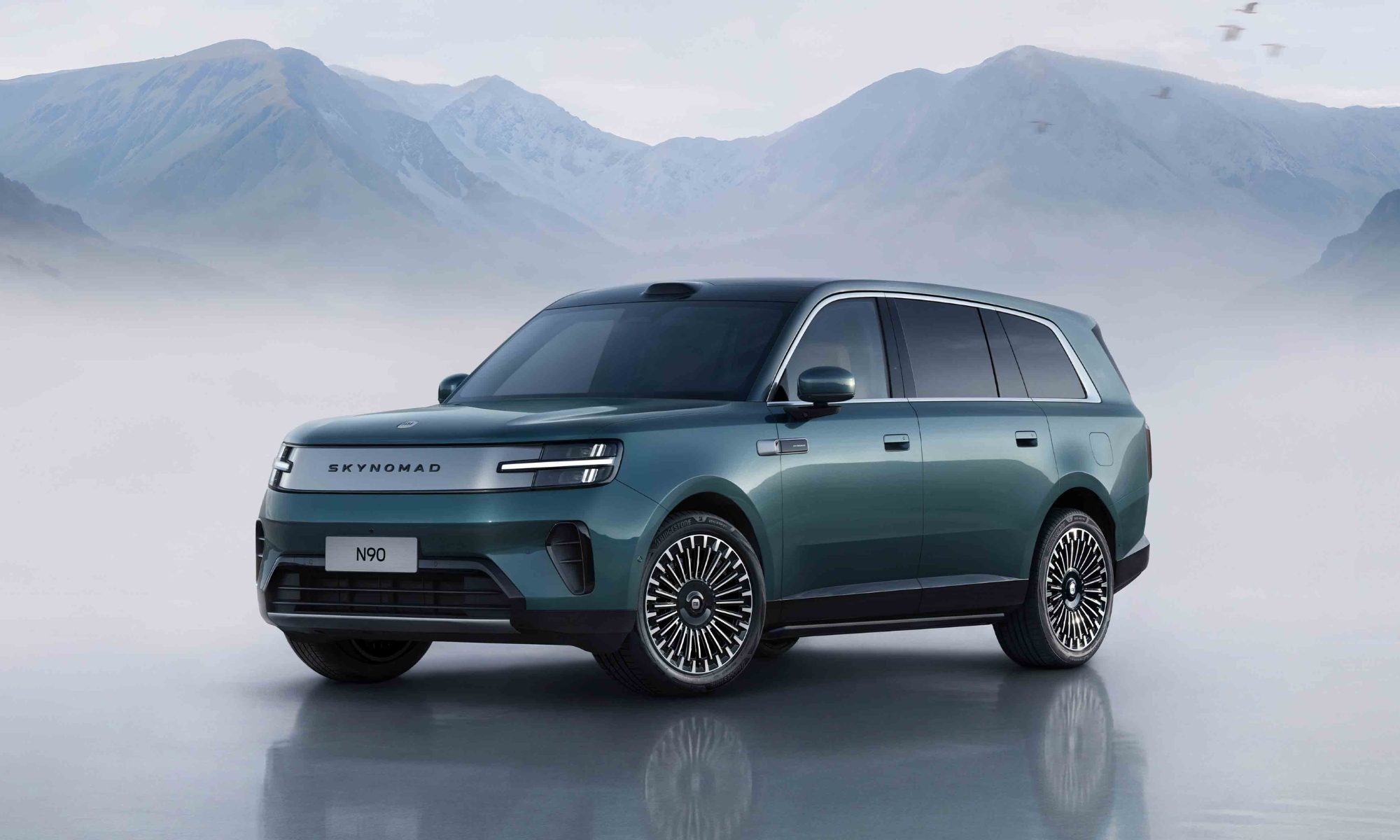
Xiaomi’s sleek seven-seater SkyNomad EREV gets a specs reveal. It’s a template US carmakers must desperately follow
Xiaomi made a sedan first. Now it's coming for your family SUV too.
Skynomad

When Xiaomi entered the automotive industry, it did so with the all-electric SU7 sedan, then expanded into SUVs with the YU7. Its next move is taking the company into one of China's fastest-growing vehicle segments: extended-range electric SUVs (EREVs). Ahead of a technical presentation on July 30, Xiaomi has shared fresh details about its upcoming SkyNomad lineup via its Weibo channel, first spotted by CarNewsChina, revealing the new Kunlun range extender, fuel economy figures and testing progress.

At first glance, the SkyNomad N90's upright silhouette, squared-off proportions and premium detailing inevitably draw comparisons with the Range Rover. But mechanically, Xiaomi appears to be targeting a very different group of rivals. The company is entering a market currently dominated by Chinese brands such as Li Auto and Huawei-backed Aito, both of which have built successful businesses around extended-range SUVs that combine electric driving with the convenience of a gasoline-powered range extender.

Read more