  1. Home
  2. Cars
  3. News

Manhat’s $465,000 BMW X6 concept is part dune buggy and part hot rod

Add as a preferred source on Google

The BMW X6 is many things, but it’s certainly not discreet. It’s not unifying, either. It’s the kind of car people either love or hate. German tuner Manhart is making it even more contentious by turning it into a cross between a dune buggy, a hot rod, and, at least with this yellow-and-black paint job, a bumblebee.

The model is called the MHX6 Dirt² Concept, a name that signals it’s a follow-up to the original Dirt Edition that was based on the first-generation X6. In addition to a lift kit, it receives a long list of off-road-oriented modifications such as a winch, a skid plate, a bull bar, and an external roll cage. It rides on 21-inch alloy wheels wrapped by all-terrain tires. See the big snorkels on either side of the windshield? They feed air to the engine even when the X6 has water up to its belt line.

Recommended Videos

We don’t know what the interior looks like yet, for better or worse, but Manhart promises it’s nowhere near stock. The modifications in the cabin include individual rear seats and a fridge.

The tuner tore down BMW’s twin-turbocharged 4.4-liter V8 engine and rebuilt it completely. The build includes new pistons and connecting rods, upgraded turbochargers, and a beefier cooling system to keep the temperature in check under the hood. All told, the eight-cylinder makes a monstrous 900 horsepower and 885 pound-feet of torque. Mercilessly subjecting the tires to that much torque required reinforcing the automatic transmission and the axles.

Manhart BMW X6
Image used with permission by copyright holder

Perhaps too bold to enter production right away, the MHX6 remains at the concept car stage. It’s close to production, though. Manhart calls it a “breathtaking” project, and predicts we’ll soon see the beast drifting through sand dunes in the Middle East, the market it’s largely aimed at.

Production will be limited to only five examples worldwide, each painstakingly built by hand, and pricing starts at an eye-watering 395,000 euros, which converts to more than $465,000. For that price, you could buy two examples of the all-new Lamborghini Urus and still have money leftover to buy a Jeep Wrangler, build it into your dream off-roader, and spend a long weekend testing it out on the trails in Moab, Utah. Decisions, decisions.

Ronan Glon
Ronan Glon is an American automotive and tech journalist based in southern France. As a long-time contributor to Digital…
This sleek Chinese EV pairs supercar styling with three AI brains
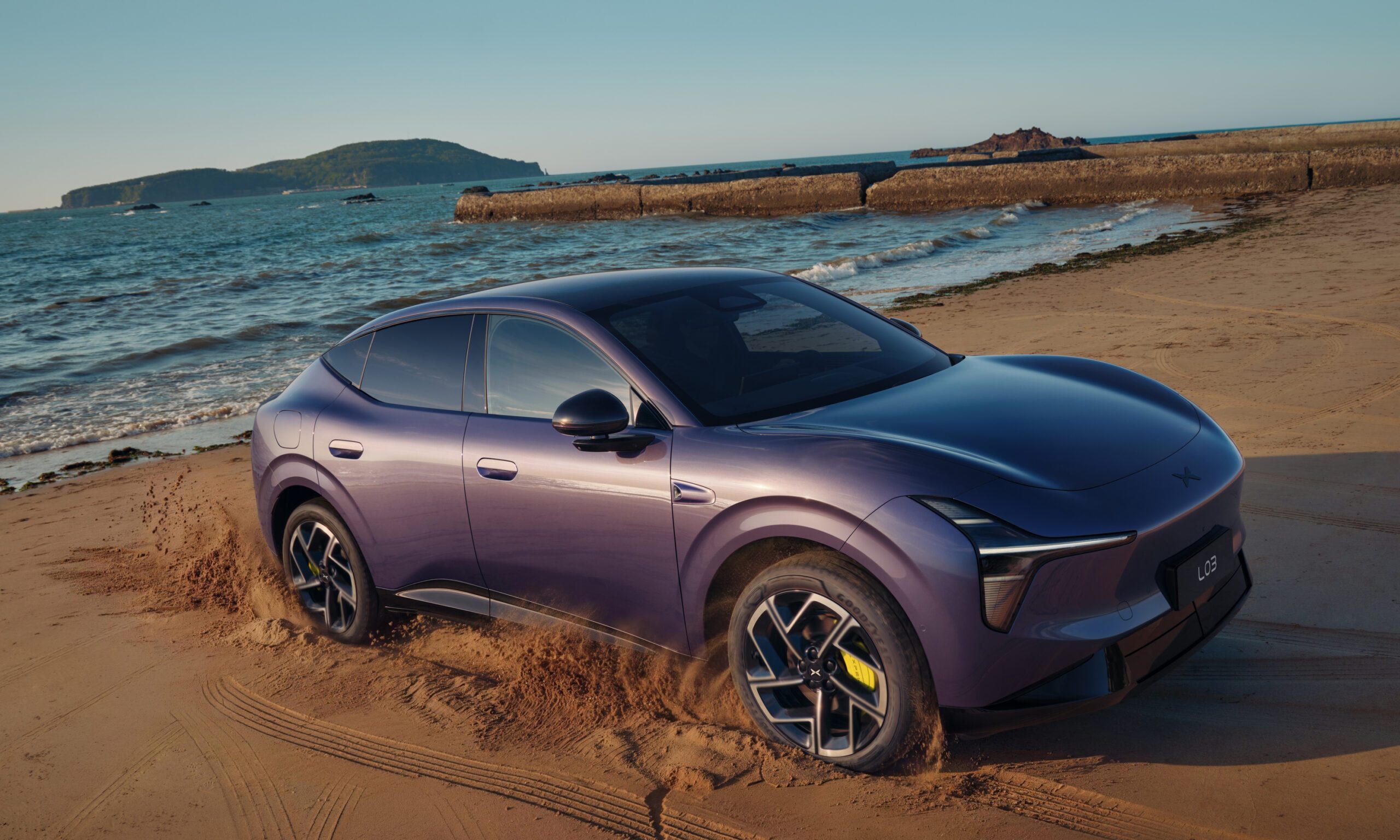
The Xpeng L03 is an AI supercomputer disguised as a stylish family SUV
Xpeng L03

Xpeng’s latest electric vehicle carries enough processing power to make the term "smart car" actually sound more realistic than it actually is. The new Xpeng L03 debuted simultaneously in Europe and China on July 16, with the company presenting it across 65 markets. Available as a fully electric vehicle and an L03 Power X range-extender, the coupe-SUV is Xpeng’s most internationally focused model so far. Market-specific prices and sales dates remain unannounced.

Three AI chips and Google Maps built right in

Read more
A new sodium battery posts wild four-minute charging numbers, but don’t expect it in an EV yet
The breakthrough could improve fast charging and battery life, but the study hasn’t demonstrated those results in a production-sized pack
EV Charger

A new sodium-metal battery has posted a charging number that makes today’s EVs look painfully slow. In laboratory testing, the cell operated at a 15C rate, equivalent to completing a charge or discharge in roughly four minutes.

That doesn’t mean researchers plugged in an electric car and watched it fill up before the driver finished buying coffee. The result came from a small experimental cell using a new quasi-solid electrolyte, while the larger pouch-cell prototype delivered far less dramatic performance.

Read more
The Apple Car may be dead, but it became the foundation of Apple Intelligence
A decade of work on a canceled car project reportedly laid the groundwork for Apple Intelligence.
Apple Intelligence in Apple Car

The Apple Car may have never left the garage, but it apparently gave birth to Apple's AI ambitions. According to Bloomberg's Mark Gurman, Apple's canceled autonomous vehicle project, one that consumed more than a decade of work and over $10 billion before being scrapped in 2024, ended up laying the technological foundation for Apple Intelligence. In a rather ironic twist, one of Apple's most expensive failures may also become one of its most important long-term investments.

The Apple Car forced Apple to think like an AI company

Read more