1. Home
  2. Phones
  3. Android
  4. Mobile
  5. News

Google’s lightweight Maps Go app is built for low-end Android devices

Add as a preferred source on Google

It’s been roughly a week since Google announced the launch of Android Go — a pared-down version of Android 8.1 Oreo, designed to run on lower-end devices packing between 1GB and 512MB of RAM. Mostly useful in developing markets like Brazil and India, Android Go is focused on reducing the install size of the operating system to less than half of that of Android 7.0 Nougat, and ensuring that essential services can run on a device with significantly less power than most smartphones running Android 8.0 Oreo.

A big part of this drive is the creation of a number of smaller, “Go-style” Google apps, made to work on lower-end hardware. Essentially pared-down versions of existing Google apps, Google also announced that we should expect more compact versions of Google Maps, YouTube, Google Assistant, and Gmail. Files Go, a slim-line file managing app has already been launched, as has a lightweight search app, Google Go, and now low-end users can access a lightweight maps app with Google Maps Go on the Google Play Store. Google Maps Go gives users the ability to see their location, get directions to a place via car, train or bus, or by walking, and even allows users to add filters to their map to see satellite imagery, public transport, or an overlay of the current traffic.

google maps go vs google maps
A comparison between Google Maps Go (left) and Google Maps (right) on the Galaxy S8 Image used with permission by copyright holder

The app will only be downloadable for a specific subset of Android smartphones; any device that has less than 1GB of RAM, and is running Android 4.1 or newer. It’s a very specific band of users, and unlike the implementation of Files Go, which was made available as a general file managing app for any Android smartphone.

Recommended Videos

Key to the low impact of the app is that it’s not really an app at all — the app icon is a link to a Progressive Web App (PWA) version of Google Maps (as noted by Android Police). PWAs allow users to access apps without downloading them, and this means that they’re extremely low-impact on a device’s resources. It also means you can try out the app for yourself without needing a compatible phone. Simply access this link on your phone or PC, and you should be able to access Google Map Go — it may try to send you to your normal Google Maps app, but you can circumvent that by holding the link and opening it in a new tab.

Mark Jansen
Former Mobile Evergreen Editor
Mark Jansen is an avid follower of everything that beeps, bloops, or makes pretty lights. He has a degree in Ancient &…
Vibecoded apps are flooding Apple’s App Store, and users are getting sick of them
App Store submissions have doubled this year as AI tools make it easier than ever to build an app, but downloads haven't kept pace, and for good reason.
Apple App Store homepage on an iPhone

Apple's App Store is in the middle of its steepest submission surge in years. Developers submitted nearly 600,000 new apps last year, marking a 30 percent jump over the previous year. That number has already doubled to roughly 560,000 new apps in just the first six months of this year, according to estimates from analytics firm Sensor Tower cited by the New York Times. The reason behind the spike is vibecoding, which allows people with no prior development experience to create new apps using AI tools.

A familiar boom, with a twist

Read more
Google Photos adds a quick toggle between AI and classic search
Classic search is finally easier to reach for people who enabled Ask Photos
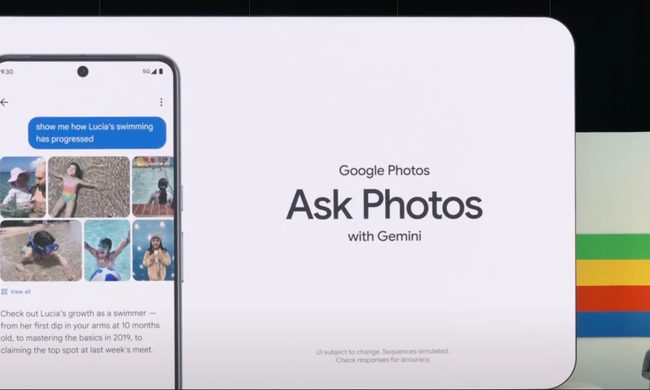
Google's Ask Photos debut.

Google Photos is giving users an easier way to leave its Gemini-powered search when a simple keyword would do. A new toggle now sits at the top of the results page, letting users switch between Ask Photos and classic search without digging through settings.

The change appears to address feedback from people who opted into Ask Photos but wanted a quicker way to return to classic search when Gemini was slower or less useful for a straightforward query.

Read more
Snapseed Camera now lets Android users save original photos and add geotags
Google updates Snapseed Camera with geotag support and non-destructive photo editing
Snapseed App

Google appears to be quietly turning Snapseed into something more than just a photo editing app. Over the past few weeks, the company has been steadily adding new capabilities to Snapseed Camera, its standalone camera app for Android. The latest update introduces two practical features that many smartphone users have come to expect from modern camera apps: the ability to save an untouched copy of every image for future editing and support for embedding location data directly into photos.

Neither feature is flashy, but together they make Snapseed Camera a more capable photography tool, particularly for users who like experimenting with filters without permanently altering their original shots. According to a report by 9to5Google, the features are rolling out with Snapseed Camera version 4.1.1.x on Android.

Read more