In recent years, “MicroLED” has become a bit of a buzzword in the tech and TV community. It’s not a stretch to say that MicroLED TVs could revolutionize how manufacturers make TVs in the future. In comparison to OLED TVs, many people consider MicroLED sets to be a step above.
If you’re considering making the change or purchasing a MicroLED TV, there’s plenty you should know before making the switch.
In theory, MicroLED should offer perfect blacks, excellent color, and near-perfect off-angle viewing.
TV Tech 101
To understand why MicroLED is such a big deal, we need a quick refresher on how modern-day TVs work: Presently, what we call LED TVs are really LCD panels with a bunch of LED lights behind them. LCD screens can’t make their own light, so it’s necessary to shine a light behind them to get a picture.
The reason OLED TVs get such great reviews is that OLED panels are what we call an “emissive display” technology. Each pixel in an OLED screen makes its own light, no backlights necessary. The advantages of an emissive display like OLED are perfect black levels, excellent color, and near-perfect off-angle viewing. In other words, OLED is excellent at everything that LCD/LED TVs are not.
The downside to OLED panels? Because they’re made with organic compounds, they’re expensive to make, somewhat limited in brightness, and can potentially suffer burn-in under the most excruciating viewing scenarios. They’re also very difficult to manufacture in large sizes. To date, LG’s 88-inch 8K Z9 OLED is the biggest ever made.
The benefits of MicroLED
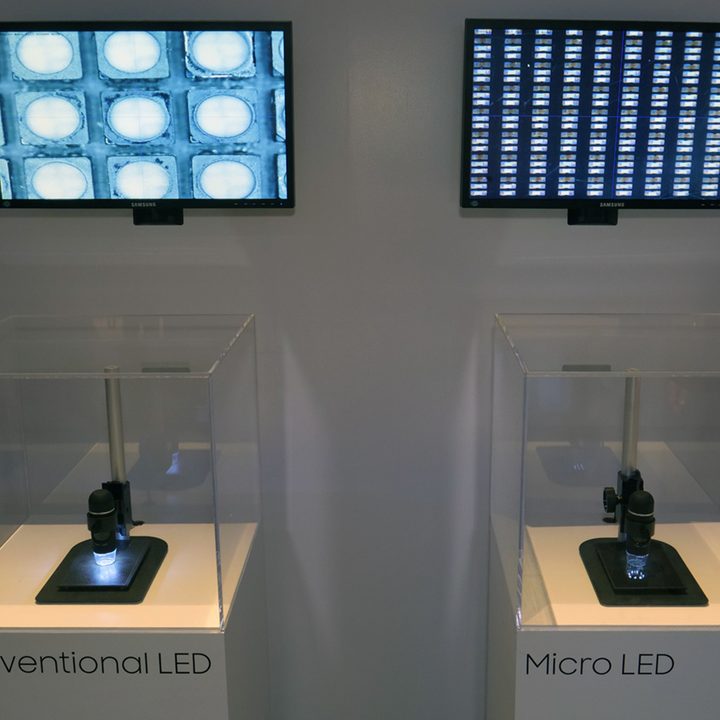
The exciting thing about MicroLED is that it is also an emissive display, but unlike OLED, it doesn’t rely on organic compounds to make light. In theory, MicroLED displays should offer perfect blacks, excellent color, and near-perfect off-angle viewing, just like OLED, but they should also be even brighter, very slim, immune to burn-in, and, in the long run, less expensive to make than OLED.

Because small MicroLED panels can be combined into larger displays, there’s also no limit — from a manufacturing point of view — on screen size. The cost will still play a role, however. In addition to promising stellar picture performance, MicroLED TVs are based on a modular system, allowing users to customize the size of their screen, with the potential to grow it in the future. That said, while the modular technology is advertised as “seamless,” while the displays have improved immensely, so far in our experience, there are still seams if you look closely enough.
When can we get it?
Samsung is the closest to letting people purchase a MicroLED TV, but it’s not an option available to most consumers — indeed, Samsung isn’t even discussing pricing for its MicroLED TVs unless you have the right credentials. If you do, then Samsung’s The Wall line is the closest you can get to actually owning this technology: Businesses and those interested in private installations can contact a Samsung rep about purchasing a Wall TV using their webpage here.
The Wall is well-named, and primarily suited for company meeting rooms or private home theaters with enough space to support massive 110-inch or larger screens. Estimates for purchase and installation are running around $100,000 to $300,000.
Apple and MicroLED
Samsung and Sony aren’t the only companies actively working on MicroLED. Reports began to surface in 2017 that Apple was experimenting with its own displays using the technology, but it seems that the company has an entirely different use case in mind.
In 2020, Apple invested $330 million in a Tawainese factory focused on researching and building MicroLEDs. Apple is also researching mini-LED technologies, and mini-LED screens are expected to show up on Apple products within the coming year. However, reports indicate that Apple sees MicroLED as the endgame, potentially for smaller products like the Apple Watch or even augmented reality headsets. There’s no sure timeline for when MicroLEDs may show up on Apple products, with the first entry likely still years away.
Samsung and MicroLED
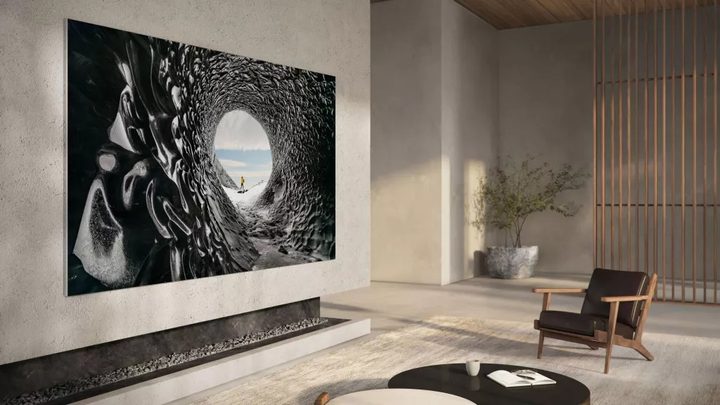
Samsung is currently offering three different versions of The Wall TV based on pixel pitch, a.k.a. how small pixels are and how densely they are clustered. The Wall is currently available in 0.84mm, 1.2mm, and 1.6mm pixel pitch.
However, in 2021 Samsung introduced a new version of The Wall that can actually be mounted on, well, the wall — previous versions required professional installation into a wall, while the 2021 version will be able to be mounted on a wall like a more traditional TV. The compromise is in size, with this latest version of The Wall limited to 110, 99, and 88-inch sizes. There’s also a new Multi View feature, that allows users to split the screen into four different sections with four different inputs.
This is good news for MicroLED technology eventually making its way to consumers: Implementing MicroLED in smaller TVs and making them easier to install are key steps in the progress to actually getting one in your home.
Sony and MicroLED
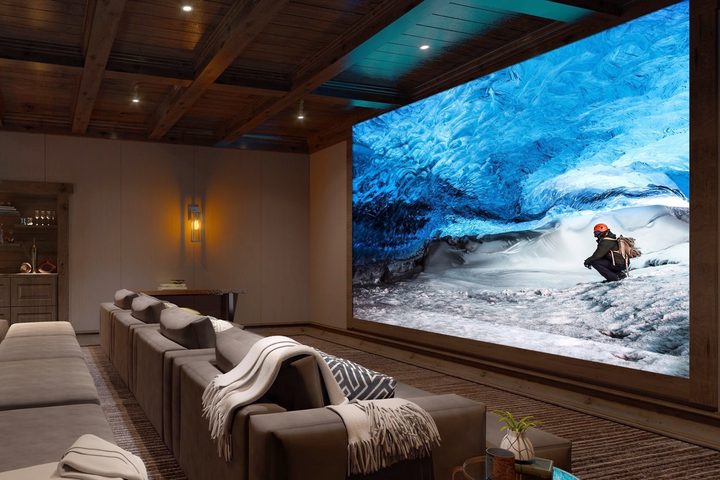
After announcing Crystal LED in 2016, it became clear that Sony was also developing a version of MicroLED, although it remains a few steps behind Samsung. Sony first revealed a Crystal LED display for consumer purchase in 2020, but estimated costs started at around $400,000 and quickly went up from there. As with Samsung’s early Wall TVs, these Crystal TVs were also limited to only the very largest screens, starting at 146 inches.
In 2021, Samsung announced Crystal LED C-Series and B-Series, new modular options designed for corporations and select private buyers. These Series are closer to real TVs with video processing and bit mapping to improve images, and can produce brightness levels up to 1800 nits and a broad color gamut. The B-Series has a pixel pitch of 1.56mm, and the C-Series a 1.26mm pitch. These TVs will be available in summer 2021 for as yet unknown prices. This is more or less exactly where Samsung was a couple of years ago.
Better than OLED?
As you’ll see in our video above, MicroLED displays — especially those on a larger scale — are simply stunning, with a brightness and color that has never been seen in a display at this size before. As mentioned, even the noticeable seams from early prototypes have been largely dealt with unless you walk right up to a panel and look closely.
But whether MicroLEDs represent a step-up from OLED TVs depends a lot on the size of the screen you want. For the moment, MicroLED screens in the 70-120-inch range are stuck with a lower resolution than similarly sized LED or OLED TVs. For instance, the 75-inch MicroLED TV that Samsung showed at CES 2019, was a 4K model — whereas both OLED and QLED TVs are available in 8K resolution at the same size. So unless your goal is to take over an entire wall, OLED remains a better bet both in terms of image quality and budget.
As we pointed out above, this will change as the technology comes down in price and newer models improve on what MicroLED can do. However, MicroLED and OLED are no longer the only emissive panel technologies.
Samsung recently announced that it would start building TVs based on its QD-OLED (quantum OLED) tech — a hybrid of the quantum dot layers that Samsung uses in its QLED TVs, and OLED technology. This may not increase the size of OLED TVs, but it could have a huge effect on how bright OLED panels can get, without sacrificing their ability to get completely black.
Another possible contender? Mini-LEDs are behind some impressive new displays from TCL, which has been focused on shrinking the size of LED backlights. The smaller the individual backlight LED, the closer you can get to the true-black of OLED.
An OLED set with properly mastered content is still a beautiful sight to behold, and you should certainly consider buying one in 2021 if you’ve been dying for an upgrade. MicroLED is a promising successor, but for now, the technology is limited to extra-large TVs and still too pricey for the consumer market.