If you’ve been following the world of TV tech for the past few years, you might know that there are basically two kinds of premium displays currently vying for your hard-earned TV dollars: OLED and QLED. But a recent report confirms that Samsung, the biggest player in the QLED space, is about to make a complete 180 by jumping into the OLED TV game despite having avoided the space for years and creating its largest competitor.
After years of championing LED TVs with Quantum dots (i.e., QLED TVs), Samsung has completely flipped the script. It’s throwing out the playbook. It’s starting … well, not totally from scratch, actually. Instead, Samsung’s new plan appears to be marrying everything the company has learned from creating its brilliantly bright and colorful QLED displays with all the wonders of OLED for an entirely new technology.
And the good news is, this could mean that not only will the next generation of OLED TVs be better and brighter — it could also mean you’ll be able to get your hands on an OLED display for a lot cheaper someday soon. Here’s why Samsung’s latest move is a good thing for everyone who loves great TVs.
QLED vs. OLED
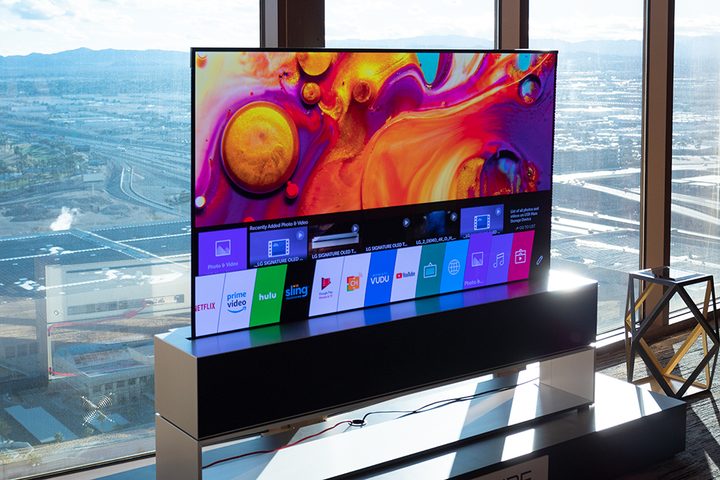
Before we get to the goodies, here’s a quick recap on QLED vs. OLED displays. We have a terrific insiders’ guide to these two technologies if you want to dig deeper, but here are the CliffsNotes:
QLED displays are essentially the same LED-backlit LCD panels we’ve had for decades, but enhanced with a special layer of nanoparticles called quantum dots that breathe new life into the old tech in the form of better brightness and color accuracy. QLED panels still require separate backlights, because even though quantum dots look amazing when illuminated, they rely on a source of light to do their magic. The technology has been pushed hard by Samsung as a better (and brighter) alternative to OLED, and through a licensing partnership, Vizio, Hisense, and TCL have also jumped into the QLED game.
OLED, on the other hand, is an entirely different way of building video displays that uses individual, organic light-emitting diodes (hence the name), each of which forms a single, tiny pixel. OLED displays are ridiculously thin, highly energy-efficient, and, since each pixel can turn on or off independently, they produce perfect black levels.
There are only two real drawbacks to OLED TVs. First, they don’t get as bright as QLED displays. Second, because they’re both harder to make and come from only one manufacturer, LG, they typically cost more. Every manufacturer who currently uses OLED displays — including Sony, Bang & Olufsen, and even Panasonic — relies on LG Display to supply them.
But both of those drawbacks could be about to change.
What is QD-OLED and why might it be awesome?
Once you’ve seen an OLED TV in action, it’s hard to contemplate what could make them look better. They’re just that good.
Still, as mentioned above, QLED enjoys an advantage in the brightness department, which helps QLED TVs perform better under bright ambient lighting conditions, especially when showing HDR content, which relies on a high degree of contrast between darks and lights, along with better color accuracy.
So what if an OLED TV could somehow be given QLED’s extra brightness, without losing any of its innate advantages? That’s the big idea behind QD-OLED or Quantum Dot Organic Light-Emitting Diode.
Pioneered by Samsung, QD-OLED takes a conventional OLED display and infuses it with the same quantum dot technology that has been used so successfully on QLED TVs. The result should be an OLED TV with much better overall brightness, and the kind of eye-melting intensity QLEDs have traditionally offered, all while preserving the perfect black levels and stunning clarity OLED TVs are prized for.
Did you say cheaper OLED TVs?
Beyond taking display quality to the next level, Samsung’s investments in QD-OLED could have a very positive effect on OLED TV pricing as a whole.
Until now, QLED has been OLED’s only real competition. But because OLED still enjoys advantages over QLED (check out our best TVs of 2019 roundup to see how the two stack up), prices have fallen at a glacial pace over the years. A 65-inch LG OLED TV still costs way over $2,000, even on sale. Samsung’s entry-level 65-inch QLED TV, on the other hand, starts at just $1,400. If consumers are willing to cough up an extra $1,000+ to get into an OLED TV — and LG is the only OLED TV display maker — what incentive does LG have to lower the price?
A Samsung QD-OLED TV could change that paradigm. As the newest, most attractive display technology, it likely would start at a premium price, but even if it cost 15-20% more than an LG OLED TV, it would still grab plenty of the gotta-have-the-best crowd. Those first buyers would become the source of demand that in turn pushes production up, and pricing down, helping QD-OLED to infringe on LG’s OLED turf.
The inevitable result would be an intense competition between the two South Korean giants that will benefit all TV buyers, both at home and in stores.
Is QLED retiring?
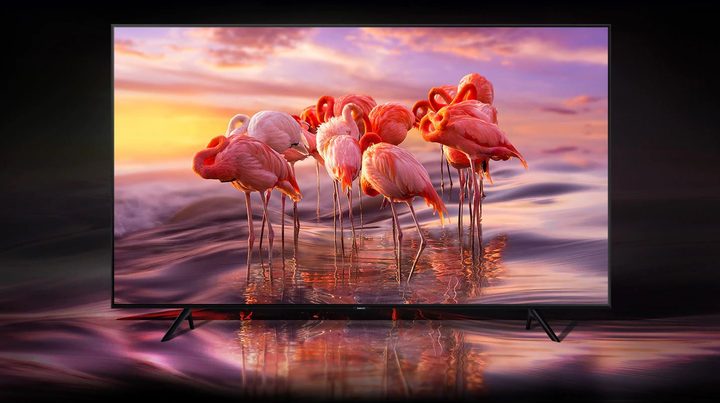
No, far from it. But much like plasma TVs and non-LED LCD TVs used to be the latest and greatest before they became extinct, QLED TVs could start to slide farther down the relative-quality scale, eventually being seen as the best budget option instead of the would-be OLED killer that Samsung had originally hoped for.
This won’t be tomorrow or even next year. But if and when Samsung ramps up its QD-OLED investments, barring any unforeseen hiccups in that process, we could see QLED TVs relegated to the lower third of the market within the next five years.
In the meantime, companies like Vizio and TCL continue to make their own contributions to the QLED story, and the technology is still getting better. TCL’s miniLED local-dimming technology shows that even a different approach to QLED backlighting can pay big dividends in picture quality. For its part, Samsung will continue making QLED TVs too, but will rely entirely on its Chinese manufacturing facilities for these TVs while it commits its South Korean resources to build the TVs of the future.
When can I get my hands on a QD-OLED?
It’s hard to say. All we have at the moment is an acknowledgment that Samsung is going to start building these new TVs. We don’t know when the first models will roll off the assembly line, how much they will cost, where they will be sold initially, or even how they will truly stack up against LG’s OLED panels when that time comes.
It’s also possible that Samsung’s other big bet in TV tech, microLED TVs, could turn out to be just as good or better despite currently being seen as a very-large-screen solution.
Keep your eyes on this space — as soon as we know more, you’ll be the first to find out.