1. Home
  2. Emerging Tech
  3. News

Lunar lava tubes may provide access to vast polar ice reservoirs on the moon

Add as a preferred source on Google

We may be able to easily access substantial quantities of water on the moon, thanks to ancient lava tubes near the lunar north pole. That’s the conclusion of the SETI Institute, after analyzing new data from NASA’s Lunar Reconnaissance Orbiter (LRO). Small openings on the surface could be “skylights” leading to huge subterranean caves formed hundreds of millions of years ago.

Pascal Lee of SETI presented the findings at the Ames Research Center in California. “The highest resolution images available for Philolaus Crater do not allow the pits to be identified as lava tube skylights with 100 percent certainty, but we are looking at good candidates considering simultaneously their size, shape, lighting conditions and geologic setting,” he said.

Recommended Videos

The openings to the pits are as large as 100 feet across, leading to permanently shadowed caverns that consist of long winding channels formed by rivers of flowing lava.

lave tubes
SETI
SETI

Extracting ice from the lunar soil on the surface would be an arduous task, and so having access to underground glaciers would make the process of obtaining water much easier. Although it’s not yet known that ice is present in the lava tubes, it could be in massive quantities, similar to findings in cold lava tubes on Earth. In addition, solar power could be used for such an endeavor, as the skylights provide relatively easy access to the lunar surface.

This area might even be a good location for a long-term lunar base, according to Science Alert. Not only would exploration of the subterranean caves provide invaluable insight into how the moon was formed, it could pave the way for further lunar missions and even expeditions to Mars.

“Exploring lava tubes on the Moon will also prepare us for the exploration of lava tubes on Mars,” Lee explained. “There, we will face the prospect of expanding our search for life into the deeper underground of Mars where we might find environments that are warmer, wetter, and more sheltered than at the surface.”

These are not the first caves of this nature found on the moon — more than 200 have been discovered by scientists, with many leading to underground lava tubes. The polar location is what has researchers intrigued, however, as water is known to be present in the permanently shadowed areas at the lunar poles.

The ice miners working on the lunar surface would also have a phenomenal view. “The Apollo landing sites were all near the Moon’s equator, such that the Earth was almost directly overhead for the astronauts,” Lee said. “But from the Philolaus skylights, Earth would loom just over the crater’s mountainous rim, near the horizon to the southeast.”


Mark Austin
Former Digital Trends Contributor
Mark’s first encounter with high-tech was a TRS-80. He spent 20 years working for Nintendo and Xbox as a writer and…
Google just canceled its AI Studio mobile app, and it’s not all bad news
Logo, Symbol, Disk

Google AI Studio was on track to make its way to Android and iPhone, giving developers and AI enthusiasts a dedicated place to build prompts and experiment with Google's latest models from their phones.

That's no longer happening. In a post shared by the official Google AI Studio account on X, Google confirmed that it's canceling the standalone AI Studio mobile app before launch. The announcement comes despite the company saying nearly 800,000 people had already pre-ordered the app across iOS and Android.

Read more
Google Earth’s AI misadventure lasted only a day. It was a tale of dangerous ignorance.
Nuclear reactors, tanks, and historical destruction on a life-like satellite map? Yeah, that's bad.
Nano Banana AI image generator representation.

Technology behemoths are clearly not reading the room, or they are just moving faster than they should when it comes to AI deployment. Google has already stuffed its Gemini AI in every corner of its software stack, from Android to daily productivity tools like Gmail that are used by hundreds of millions of users every day. AI is everywhere. Not all of it is bad, mind you. But in a few places, it just feels forced.

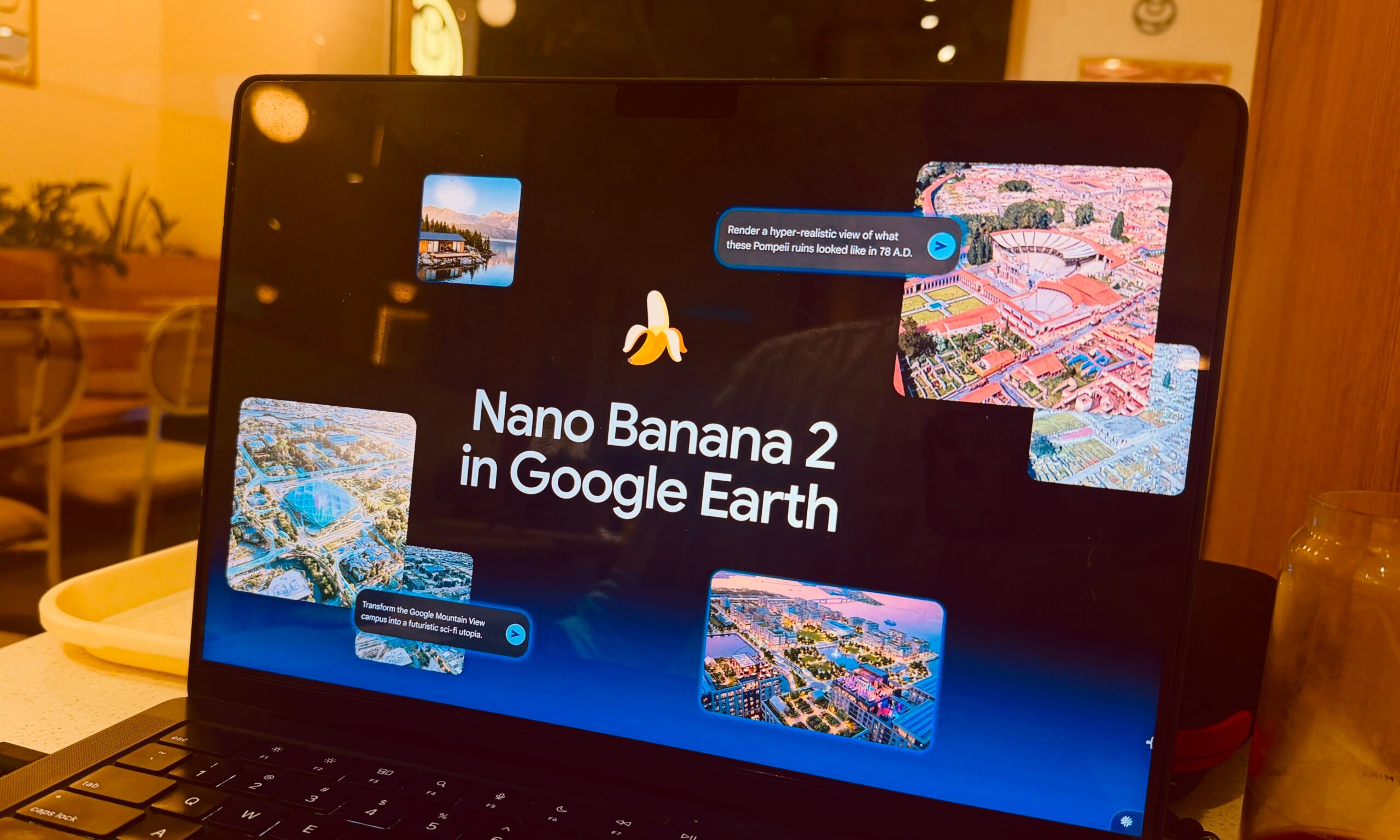
In its latest AI-fication experiment, the company targeted Google Earth. The idea was to let the audience use its Nano Banana 2 AI image generator and make images that can be placed on the map view. On paper, it's a cool idea. What would the Colosseum of Rome look like in your urban neighborhood? Yeah, fun stuff like that.

Read more
Google’s new AI gives robots better balance, smarter hands, and teamwork capabilities
Google just made robots a lot less clumsy and a lot more helpful.
Gemini robotics 2.0

Google DeepMind just brought sci-fi robots closer to reality, and it is very exciting. Building on its original Gemini Robotics model, the company has introduced Gemini Robotics 2, an AI system designed to help robots think, move, and even work together. Unlike most robots today, which rely on pre-programmed routines or someone controlling them remotely, this new system lets robots figure things out on their own when situations get unpredictable.

Can robots finally handle whole-body tasks?

Read more