  1. Home
  2. Emerging Tech
  3. Health & Fitness
  4. Virtual Reality
  5. News

VR takes you to the top of a skyscraper to help you face your fear of heights

Add as a preferred source on Google
Image used with permission by copyright holder

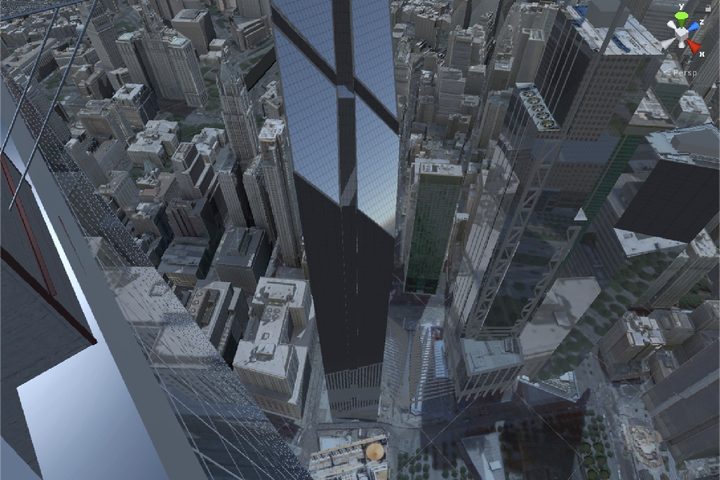
Are you scared of heights? How do you feel about trying to cure those fears by taking a trip to the top of New York’s One World Trade Center, the tallest skyscraper in the Western Hemisphere? Perhaps counterintuitively, such a terrifying scenario may actually be one of the best ways to overcome acrophobia, according to a treatment known as exposure therapy.

This therapy is something that Lithuanian software development company TeleSoftas wants to help with, courtesy of its “VR Inner Child” software, an immersive virtual reality tool created to help psychotherapists treat phobias. The VR experience involves a hyper-realistic simulation in which patients face a child version of their virtual selves, who then guides them through the dizzying rooftop scene under a therapist’s supervision.

Recommended Videos

“The so-called ‘inner child’ interacts with the patient, gradually helping him or her overcome a specific fear — in this case the fear of heights — by tapping into the patient’s free inner child ego state,” Vytautas Kemesis, TeleSoftas’ chief technology officer, told Digital Trends. “While interacting with our inner child, we challenge our deeply held beliefs that form in early childhood, before our critical receptors are mature.”

Mental Healthcare Revolutionized by Virtual Reality

-The therapist tracks the patient’s stress parameters live at all times, and can adjust the actions of the avatar accordingly. Stress=level monitoring is carried out via sensors in a wrist-worn tracker, as well as the VR headset itself. Metrics that are measured include eye movement, heartbeat, perspiration, and skin temperature. These stress parameters allow a patient to be safely pushed to their limits and overcome their anxiety over a period of time — courtesy of a gamified system that lets them try and improve on their previous numbers.

“There haven’t been any clinical trials yet to prove its effectiveness,” Kemesis said. “However, transactional analysis theory, which is what our technology is based on, has been applied for many years to treat various mental disorders and phobias. VR Inner Child is [currently] only a prototype created to show the possibilities that open when IT and medical experts combine their know-how and collaborate to challenge the mental health care industry.”

A demo of the experience will be shown off next week at Mobile World Congress 2018 in Barcelona, Spain. Oh, and if you’re not afraid of heights, subsequent phobia-challenging VR experiences promise to include open and closed spaces, public speaking, and spiders!

Luke Dormehl
I'm a UK-based tech writer covering Cool Tech at Digital Trends. I've also written for Fast Company, Wired, the Guardian…
Google’s new AI gives robots better balance, smarter hands, and teamwork capabilities
Google just made robots a lot less clumsy and a lot more helpful.
Gemini robotics 2.0

Google DeepMind just brought sci-fi robots closer to reality, and it is very exciting. Building on its original Gemini Robotics model, the company has introduced Gemini Robotics 2, an AI system designed to help robots think, move, and even work together. Unlike most robots today, which rely on pre-programmed routines or someone controlling them remotely, this new system lets robots figure things out on their own when situations get unpredictable.

Can robots finally handle whole-body tasks?

Read more
Remember Samsung’s Ballie home robot? It may finally be inching closer to reality
Leaked app wireframes give the strongest hint yet that Samsung's Ballie home robot, first shown at CES 2020, might still be headed toward an actual release.
Samsung Ballie robot in a room next to a dog feeder.

Samsung's rolling home robot has been the industry's longest-running "will it ever actually ship" joke, and I'll admit I'd mostly given up on it. Now, there's finally a glimmer of hope.

Samsung first unveiled Ballie as a concept at CES 2020. Then, it showed it as a significantly upgraded version four years later. However, the company never confirmed a release date or committed to releasing it at all. 

Read more
Polar is yet another AI browser, but it goes beyond just automating the mundane web chores
Polar wants to turn your browser into an AI-powered productivity tool
Polar AI browser

The AI browser race is entering a new phase. After spending much of 2025 trying to reinvent web search with built-in chatbots, startups are increasingly shifting their attention toward browser agents that can automate repetitive work instead of simply answering questions. The latest company to embrace that transition is Polar, a startup founded by former Perplexity engineer Kevin Zhang, which has raised $5.7 million in seed funding led by Madrona.

Unlike the first generation of AI browsers that targeted everyday consumers, Polar is designed specifically for knowledge workers. Its premise is straightforward: instead of replacing Google Search, the browser aims to eliminate repetitive tasks that professionals perform across dozens of browser tabs every day.

Read more