  1. Home
  2. Cars
  3. Business
  4. News

Toyota dedicates a new research company to autonomous tech

Add as a preferred source on Google
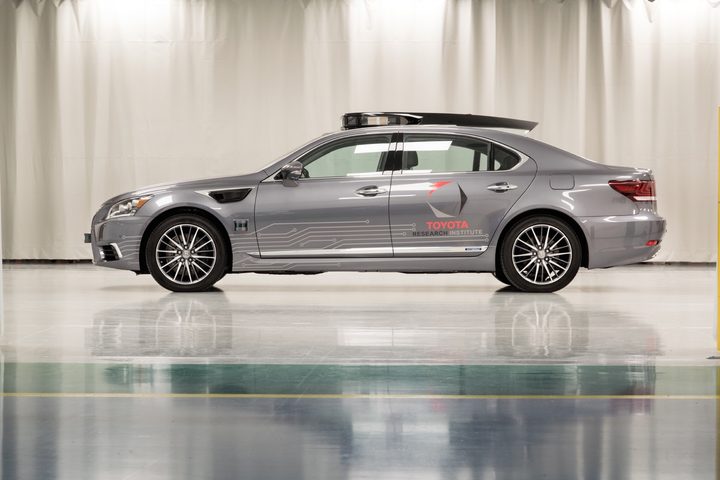
Toyota Platform 3.0 self-driving car
Image used with permission by copyright holder

Toyota is putting its brains behind self-driving technology in a serious way — by dedicating a whole subsection of its existing think tank, Toyota Research Institute (TRI), to autonomous vehicles. Meet Toyota Research Institute-Advanced Development, or TRI-AD, a new $2.8-billion company focussed on advancing the development of self-driving technology. TRI-AD will be headed by current TRI Chief Technical Officer James Kuffner (who will now serve as TRI-AD CEO); TRI CEO Gill Pratt will become the Chairman of the Board for the new firm.

While TRI has done plenty of work on its own on self-driving cars, its focus isn’t quite as specific as that of the new entity’s. As TechCrunch notes, TRI works on a wide range of issues, including advanced battery research and robotics. TRI-AD, on the other hand, will look to bring Toyota (and the auto industry at large) up to speed with the possibilities associated with autonomous driving. The goal is to eventually build a team 1,000-employees strong, in an office somewhere in Tokyo. Exactly where operations will commence is still undecided.

Recommended Videos

Toyota notes that its goals with TRI-AD are to “create a smooth software pipeline from research-to-commercialization, leveraging data-handling capabilities; strengthen coordination with TRI and efficiently link research results to product development; strengthen the collaboration within the Toyota Group in the domains of research and advanced development; and recruit and employ top-level engineers globally, while cultivating and coordinating the strong talent within the Toyota Group.”

It would appear that the ultimate endgame for TRI-AD would be to implement much of the purely academic work that is currently conducted by TRI, helping to bring the theoretical into the physical realm. Given that “product development” is high on the new company’s list of priorities, we expect to see self-driving cars from Toyota soon. While it seems that nearly every car company in the world is now working on and testing self-driving cars (and certainly every technology company), none has established itself as the true leader in the next generation of automobiles. With TRI-AD, the landscape could be changing.

Lulu Chang
Fascinated by the effects of technology on human interaction, Lulu believes that if her parents can use your new app…
Volvo is rolling out Apple Music to over 2 million cars with a simple OTA update
Your Volvo may soon get Apple Music without needing CarPlay
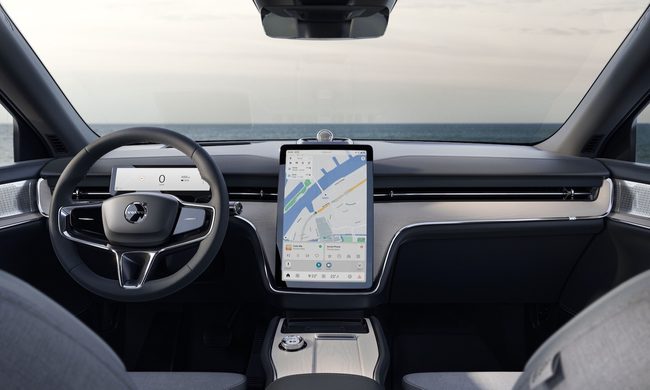
Interior view of the 2024 Volvo EX90.

The line between your smartphone and your car continues to blur. Volvo has announced that it is rolling out an over-the-air software update that brings Apple Music directly to the infotainment systems of more than 2 million vehicles worldwide. Instead of relying on Apple CarPlay or plugging in an iPhone, eligible drivers will be able to stream music natively from their car's built-in system, making Apple Music another integrated feature of Volvo's software experience.

The update is arriving for a wide range of Volvo models, including the EX90, ES90, XC90, S90, V90, XC60, S60, V60, XC40, EX40 and EC40, covering model year 2020 onwards. Availability, however, may vary depending on the vehicle.

Read more
Chery’s latest EV packs flagship tech for the price of a base Tesla, but you can’t buy it
Here's everything packed into Exeed's 2027 Exlantix ES, from its 27-sensor autonomous driving suite to its 860 km range, all starting under $31,000.
Car, Transportation, Vehicle

Chery's premium arm just dropped a sedan that makes you wonder why American EVs cost twice as much for half the tech.

Exeed's 2027 Exlantix ES ships with a driver-assist system called Falcon 700. It is built around an Nvidia Orin-Y chip and a genuinely stacked sensor suite.

Read more
A new AI model wants self-driving cars to think before they swerve
Forget guessing games, this self-driving AI actually shows its work.
Self driving car

Self-driving cars have gotten pretty good at driving. The harder problem is teaching them to drive safely in situations nobody planned for. We have heard horror stories of self-driving cars, behaving erratically in emergency situations, often times delaying first responders from reaching the scene.

A team at Seoul National University, led by professor Jun Won Choi from the Department of Electrical and Computer Engineering, thinks they have cracked part of that puzzle with a new AI model called SafeDrive. The research was recently selected as a highlight paper at CVPR 2026, a distinction that goes only to roughly 3% of all submissions.

Read more