The Ninth Circuit Court of Appeals has refused a request to dismiss the famous “monkey selfie” case, despite an agreement that was reached between the photographer and wildlife group PETA. This means we may finally find out who owns the rights to the image that has spawned countless internet memes.
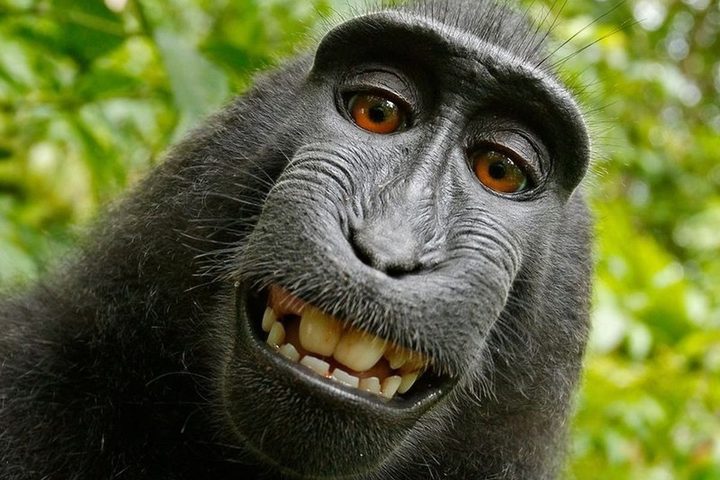
Back in 2011, nature photographer David Slater was capturing images of the endangered Sulawesi crested macaque in Indonesia. “So I put my camera on a tripod with a very wide angle lens, settings configured such as predictive autofocus, motorwind, even a flashgun, to give me a chance of a facial close up if they were to approach again for a play,” he wrote on his blog. “I was then to witness one of the funniest things ever as they grinned, grimaced and bared teeth at themselves in the reflection of the large glassy lens.”
One of the monkeys, possibly named named “Naruto,” eventually triggered the camera shutter, which resulted in a series of captivating “monkey selfies,” setting off a seven-year legal battle that’s still ongoing. Wikimedia Commons posted the images and claimed they were public domain, saying monkeys can’t own a copyright to a picture they take.
As NPR reported, the U.S. Copyright office even updated its manual in 2014 to reflect that a photograph taken by a monkey is not a “fruit of intellectual labor” and therefore not protected by copyright law.
The court agreed, but PETA appealed the court decision in 2016 on behalf of the monkey, saying the proceeds from Slater’s self-published book should go towards preservation of the endangered species.
Back in September, the two parties came to an agreement that seemed amicable to all and asked the Ninth Circuit to dismiss the case.
In a surprise move the court refused, writing in its decision that, “The grant of a voluntary dismissal is not mandatory, and sometimes neither is it advisable.” The court cited a number of previous cases where humans had attempted to represent animals, as well as other cases that courts had refused to dismiss despite requests from both parties.
The decision makes it seem like the judges were wary of the litigants using the court case for some monkey business of their own, noting that “denying the motion to dismiss and declining to vacate the lower court judgment prevents the parties from manipulating precedent in a way that suits their institutional preferences.”
So it seems Naruto will finally have her day in court, and perhaps Slater can finally get this monkey off his back.