1. Home
  2. Emerging Tech
  3. Health & Fitness
  4. News

Move over, antibiotics! Cold plasma could be the next great way to treat wounds

Add as a preferred source on Google

Here in 2018, plenty of the Star Trek technologies which once seemed the stuff of science fiction are now science reality. Technologies like universal translators and mobile communicators are part of our everyday lives, while we’ve also covered the likes of real life tractor beams and holodecks. Now a German company called Coldplasmatech wants to add one more Star Trek technology to the real world. And this one could help transform wound treatment in hospital emergency rooms — and maybe even save some lives.

“The easiest way to explain our technology to someone is by comparing it to the dermal regenerator in Star Trek,” Dr. Carsten Mahrenholz, CEO of Coldplasmatech, told Digital Trends. “The dermal regenerator is a handheld device which emits a blue light. If someone receives a cut, the dermal regenerator can be used on the wound to close it. Basically, that’s what we’ve developed.”

Recommended Videos

Well, kind of. In fact, the technology is a cold plasma patch made of silicone, which uses ions and UV radiation to treat infections in chronic wounds as an alternative to antibiotics. At the same time, it greatly speeds up the healing process.

Cold plasma is an ionized gas, a state of matter that remains mysterious to most people, compared to more widely understood states of matter. The wound dressing comprises a silicone part which applies plasma to the wound, and a power supply. The patch converts the oxygen and nitrogen mixture which makes up the air we breathe into a bioactive ionized gas. This bioactivity results in faster wound healing, while also killing bacteria extremely efficiently — in as little as just two minutes.

“For various reasons, in a hospital today you do not have time for a physician to treat one wound for 45 minutes or so,” Mahrenholz continued. “You want the physician to look at the wound, and then for a nurse to be able to do the treatment. That way, the physician gets to see more patients.”

The patch was recently shown off at the Athens Science Festival in Greece. Later this year, it will be part of a clinical trial at two hospitals in Germany. “We’ve been very lucky because we have received funding from the Federal Ministry of Science and Education in Germany,” Mahrenholz said. “They are helping us set up and pay for clinical and economic trials in Germany. That second part is very important because not only is it crucial to show the clinical success of a new technology, but also what it means in terms of economic value.”

Provided all goes well with these trials, Mahrenholz hopes that the technology will become more widely used around the world in the near future.


Luke Dormehl
I'm a UK-based tech writer covering Cool Tech at Digital Trends. I've also written for Fast Company, Wired, the Guardian…
Yet another study says AI is bad for elections, and the rabbit hole gets worse
AI may be an election bomb waiting for someone to light the fuse
Voters cast their ballots on Election Day

Another election, another study has concluded that asking an AI chatbot for political guidance is a spectacularly bad idea. Research conducted during Hungary’s 2026 parliamentary election found that ChatGPT and Google Gemini offered not just inaccurate but also inconsistent and unreliable voting advice. The chatbots misclassified voter profiles, overlooked relevant parties, recommended parties absent from the ballot, and sometimes produced materially different answers when given the same information repeatedly.

AI keeps failing the voter test

Read more
Samsung’s humanoid robot ambitions are real, but factories come first
Samsung’s new robotics division has humanoids in its sights, although its immediate business is far more practical factory automation
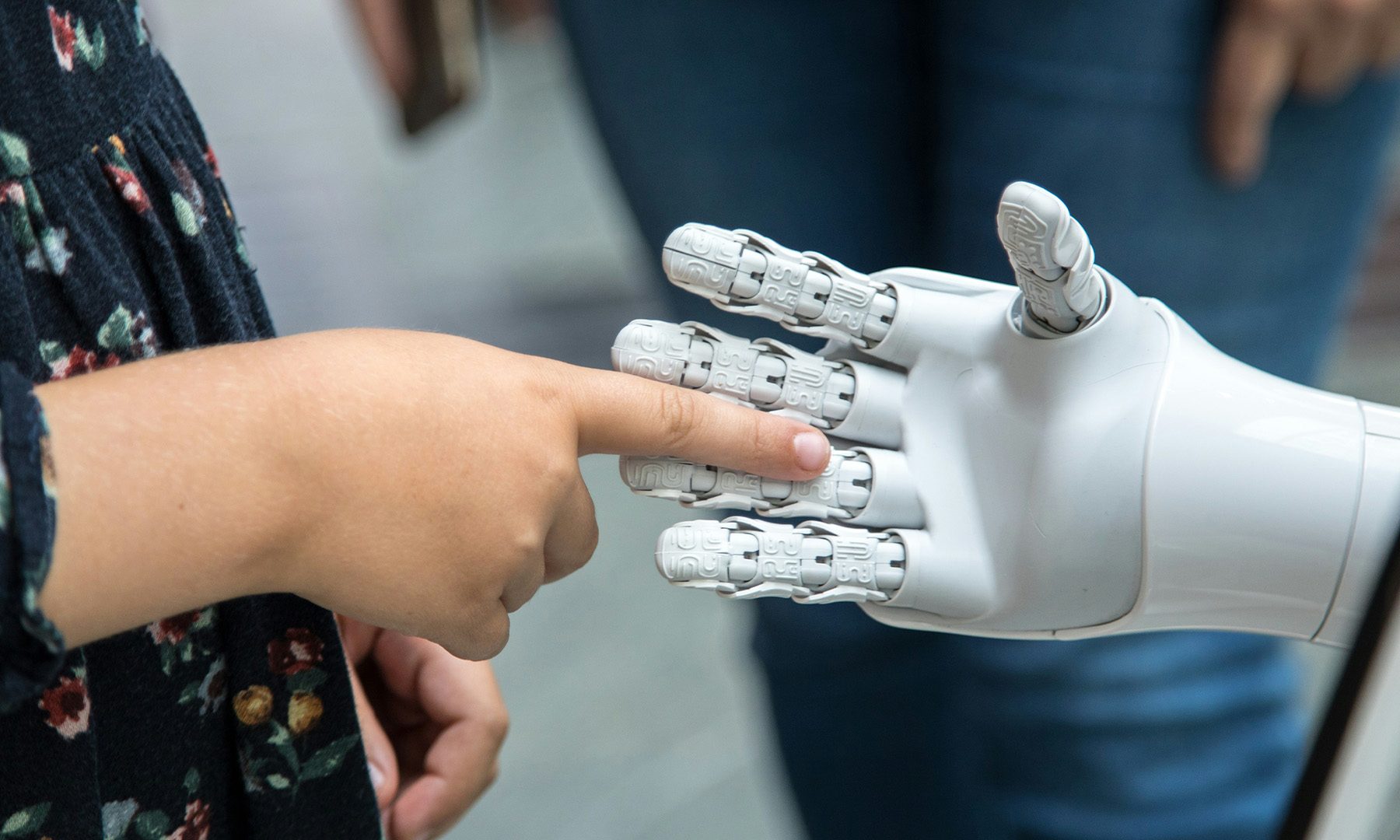
Robot Touch Human Finger

Samsung wants a place in the humanoid race, but its new robotics push begins with machines built for factories rather than homes.

The CEO-led RX robotics division will initially focus on manufacturing robots. Samsung has separately identified humanoids as a priority, although it hasn’t announced a commercial model or explained where one fits into the division’s immediate plans.

Read more
The future of AI may depend on this one behind-the-scenes change
Running Claude on Android.

Whenever a new AI model arrives, it's easy to get caught up in the bells and whistles. We talk about how much smarter it is, how quickly it answers questions, or how realistic its images have become. But here's the thing: none of that matters much if the AI can't reliably work with the apps and services people use every day.

That's why an upcoming update to the Model Context Protocol (MCP) caught my attention. It isn't a new chatbot or a fancy AI model. In fact, most people will never even know it's happening. But it could quietly make the AI ecosystem a lot healthier. If you've never heard of MCP before, don't worry. Think of it as a shared language that lets AI assistants safely talk to apps like Gmail, Slack, calendars, databases, and countless other services. Instead of every company inventing its own way to make those connections, MCP gives everyone a common rulebook.

Read more