1. Home
  2. Emerging Tech
  3. Health & Fitness
  4. News

Future pain-free microneedles could be inspired by mosquitos

Add as a preferred source on Google
Ohio State Looking to Mosquitoes for a Way to Develop Painless Microneedles

If you receive a painless injection courtesy of a new microneedle in the near future, you may owe a debt of gratitude to the mosquito. The reason? Because quite possibly everyone’s least favorite insect is the inspiration behind new work being carried out by researchers at Ohio State University.

Recommended Videos

“The reason we look at nature for cues is because nature has been through so much evolution to discover the simplest and most efficient methods,” Bharat Bhushan, a professor of Mechanical Engineering at Ohio State, told Digital Trends. “In this work what interested us was the way that mosquitoes bite, since they are able to do this for several minutes without us feeling a thing. We wanted to use this to see if we could develop a painless microneedle.”

So far, they haven’t actually developed a prototype of this needle. What they have done is to take a much closer look at the unique components that enable the mosquito to bite people without causing them discomfort. The mosquito uses a combination of four things. These include the use of a saliva-based numbing agent during biting, a serrated design for the “needle,” vibration during the piercing process, and a combination of soft and hard parts on the proboscis, the insect’s elongated sucking mouthpart. This combination allows the mosquito to pierce the skin with just one-third of the force required for an artificial needle, while the numbing agent takes care of the rest.

Based on the team’s research, Bhushan suggests that it would be possible to create a microneedle containing two needles. One of these would inject a numbing agent, while the second could be used for drawing blood or injecting a drug. This second needle would also bost a serrated edge like the mosquito’s fascicle, be flexible and softer on the tip and sides, and vibrate when inserted. He claims that the materials and technology to create such a needle already exists.

While this could prove to be more expensive than traditional needles, it may be useful for cases in which children or adults have a phobia around the use of needles. “It could also be in cases of drug delivery in patients, where the needle needs to be in for a long period of time,” Bhushan continued.

This isn’t the only pain-free needle project we’ve covered at Digital Trends. Researchers at the Massachusetts Institute of Technology are busy developing a new smart injection technology that promises a way to inject drugs without the needles by blasting them into your body at Mach 0.7. Still, we could do a lot worse than having competing projects designed to bring us pain-free injections, right?


Luke Dormehl
I'm a UK-based tech writer covering Cool Tech at Digital Trends. I've also written for Fast Company, Wired, the Guardian…
Yet another study says AI is bad for elections, and the rabbit hole gets worse
AI may be an election bomb waiting for someone to light the fuse
Voters cast their ballots on Election Day

Another election, another study has concluded that asking an AI chatbot for political guidance is a spectacularly bad idea. Research conducted during Hungary’s 2026 parliamentary election found that ChatGPT and Google Gemini offered not just inaccurate but also inconsistent and unreliable voting advice. The chatbots misclassified voter profiles, overlooked relevant parties, recommended parties absent from the ballot, and sometimes produced materially different answers when given the same information repeatedly.

AI keeps failing the voter test

Read more
Samsung’s humanoid robot ambitions are real, but factories come first
Samsung’s new robotics division has humanoids in its sights, although its immediate business is far more practical factory automation
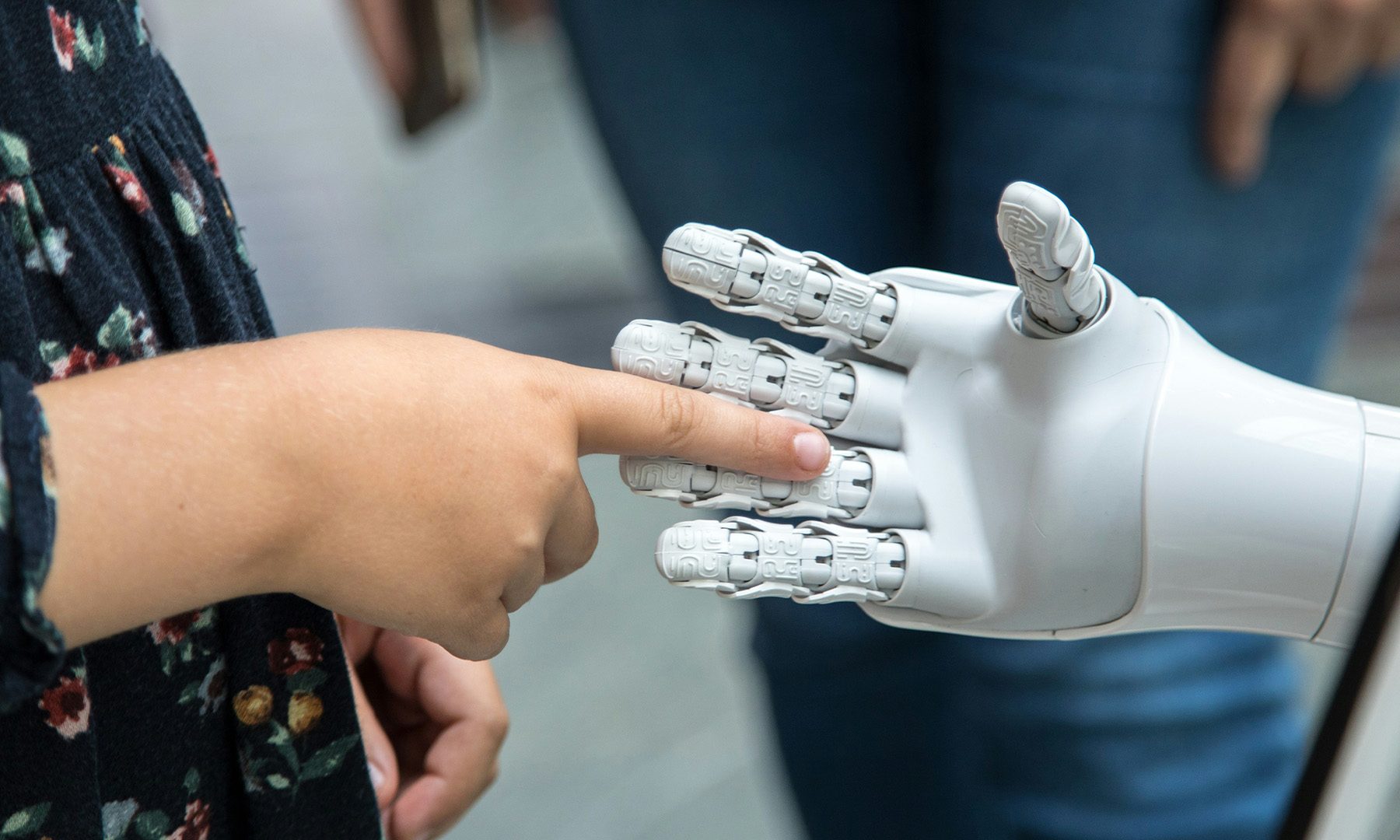
Robot Touch Human Finger

Samsung wants a place in the humanoid race, but its new robotics push begins with machines built for factories rather than homes.

The CEO-led RX robotics division will initially focus on manufacturing robots. Samsung has separately identified humanoids as a priority, although it hasn’t announced a commercial model or explained where one fits into the division’s immediate plans.

Read more
The future of AI may depend on this one behind-the-scenes change
Running Claude on Android.

Whenever a new AI model arrives, it's easy to get caught up in the bells and whistles. We talk about how much smarter it is, how quickly it answers questions, or how realistic its images have become. But here's the thing: none of that matters much if the AI can't reliably work with the apps and services people use every day.

That's why an upcoming update to the Model Context Protocol (MCP) caught my attention. It isn't a new chatbot or a fancy AI model. In fact, most people will never even know it's happening. But it could quietly make the AI ecosystem a lot healthier. If you've never heard of MCP before, don't worry. Think of it as a shared language that lets AI assistants safely talk to apps like Gmail, Slack, calendars, databases, and countless other services. Instead of every company inventing its own way to make those connections, MCP gives everyone a common rulebook.

Read more