  1. Home
  2. Emerging Tech
  3. Health & Fitness
  4. News

Scientists can 3D print human heart tissue now. The future is here

Add as a preferred source on Google
BIOLIFE4D

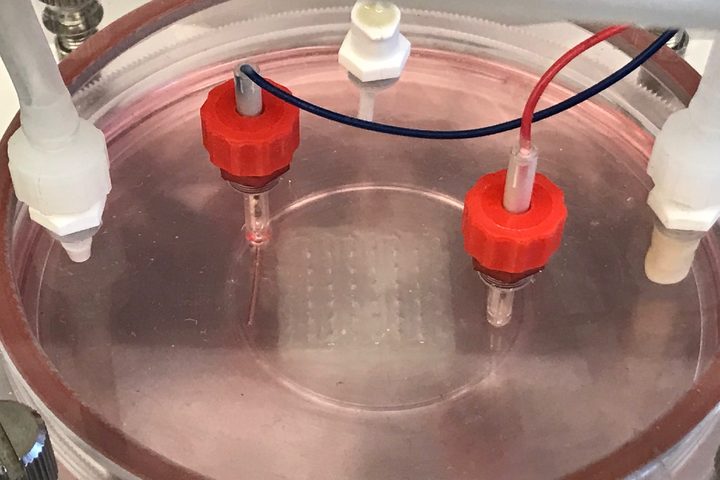
Long term, the goal of 3D bioprinting is to be able to 3D print fully functioning organs which can be used to replace the failing biological organs of humans in need of a transplant. That may still be years off, but Chicago-based biotech startup Biolife4D this week announced a major new milestone: Its ability to bioprint human cardiac tissue.

The scientific landmark followed shortly after the company opened a new research facility in Houston. It involved the printing of a human cardiac patch, containing multiple cell types which make up the human heart. It could one day be used to help treat patients who have suffered acute heart failure in order to restore lost myocardial contractility, the ability of the heart to generate force for pumping blood around the body.

Recommended Videos

“The cardiac patch that we printed demonstrated two major advancements,” Steven Morris, CEO of Biolife4D, told Digital Trends. “First, it demonstrated Biolife4D’s ability to take a patient’s own blood cells, reprogram them back into stem cells, reprogram them again to make the different type of cells which we need to 3D bioengineer our human heart viable for transplant, and then successfully 3D bioprint with those cells to make living human heart tissue. Second, this is the first time that a cardiac patch was 3D bioprinted that contains multiple cell types of which the human heart is made, and includes preliminary vascularization — all of which are needed to make a functional patch and to keep it alive after the bioprinting process.”

Given the potential life-saving ability of this technology, Biolife4D is far from alone in working toward this bioprinting goal. However, Morris noted that, while other companies have previously made similar patches, none have included each of the cell types which make up the heart, along with the vascularization needed to allow the body to nourish the cells and remove their waste products. “You can think of it like this is the first time all of the proper ingredients were used to properly make the recipe,” he continued.

Going forward, Biolife4D hopes to continue developing the patch in order to start preclinical testing in around six months. They will also continue with the broader project of printing a functioning human-scale heart by focusing on 3D bioprinting other components, such as valves, blood vessels, and a working mini-heart.

Luke Dormehl
I'm a UK-based tech writer covering Cool Tech at Digital Trends. I've also written for Fast Company, Wired, the Guardian…
This smart knitted fabric can flip switches, count your steps, and even change shape
Grandma's knitting just entered its Iron Man era
Representative Image

For most of us, knitting brings to mind sweaters, scarves, and perhaps an ambitious grandmother determined to make winter more fashionable. Researchers at Harvard University, however, have a far more futuristic vision. They've transformed ordinary knitted fabric into a programmable material capable of changing shape, acting as an electrical switch, sensing movement, and potentially forming the foundation of tomorrow's wearable technology.

The research, published in Advanced Functional Materials by scientists at the Harvard John A. Paulson School of Engineering and Applied Sciences (SEAS), demonstrates how machine-knitted textiles can "snap" between multiple stable shapes without relying on motors or rigid mechanical parts.

Read more
Starlink V5 is here, and it’s lighter, smarter, and far more efficient
The next-generation satellite internet kit promises improved efficiency while maintaining high-speed connectivity.
Starlink V4 vs V5

Not every hardware upgrade needs to be about speed. With Starlink V5, SpaceX is betting that a lighter design and lower power consumption matter just as much. The company has officially introduced its next-generation Starlink V5 kit, featuring a smaller and lighter design with significantly improved power efficiency.

Smaller, lighter, and far more efficient

Read more
Frontier joins the Starlink club with high-speed in-flight internet
The carrier plans to roll out SpaceX's satellite-powered Wi-Fi across its fleet starting in 2027.
Frontier Starlink partnership featured

If there's one thing budget airlines aren't exactly known for, it's great onboard Wi-Fi. In Frontier Airlines' case, it hasn't offered in-flight internet at all. That's about to change. Frontier Airlines has announced a partnership with SpaceX's Starlink to bring high-speed, low-latency internet across its fleet. Installations will begin in early 2027, making Frontier the first ultra-low-cost carrier in the United States to adopt Starlink's satellite-powered connectivity.

Streaming, browsing, and even gaming at 35,000 feet

Read more