
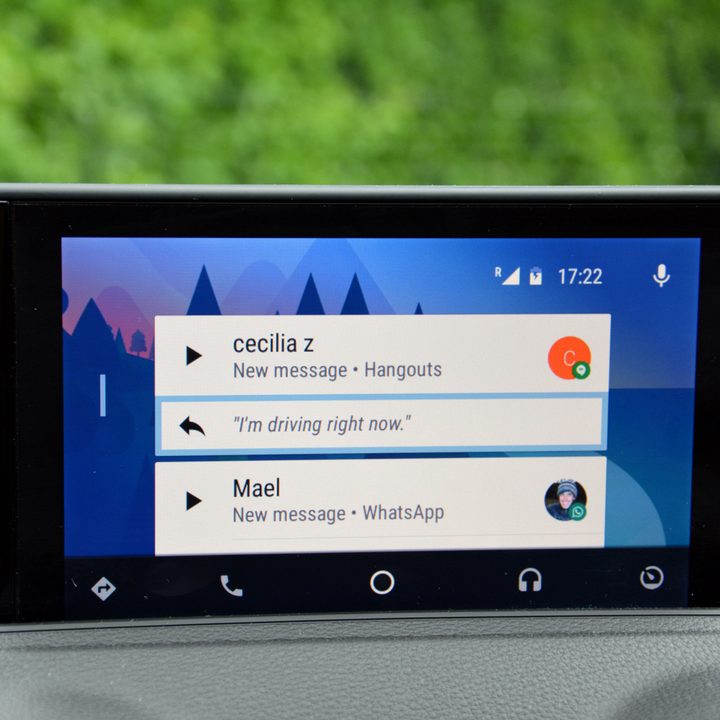
Android started out as a mobile operating system, but over the 10 years since it came to market, it has become so much more. Forks of Android now act as Google’s operating system across a wide variety of different form factors, from automobiles to smartwatches. Because it’s open source — freely available for redistribution and modification — the use cases are incredibly diverse. Here, we look at the various industries Android has permeated since it launched in the HTC G1 in 2008 — and one that might be vying to take over from the beloved OS in the future.
Wear OS (formerly Android Wear)
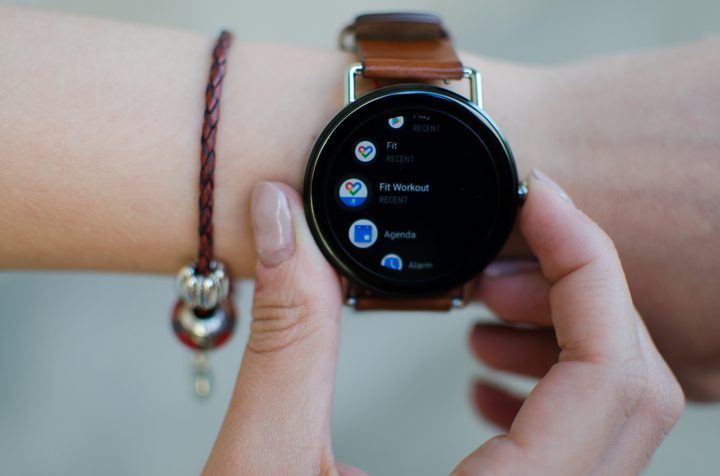
Google debuted its wearables platform called Android Wear in 2014. Since then, the platform has shipped on smartwatches from a wide range of brands in both tech and fashion — everything from Asus to Michael Kors — but it hasn’t been entirely smooth sailing. The past several years were shaky for the now-branded Wear OS, as the future of smartwatches, in general, seemed far less promising than originally expected. There were delays in the development of the platform, and many tech partners starting to lose interest in a market that seemed to have very little dynamism. At the same time, though, it’s become clear that fashion companies are more than glad to take up the mantle abandoned by smartphone manufacturers, introducing devices that are more about battery life and aesthetic than boundary-pushing features. Regardless of whether mobile manufacturers continue to tap into the market, it’s here to stay.
Android TV

Going from minuscule screens to the home theater, Google also launched Android TV in 2014, offering the tech company’s take on smart TV software. The OS primarily runs on some set-top boxes and as integrated software on smart TVs from brands including Sony and Sharp. As it grows in popularity, it’s also showing up in things like pico projectors and mobile robot projectors. Along with the standard interface showing media from installed apps, it benefits from being tightly intertwined with all other Google services and features — for instance, it supports Google Assistant, offers access to the Google Play Store, and provides Cast support, with no need for a Chromecast dongle.
Android Things

These days, more and more objects are gaining the ability to communicate, both with one another and with us humans. In the home, we know this space age-sounding phenomenon simply as the “smart home.” Google joined in on the fun in 2015, when it announced Android Things, its own embedded operating system for low-power and memory constrained Internet of Things (IoT) devices. Google also introduced a protocol for communication between these devices. So far, brands including JBL, Lenovo, and LG are all making smart displays that run on the platform, featuring tools like Google Assistant and Google Cast. Meanwhile, LG and iHome are also producing Android Things smart speakers.
Android Auto/Android Automotive
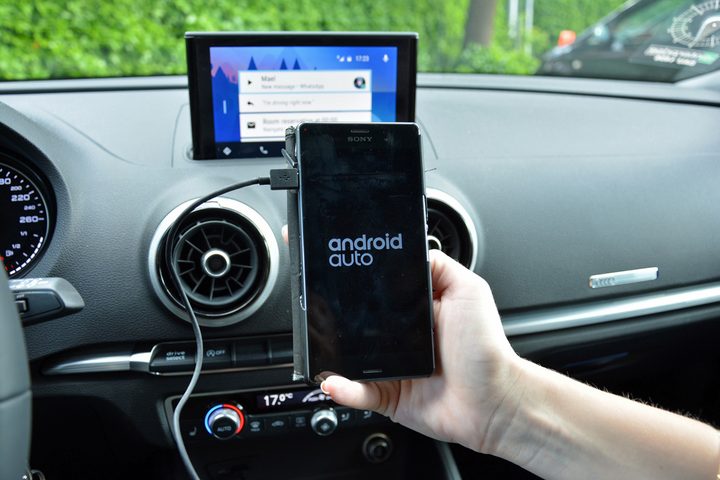
Becoming the dominant operating system in cars has long been an ambition for Google, and Android Auto, launched in 2014, represents the tech giant’s first step toward that goal. You can use the app for a more car-friendly user interface, or use a supported in-car display to access music, GPS, and more. Google’s next step, though, is Android Automotive — a more full-bodied version of Android running on the car itself. This new implementation has some major momentum right now, with massive carmaking alliance Renault-Nissan-Mitsubishi signing a deal to run Android Automotive infotainment systems in millions of cars beginning in 2021, along with Volvo. This sort of deal is major not only for Google but for the car industry — automakers have long been reticent to give up on making their own systems and retaining their own data.
Daydream
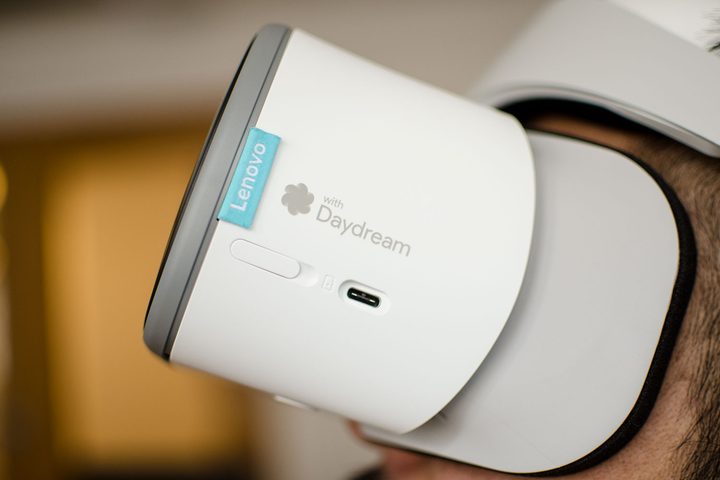
Daydream is Google’s virtual reality platform, and it originally debuted in 2016 as a platform powered by Android phones in Android Nougat. You would slap a “Daydream-ready” phone inside a headset, and the experience would be completely powered by the phone. Earlier this year, Google and Lenovo released the Mirage Solo, one of the first standalone Daydream headsets that do not require the use of a phone. There hasn’t been a lot of momentum in the virtual reality space, as it’s still a nascent industry. Additionally, though Oculus doesn’t call it Daydream, its Oculus Go headset runs on a custom version of Android.
Chrome OS

Chromebooks don’t run on Android, they run Google’s Chrome OS. But Google brought the Google Play Store and familiar Android features to the platform to make it more versatile. The latest Google Pixel Slate is a testament to the future Google wants, where you can get work done with a desktop operating system like Chrome OS, with the benefits of swapping to a tablet mode to use a more tablet-friendly user interface thanks to Android, with plenty of app support.
And more…
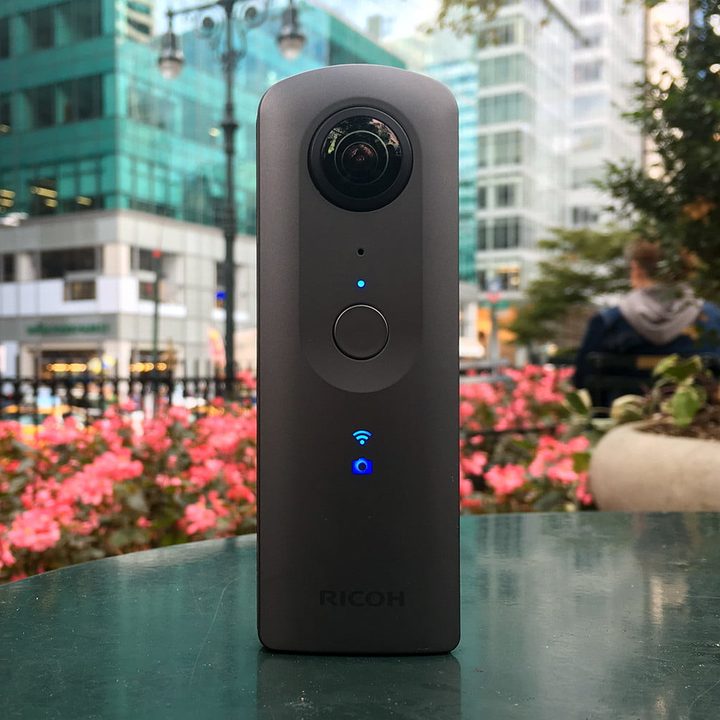
While the use cases above are large, official branches of Google’s operating system, Android appears on a whole bunch of other types of devices — which makes sense, considering the OS runs on around 24,000 distinct devices. Amazon’s Fire HD tablets, for example, run a forked version of Android that does not have access to the Google Play Store. One of the more interesting examples is in-flight entertainment systems, like Panasonic’s Ex3, which British Airways employs in its Boeing 747 aircrafts. EX3 is an HD display that focuses on providing a massive content library to entertain travelers, and benefits greatly from using a well-established, mature OS over a buggy creation made from scratch. Another noteworthy example is the Rico Theta V 360 camera, which uses software based on Android, making it open to support a wide variety of third-party apps. It was recently a finalist in the 2018 International Design Excellence Awards. No doubt many more unique Android gadgets will crop up in the future — that’s the benefit of an open source platform.
Google Fuchsia

Fuchsia OS isn’t strictly Android-related, but it could potentially be its successor. We’ve been hearing about Google’s all-purpose operating system for around two years now, but a commercial release still isn’t expected for quite a while, and its exact purpose isn’t known for certain yet either. We do know, however, that Fuchsia is being designed to run across all sorts of different form factors, including laptops and embedded devices. Reports have further suggested that it will take over from every OS shipping on Google’s consumer hardware. Google responded to those recent rumors, though, by stating that there is no concrete plan at the moment for replacing Android in the immediate future. Still, the definition of mobile has grown exponentially over the last 10 years, so it makes sense Google would create a more flexible OS. We’ll just have to wait and see.


