  1. Home
  2. Emerging Tech
  3. News

Curiosity data shows how asteroid impact could have made Mars habitable

Add as a preferred source on Google

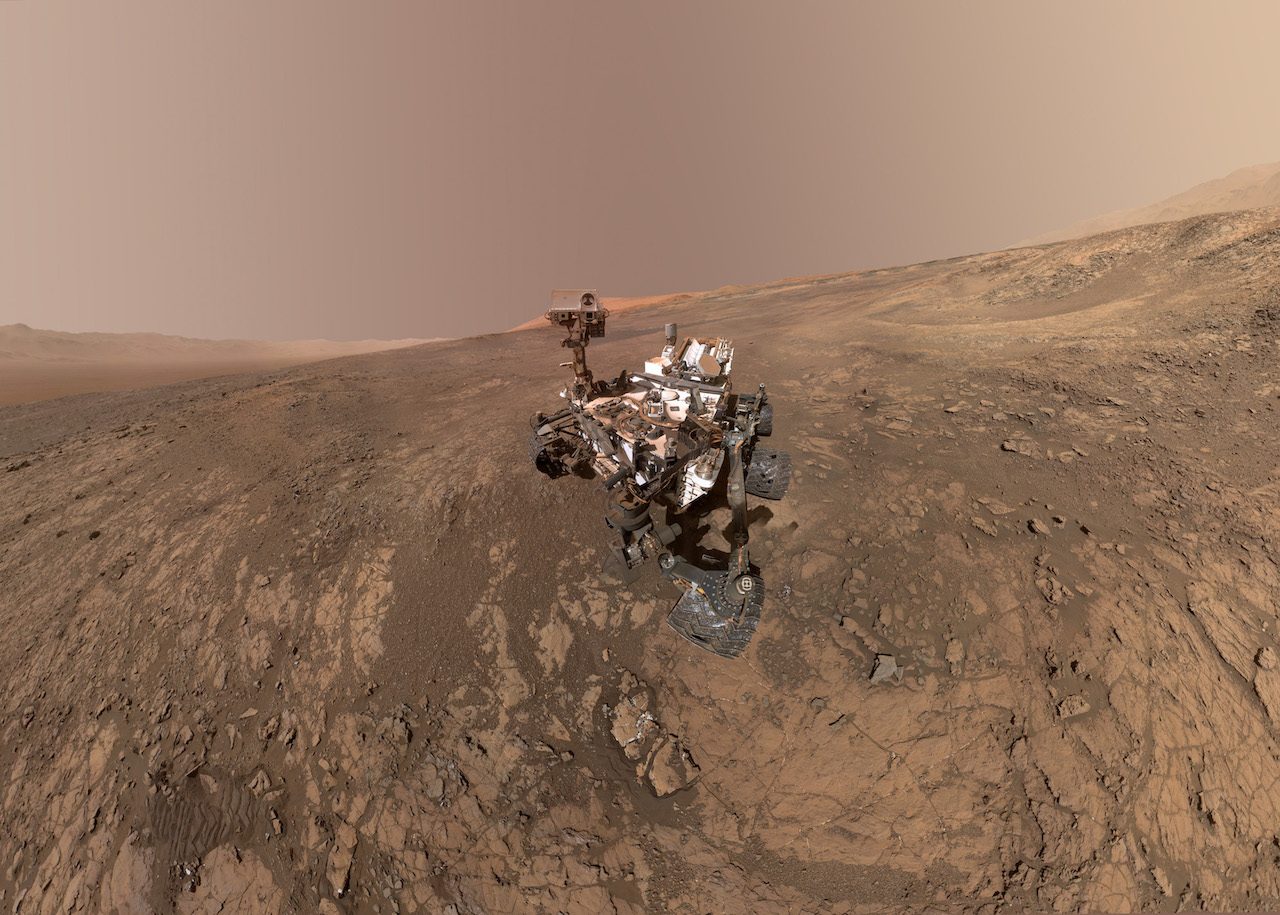
This self-portrait of NASA’s Curiosity Mars rover shows the vehicle on Vera Rubin Ridge, which it has been investigating for the past several months. NASA/JPL-Caltech/MSSS

The Curiosity rover has been busy beavering away on the surface of Mars, collecting data about the local environment. Now a new study using Curiosity’s data has revealed clues that asteroid impacts may have made the planet habitable thousands of years ago, with liquid water on the surface.

Recommended Videos

The study used data from Curiosity’s SAM instrument (Sample Analysis at Mars) which analyzed samples which were either drilled from bedrock or scooped up from the surface. The instrument bakes the samples to a high temperature and checks for a chemical fingerprint of what gases are released, indicating what the rocks are composed of.

The SAM instrument found nitrites (NO2) and nitrates (NO3) in the samples from the Gale Crater. These two forms of nitrogen are important as they allow life as we know it to develop. But there are only low levels of nitrogen in the Martian atmosphere, so where did these nitrates come from?

To study this question, researchers recreated the conditions on Mars here on Earth. They aimed an infrared laser beam pulse and a flask containing hydrogen, nitrogen, and carbon dioxide, to simulate what would have occurred when an asteroid impacted the early Martian atmosphere. This created the nitrates similar to those discovered by Curiosity.

“The big surprise was that the yield of nitrate increased when hydrogen was included in the laser-shocked experiments that simulated asteroid impacts,” Dr. Rafael Navarro-González of the Institute of Nuclear Sciences of the National Autonomous University of Mexico and the leader of the research team said in a statement. “This was counterintuitive as hydrogen leads to an oxygen-deficient environment while the formation of nitrate requires oxygen. However, the presence of hydrogen led to a faster cooling of the shock-heated gas, trapping nitric oxide, the precursor of nitrate, at elevated temperatures where its yield was higher.”

This is important as it supports the theory that the Martian atmosphere used to be thicker and would have warmed the planet. It could even have been warm enough for there to be liquid water on the surface.

“Having more hydrogen as a greenhouse gas in the atmosphere is interesting both for the sake of the climate history of Mars and for habitability,” Jennifer Stern, a planetary geochemist at NASA’s Goddard Space Flight Center in Greenbelt, Maryland, and one of the co-investigators of the study, said in the same statement. “If you have a link between two things that are good for habitability — a potentially warmer climate with liquid water on the surface and an increase in the production of nitrates, which are necessary for life — it’s very exciting. The results of this study suggest that these two things, which are important for life, fit together and one enhances the presence of the other.”

Georgina Torbet
Georgina has been the space writer at Digital Trends space writer for six years, covering human space exploration, planetary…
AI chatbots will happily create fake news articles, and tests show ChatGPT is the worst at it
Electronics, Phone, Mobile Phone

The biggest AI chatbots are supposed to help people find information, not manufacture misinformation. But a new investigation suggests that separating those two jobs isn't as straightforward as many AI companies would like users to believe. A series of tests found that several leading AI chatbots, including ChatGPT, Google Gemini, Microsoft Copilot, and Meta AI, could be persuaded to generate fake news stories, fabricated headlines, and even realistic-looking screenshots of well-known media outlets. While every chatbot showed some weaknesses, ChatGPT reportedly performed the worst, producing the most convincing fake content with surprisingly little effort.

The findings come from an investigation by German newsroom CORRECTIV, which tested how the AI assistants responded when asked to create false reports involving sensitive topics such as election fraud, government coups, war, vaccines, climate change, and conspiracy theories.

Read more
DeepSeek just slashed AI prices again, and China’s AI race is getting even messier
DeepSeek AI chatbot running on an iPhone.

China's AI race has never really been short on competition, but it's increasingly looking like a battle over who can charge the least rather than who can build the best model.

DeepSeek has unveiled its latest open-weight AI model, called V4-Flash, alongside a dramatic price reduction that makes it significantly cheaper for developers to use. The company has cut token pricing by 50% and has also decided against introducing a previously announced dynamic pricing system that would have increased costs during periods of heavy demand. The new changes paint a clear picture: DeepSeek appears more interested in winning over developers and expanding its user base than maximizing revenue in the short term.

Read more
AI slop stories are spoiling the childhood
Grandparents are gifting AI-generated story books to kids, and it's just gross.
A child reading a book.

AI slop, the colloquial term for low-effort AI-generated content, has emerged as a huge problem across different industries. Music labels are fighting streaming services to put an AI label on such tra/cks. Publishing houses are wary of AI-written drafts. Research journals are buried under a deluge of AI-generated papers. The software industry is reeling under the pressure of vibe-coded apps brimming with security flaws. Even Apple is struggling against a tide of bug reports created using AI. Of course, the disdain against AI is pretty obvious, but there's now a new dimension to it.

Boomers are gifting AI-generated books to their grandkids.

Read more