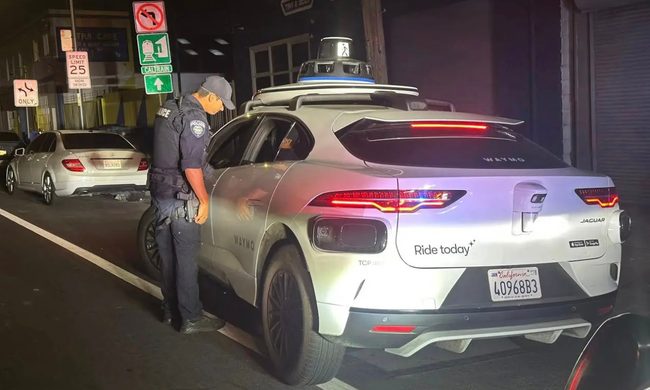
Waymo wants a future without steering wheels. The unit of Google parent Alphabet doesn’t believe its self-driving cars need them, and it just asked the National Highway Traffic Safety Administration (NHTSA) to “promptly” remove requirements for steering wheels, as well as brake pedals, reports Reuters.
Companies must currently meet 75 safety requirements for self-driving cars, but many of them were written under the assumption that a human driver will still be at the controls, according to Reuters. It’s another important dimension of the push to take self-driving cars mainstream. As the technology develops, regulations will have to evolve with it. Waymo wants to speed up that process.
“NHTSA should move promptly to remove barriers while ensuring safety,” Waymo said in a letter submitted in late August as part of a public comment period on new rules for autonomous cars. The letter also said the NHTSA should prioritize changes to rules that assume a human being is behind the wheel and allow for alternative setups. That will allow the “timely deployment” of vehicles with no manual controls, the letter said.
Waymo has been eager to ditch manual controls for some time. While it currently uses Chrysler Pacifica Hybrid minivans and Jaguar I-Pace crossovers, which retain their factory-installed steering wheels and pedals, Waymo previously used a purpose-built electric car called the Firefly. When the vehicle was unveiled, it was capable of operating without manual controls, Waymo said, although a steering wheel and pedals were added to satisfy regulations.
The NHTSA does not plan to write new rules on seating positions, which will involve changes to crashworthiness standards, until March 2020, according to Reuters. Comments filed by automakers indicate it could take the NHTSA until at least 2025 to rewrite current rules to accommodate self-driving cars. The agency is also unsure of how to test for safety, Reuters reports. The NHTSA is reportedly considering both simulations and putting external remote controls on cars.
Waymo isn’t the only company pushing for rule changes. In 2018, General Motors published a photo of a car interior with no steering wheel or pedals, indicating this was the goal of its self-driving car program. Prior to that, in January 2017, GM sought a rules exception from the NHTSA to test cars without steering wheels, according to Reuters. GM-owned Cruise recently announced that is pushing back the launch of a commercial ridesharing service using self-driving cars.
Getting rid of steering wheels and pedals would give engineers and designers more freedom. Many recent concept cars have featured living-room-like interiors, with inward-facing seats that allow occupants to more easily converse. Toyota’s e-Palette concept is a box on wheels that takes advantage of the flexibility of not having permanent manual controls. The chief engineer for GM’s self-driving car program recently told Digital Trends that removing steering wheels could help engineers better address there needs of disabled people.