  1. Home
  2. Cars
  3. News

Electric Mini conquers range anxiety with drive from Munich to Frankfurt

Add as a preferred source on Google
Image used with permission by copyright holder

Most manufacturers bring new cars to an auto show on the back of a truck, but Mini wanted to make a point about range anxiety with its first all-electric model. So it drove one from Munich to the 2019 Frankfurt Motor Show. The 2020 Mini Cooper SE made the 400-kilometer (248-mile) trip with just one stop to charge.

Munich was chosen as the starting point because it’s the hometown of Mini parent BMW. It was also a reasonable distance from Frankfurt. Mini expects the Cooper SE to achieve a range of 235 kilometers to 270 kilometers (146 miles to 167 miles) on the European testing cycle. The car is equipped for DC fast charging, so enough range could be recovered from one short charging stop to complete the trip. Note that the car will likely get lower range ratings on the tougher United States testing cycle.

Recommended Videos

Elena Eder, project manager for the Cooper SE, drove the car from Munich to Frankfurt. She stopped at a DC fast-charging station along the way and got an 80-percent charge in 35 minutes, according to Mini. The only concession Eder needed to make to preserve range was to keep under the Cooper SE’s top speed of 150 kph (93 mph), according to Mini. Outside of Germany, with its unrestricted autobahns, it’s unlikely that any Mini Cooper SE driver will need to go that fast. Upon arrival in Frankfurt, the car was driven directly onto Mini’s stand, where it will be displayed during the auto show.

The electric Mini’s run from Munich to Frankfurt shows what’s possible even with a relatively low-range electric car. Cars like the Chevrolet Bolt EV and Nissan Leaf already offer more than 200 miles of range for under $40,000. As demonstrated by Mini, DC fast charging allows drivers to stretch that range and make longer trips. But the public’s unfamiliarity with electric cars means range anxiety will likely continue to restrict sales.

Speaking of sales, the 2020 Mini Cooper SE is expected to hit U.S. showrooms in 2020. The Mini will join the BMW i3 as the second all-electric model in the German automaker’s lineup. BMW plans to follow that up with an electric version of its X3 SUV, as well as a flagship electric model dubbed iNext.

Stephen Edelstein
Stephen is a freelance automotive journalist covering all things cars. He likes anything with four wheels, from classic cars…
This sleek Chinese EV pairs supercar styling with three AI brains
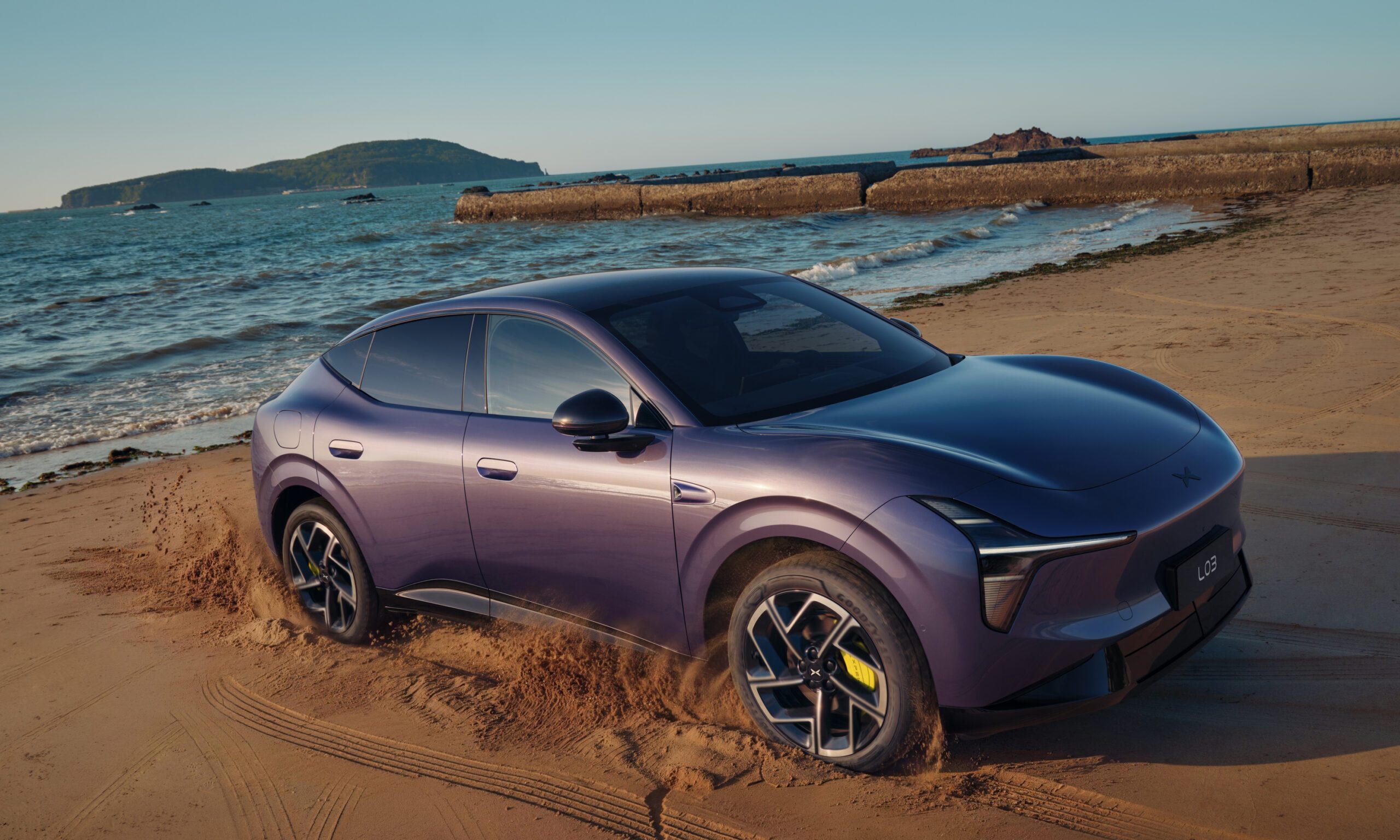
The Xpeng L03 is an AI supercomputer disguised as a stylish family SUV
Xpeng L03

Xpeng’s latest electric vehicle carries enough processing power to make the term "smart car" actually sound more realistic than it actually is. The new Xpeng L03 debuted simultaneously in Europe and China on July 16, with the company presenting it across 65 markets. Available as a fully electric vehicle and an L03 Power X range-extender, the coupe-SUV is Xpeng’s most internationally focused model so far. Market-specific prices and sales dates remain unannounced.

Three AI chips and Google Maps built right in

Read more
A new sodium battery posts wild four-minute charging numbers, but don’t expect it in an EV yet
The breakthrough could improve fast charging and battery life, but the study hasn’t demonstrated those results in a production-sized pack
EV Charger

A new sodium-metal battery has posted a charging number that makes today’s EVs look painfully slow. In laboratory testing, the cell operated at a 15C rate, equivalent to completing a charge or discharge in roughly four minutes.

That doesn’t mean researchers plugged in an electric car and watched it fill up before the driver finished buying coffee. The result came from a small experimental cell using a new quasi-solid electrolyte, while the larger pouch-cell prototype delivered far less dramatic performance.

Read more
The Apple Car may be dead, but it became the foundation of Apple Intelligence
A decade of work on a canceled car project reportedly laid the groundwork for Apple Intelligence.
Apple Intelligence in Apple Car

The Apple Car may have never left the garage, but it apparently gave birth to Apple's AI ambitions. According to Bloomberg's Mark Gurman, Apple's canceled autonomous vehicle project, one that consumed more than a decade of work and over $10 billion before being scrapped in 2024, ended up laying the technological foundation for Apple Intelligence. In a rather ironic twist, one of Apple's most expensive failures may also become one of its most important long-term investments.

The Apple Car forced Apple to think like an AI company

Read more