Deepfakes are moving past videos — Descript’s new podcast editor has the ability to deepfake your own voice to fix errors you made during recording.
Descript Podcast Studio launched Wednesday with a feature called “Overdub,” which allows you to replace recorded words and phrases with synthesized speech that blends in with the other audio. The feature is meant to fill in the blanks of any mistakes or awkward pauses during the recording of a podcast. Right now, the Overdub feature is only available in a closed beta.
The app cautions users, however, that the feature is not meant to create abusive deepfakes, instead it’s meant to help podcasters with the editing process. They can simply edit text to edit their podcast — and dub over any mistakes.
“Rest assured, you can only use Overdub on your own voice. We built this feature to save you the tedium of re-recording/splicing time every time you make an editorial change, not as a way make deep fakes,” wrote Andrew Mason, the CEO of Descript, in a blog post announcing the feature.
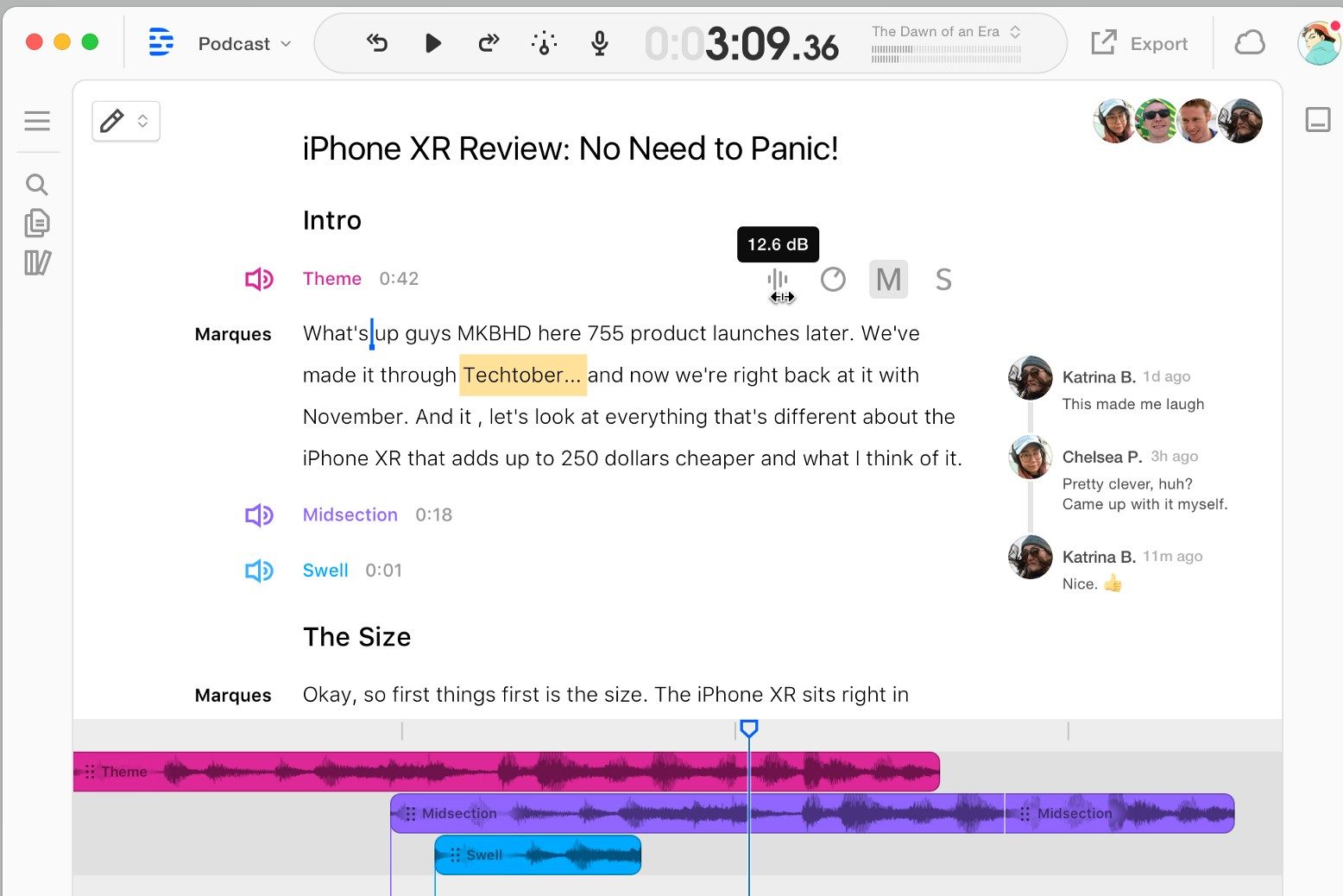
Descript essentially allows you to edit audio by editing text, with an interface that looks just like Microsoft Word or Google Docs. Along with podcast editing, Descript offers a transcription service for 15 cents a minute, or 7 cents a minute for users who are a part of its $10 monthly plan.
Lyrebird, Descript’s AI research division, created the Overdub feature. Both Lyebird and Descript created an ethics page about the “deepfake” technology and how they created it.
“We believe you should own and control the use of your digital voice. Descript uses a process for training speech models that depends on real-time verbal feedback, ensuring that individuals can only create a text-to-speech model of their own voice. Once created, the user is the owner of their voice and has the sole authority to decide when and how it is used,” Descript’s ethics statement reads.
This new technology is groundbreaking for sure, but it’s also a good thing that Descript and Lyebrid have gone to lengths to ensure the AI technology is used ethically because as we’ve seen in the past, deepfakes aren’t always used for good.
There’s already been issues with fake deepfakes purporting to show famous people saying something they never actually said, including one of Facebook CEO Mark Zuckerberg proclaiming his power over “millions of people’s stolen data.” Experts say that the technology is advancing quickly and deepfakes will only get more convincing (and easier to create) over the next few years.
“While we cannot predict what the future holds for the media, we do believe it will continue to be important for each of us to be critical consumers of everything we see, hear, and read,” Descript wrote.