  1. Home
  2. Gaming
  3. News

Google announces game studio dedicated to original titles for Stadia

Add as a preferred source on Google

Earlier this year, Google announced that it would form its own gaming division, with the intent of producing original and exclusive content for its forthcoming cloud-based gaming service, Google Stadia. Today, the tech giant has announced that its first gaming studio has opened in Montreal, Canada.

According to a recent Google recent blog post, Stadia Games and Entertainment will be led by industry veteran Jade Raymon, who reiterated in the blog post that the studio’s mission is to produce “exclusive, original content across a diverse portfolio of games.”

Recommended Videos

This will allow Stadia to receive a steady flow of first-party content not available anywhere else in addition to its supply of second and third-party titles such as Assassin’s Creed OdysseyBorderlands 3, Cyberpunk 2077, and Destiny 2.

With Stadia competing with gaming systems such as the Nintendo Switch and with the next generation of Xbox and PlayStation consoles slated to launch a year from now, it is crucial for Stadia to start developing its own original IPs to incentivize players to hop on Stadia.

“It’s very important for first-party games, in my opinion, to be games that wouldn’t be possible on any other platform,” Raymond stated. “I think that’s what’s really exciting and why we’re building out the first-party teams.”
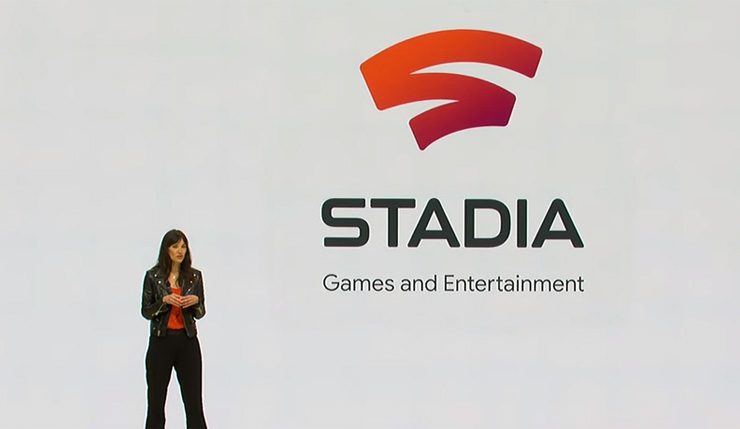
Image used with permission by copyright holder

There is no official word yet on its first batch of first-party games launching on Stadia, which is slated to launch officially on November 19. Although it has been reported that even pre-ordering, the service does not guarantee you can play Stadia on its official launch day. Raymond has yet to comment on what genre(s) the studio will be focusing on, given Google’s extensive background in various tech industry beats such as artificial intelligence.

With Stadia launching in three weeks, we can strongly infer that second- and third-party titles will primarily support Google Stadia for the first few months until the Canadian-based studio can hire enough people to help build out Stadia’s original content portfolio.

In addition to announcing the studio’s office location, the blog post also served as a job posting of sorts for game developers looking for work and interested in joining the ambitious Montreal-based developer, citing what the studio aims to do and that it has several positions to fill.

“We believe in being more: More ambitious. More inclusive. More accessible. More immersive. More engaging. We’re bringing that mentality to Stadia Games and Entertainment, and now with our first studio, we’re looking for the best developers on the planet to join us,” the blog post said.

Taylor Lyles
Former Digital Trends Contributor
Based out of Baltimore, Maryland, Taylor is a contributing writer for Digital Trends covering the latest news in the computer…
Razer made a Cinnamoroll headset, and it is aggressively adorable
Razer launches a Cinnamoroll Edition Kraken Kitty V2 BT headset
Razer Kraken Kitty V2 BT Cinnamonroll themed gaming headphones

Razer’s Sanrio collaboration has already produced a full desk setup, and the final drop is now here. The company has launched the Razer Kraken Kitty V2 BT Cinnamoroll Edition, a wireless headset themed around one of Sanrio’s most recognizable characters.

Cinnamoroll is a white puppy from Sanrio, the Japanese company behind Hello Kitty and several other globally recognized character brands. He is known for his long floppy ears, blue eyes, curly tail, and soft cloud-like look. As per the Sanrio lore, he was born high above the clouds and can fly by flapping his big ears. Razer has leaned heavily into that identity for this headset, replacing the usual kitty look with Cinnamoroll’s floppy ears and a sky-blue color scheme.

Read more
This AMD mini PC beats Valve’s Steam Machine, but it costs a lot more
SteamOS on this AMD mini PC delivers higher frame rates than Valve's hardware
AMD Ryzen AI Max+ 395 Strix Halo

Valve's decision to officially support SteamOS 3.8 on standard gaming PCs has opened the door to an entirely new class of Steam Machines - without requiring gamers to buy Valve's own hardware. Now, a new benchmark from YouTuber ETA Prime suggests that a high-end AMD-powered mini PC can outperform Valve's upcoming Steam Machine by a comfortable margin. The only problem? It also costs several times more.

The testing highlights both the flexibility of SteamOS and the growing appeal of AMD's latest integrated graphics, but it also raises an important question: how much extra performance is actually worth paying for?

Read more
Dell’s new Alienware monitors are brighter, sharper, and cost less than expected for OLED upgrade
This 34-inch QD-OLED curved gaming monitor is much cheaper than expected
Alienware OLED gaming monitor on a desk

OLED has been one of the clearest upgrades gaming monitors have received in years, but the problem has always been the price. Cutting-edge OLED gaming monitors have mostly lived in enthusiast territory, especially if you wanted a panel larger than 30 inches. Dell’s Alienware is now making that jump a little easier with its new 34-inch ultrawide QD-OLED gaming monitor, the AW3426DW.

The monitor was first shown at CES 2026 and is now available as part of Alienware’s 30th-anniversary lineup, alongside two more affordable VA models. At $799.99, the AW3426DW is still expensive, but for a 34-inch ultrawide with a 5-stack Penta Tandem QD-OLED panel, the price is lower than expected.

Read more