  1. Home
  2. Emerging Tech
  3. News

ISS astronauts await arrival of cookie oven to bake out-of-this-world snacks

Add as a preferred source on Google

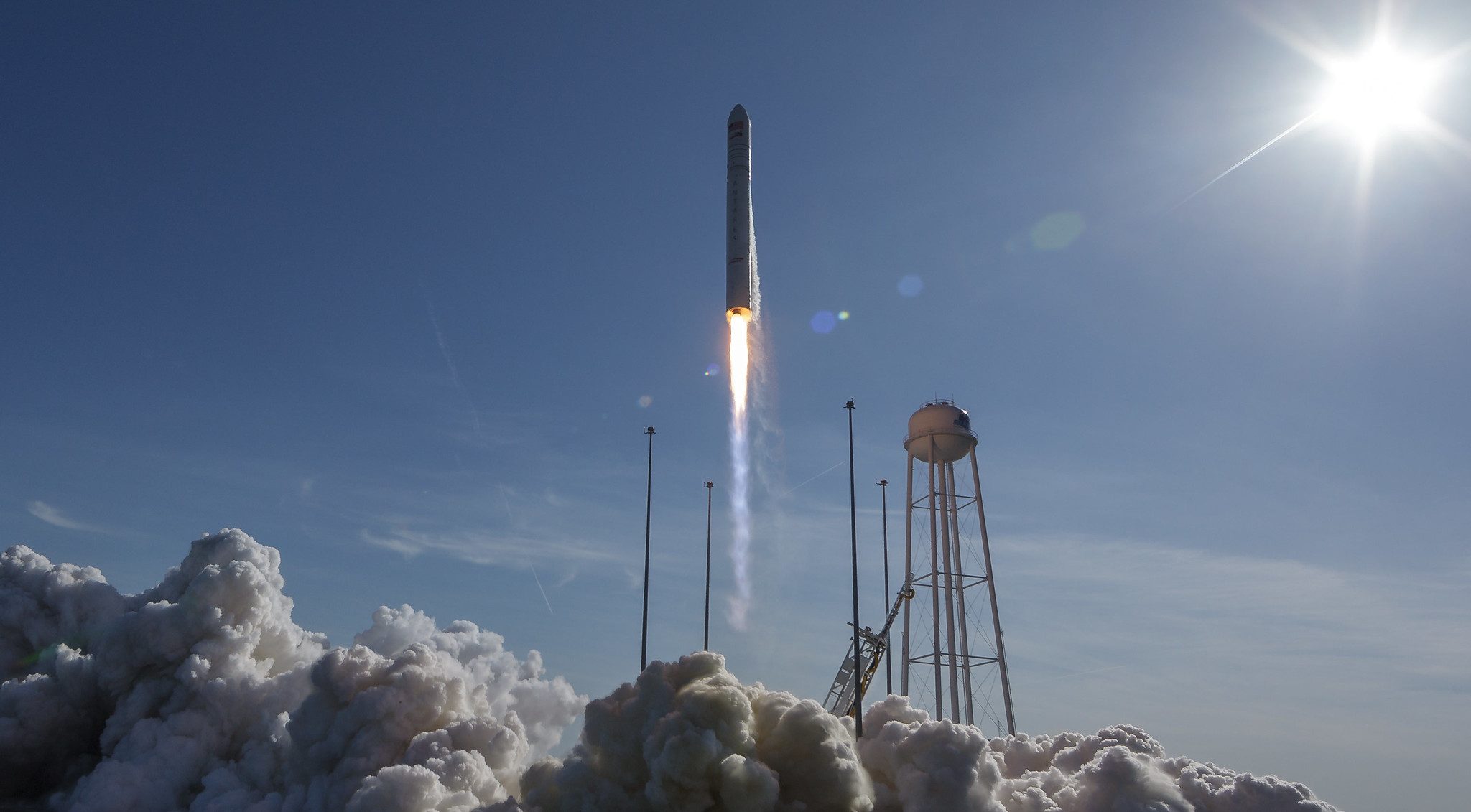
The Northrop Grumman Antares rocket, with Cygnus resupply spacecraft onboard, launches from Pad-0A, Wednesday, April 17, 2019 at NASA’s Wallops Flight Facility in Virginia. NASA/Bill Ingalls

It has been a busy week on the International Space Station (ISS). First, an unmanned Japanese craft called Kounotori departed from the station having delivered its cargo of six new lithium-ion batteries to replace older batteries as part of the station’s power system upgrade. Now, a craft from commercial cargo provider Northrop Grumman has launched to carry even more supplies including 8,200 pounds of research equipment and hardware to the station.
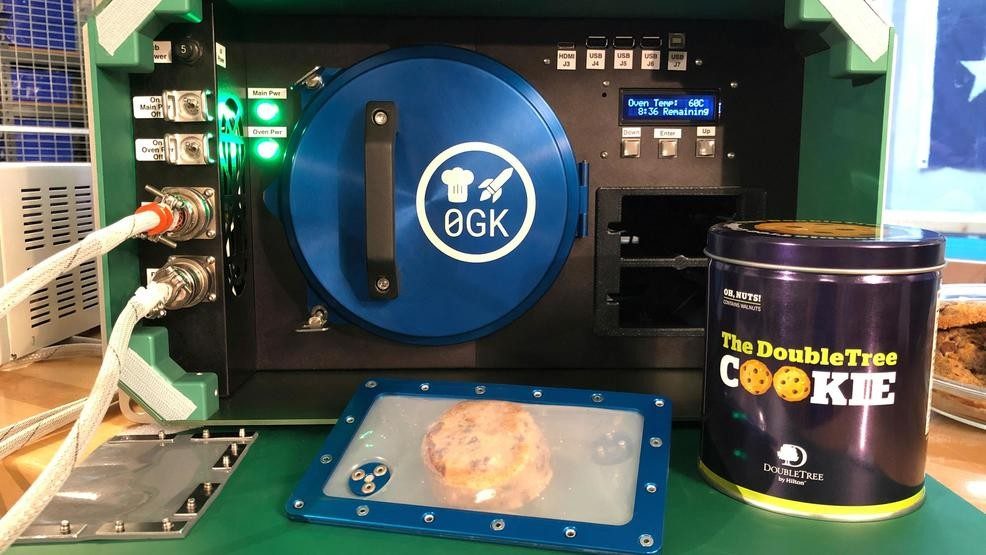
Zero G Kitchen Space Oven Hilton

Included aboard Northrop Grumman’s Cygnus capsule is a very special delivery that’s surely hotly awaited by the ISS astronauts. It’s not an instrument for ground-breaking scientific research or a crucial piece of engineering equipment, but rather something much more down to earth: A cookie oven. The Zero G Oven is designed to turn cookie mix into delicious, freshly baked cookies and has insulating and venting mechanisms to allow safe operation with the controlled environment of the ISS.

Recommended Videos

As convection heating is not possible in microgravity, the oven uses electric heating elements similar to those found in a standard toaster. The cookies come in a silicone pouch which allows steam to escape during the baking process but which keeps contained any crumbs which could potentially escape and damage equipment onboard the station. In the future, the oven could be used for grilling, pan cooking, and griddling of other food types as well. In addition to the importance of plentiful nutrition and calories for the astronauts, food items like cookies or pizza are a much-anticipated treat for the crew.

The ISS astronauts have found a way to keep themselves amused while waiting for the cargo ships to depart and arrive though, playing a game of zero-gravity baseball. NASA astronauts Christina Koch, Jessica Meir, and Andrew Morgan played a space-borne version of the great American pastime last week and gave a shoutout to Houston, Texas, home of the astronaut corps:

Ever wonder what it would be like playing baseball in space?

Take a look at our friends from @Space_Station enjoying the game we love! pic.twitter.com/eEsy9LvWAb

— FOX Sports: MLB (@MLBONFOX) October 26, 2019

The Cygnus craft is scheduled to arrive at the space station on Monday, November 4 at around 1:10 a.m. PT. You can tune in to NASA TV to watch the craft being captured by the ISS’s robotic arm and then see coverage of the installation operation.

Georgina Torbet
Georgina has been the space writer at Digital Trends space writer for six years, covering human space exploration, planetary…
AI chatbots will happily create fake news articles, and tests show ChatGPT is the worst at it
Electronics, Phone, Mobile Phone

The biggest AI chatbots are supposed to help people find information, not manufacture misinformation. But a new investigation suggests that separating those two jobs isn't as straightforward as many AI companies would like users to believe. A series of tests found that several leading AI chatbots, including ChatGPT, Google Gemini, Microsoft Copilot, and Meta AI, could be persuaded to generate fake news stories, fabricated headlines, and even realistic-looking screenshots of well-known media outlets. While every chatbot showed some weaknesses, ChatGPT reportedly performed the worst, producing the most convincing fake content with surprisingly little effort.

The findings come from an investigation by German newsroom CORRECTIV, which tested how the AI assistants responded when asked to create false reports involving sensitive topics such as election fraud, government coups, war, vaccines, climate change, and conspiracy theories.

Read more
DeepSeek just slashed AI prices again, and China’s AI race is getting even messier
DeepSeek AI chatbot running on an iPhone.

China's AI race has never really been short on competition, but it's increasingly looking like a battle over who can charge the least rather than who can build the best model.

DeepSeek has unveiled its latest open-weight AI model, called V4-Flash, alongside a dramatic price reduction that makes it significantly cheaper for developers to use. The company has cut token pricing by 50% and has also decided against introducing a previously announced dynamic pricing system that would have increased costs during periods of heavy demand. The new changes paint a clear picture: DeepSeek appears more interested in winning over developers and expanding its user base than maximizing revenue in the short term.

Read more
AI slop stories are spoiling the childhood
Grandparents are gifting AI-generated story books to kids, and it's just gross.
A child reading a book.

AI slop, the colloquial term for low-effort AI-generated content, has emerged as a huge problem across different industries. Music labels are fighting streaming services to put an AI label on such tra/cks. Publishing houses are wary of AI-written drafts. Research journals are buried under a deluge of AI-generated papers. The software industry is reeling under the pressure of vibe-coded apps brimming with security flaws. Even Apple is struggling against a tide of bug reports created using AI. Of course, the disdain against AI is pretty obvious, but there's now a new dimension to it.

Boomers are gifting AI-generated books to their grandkids.

Read more