If there’s one meme that can sum up Grounded — the new Honey, I Shrunk the Kids-style game topping the Twitch charts right now — it’s Buzz Lightyear simply saying “Spider. Spiders everywhere.” The spaceman couldn’t be more true. In fact, he came close to all this anytime he fell out of Andy’s bedroom window. In style, of course.
Like most survival games out there, it’s you against nature; only it’s less about being eaten by a velociraptor and more fending off the insects that occasionally decide to infiltrate your bathroom. When you’re smaller than a blade of grass, anything from a common worker ant to the humble ladybug can, and probably will, knock you into next week. And as early access games go, Obsidian’s newest adventure leaves you with nothing but the clothes on your back to get you by. Here’s how to survive your first night in Grounded.
Further Reading
- Ranking the best and worst armor sets you can own in Grounded
- How to unlock tier two tool upgrades in Grounded
- All the critters you’ll face in Grounded and how best to beat them up
Back to basics
Analyze, analyze, analyze
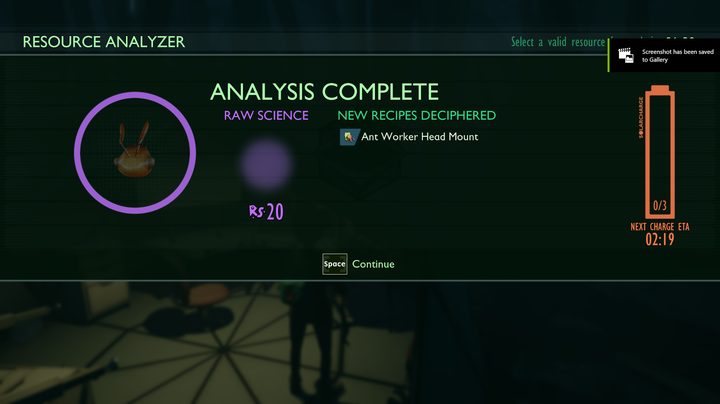
One of the first buildings you’ll come across is a Field Station. It’s used to analyze items in your inventory to unlock the crafting recipes they’re used in. You can only analyze three items to start, though, with charges then building up over time, so choose wisely.
To start, you should analyze a Pebblet, Plant Fiber, and Sap. That’ll unlock the Pebblet Axe needed to get very important materials, the Workbench for more advanced stuff, and the Woven Fibre, again, needed to make the axe. After that, you’ll probably want to research the Sprig next. Anything after that is up to you as you explore the grassy reaches of the garden. Just don’t take too long between trips. There’s nothing worse than having an inventory of items to analyze and only three charges left to use.
Start with the axe (and a hammer)
You can’t get anything done in Grounded before figuring out how to make the axe or the hammer. Both tools are necessary to gather the materials needed to craft just about anything of worth, but you’ll probably want to start with the axe to save on analysis charges.
To make either of these, you’re going to need to grab some stuff off the ground. Sprigs are, well … sprigs. They’re about half the size of you, have stems, and can be plucked with your bare hands. Anything that sprouts up that isn’t a clover is usually a sprig.
Recipes:
- Pebblet Axe: 3x Sprig, 2x Pebblet, 1x Woven Fiber
- Pebblet Hammer: 3x Sprig, 4x Pebblet, 1x Woven Fiber (2x 3 Plant Fiber)
Pebblets are the rocks you see just about everything. You can gather batches of them once you craft your first hammer, but you should have no trouble finding enough pebblets lying around for smaller tool and item crafts.
Woven Fiber is the only prerequisite craft on the list. To get this, you’ll want to analyze Plant Fiber at the Field Station as outlined above. Plant Fibers are the small leafy or root growths barely protruding from the earth. They’re everywhere, but they’re actually easy to miss if you’re sprinting about.
Stock up on the good stuff
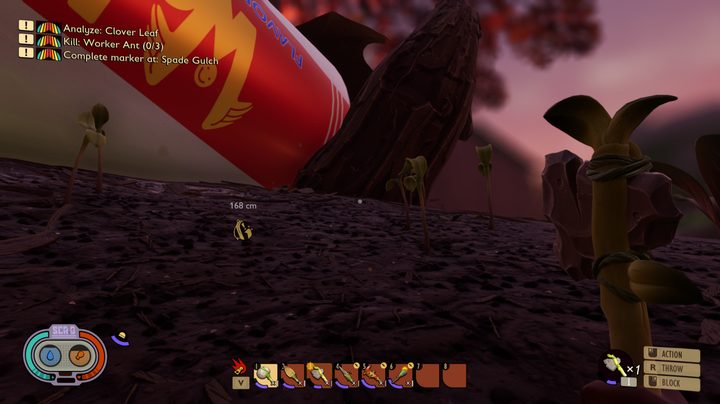
Materials like Sap, Plant Fiber, Sprig, Dry Grass Chunk, and Pebblets are all considered key materials. They’re used in loads of basic, ever-important crafts like tools, bandages, and the Roasting Spit you’ll need to cook the meat of critters you find on your travels.
It’s a good idea to grab a few stacks of these whenever you can. Storing some in a Basket by your base is a good habit to get into, but if you’re prone to traveling far from your base, you’ll want these on hand so you can quickly grab some grub or set up somewhere to sleep for the night.
Build a base by a landmark straight away
While you won’t need to go to the trouble of stacking grass planks for walls early on, setting up simple utilities like the Lean-To, Workbench, and Roasting Spit can take the stress away from attempting to survive your first night in the wild. They won’t protect you from the spiders stalking the garden at night, but you can sleep your way to the next morning and cook up some breakfast.
To bypass the need for actual shelter, setting up base by the Mysterious Machine is a good starting point. You can’t build inside it, but place your workbench and Lean-To just outside its two little entrance holes and you’ve got yourself a spacious shanty to sprint into when something too big to handle comes crawling over. You can actually get in and out through the top, too. Any landmark (like a can or box) will do, but the Mysterious Machine is a great first place to call home.
Once you’re all set up, remember to interact with your Lean-To. You might not be able to sleep right there and then, but you use the Lean-To to set your spawn point. This way you’re sent straight back to familiar ground each and every time you kick the bucket.
Cook only what you need
Food goes off fast. Like, really fast. Hunger does, too, but with how much you can replenish by chowing down on a single piece of meat, you’re unlikely to need the rest of your cookout before it spoils.
Raw meat goes bad, too, but unless you’re dishing it out to nearby friends as rations for your next hunt, cooking stacks of food in one go is likely a waste of time.
Grounded combat tips
Pick on something your own size
With a good selection of bug friends wandering the yard, it’s easy to get ahead of yourself and pick a fight with anything that crosses your path. After all, you don’t know how tough a critter is until they decide to bite back — and they will.
The general rule here is, the bigger are they, the harder they are. Small creatures like the gnat and aphid aren’t a threat, but something more evenly matched in stature — like the ant — can hunt you if you’re not careful. Ladybugs may seem docile, but they can take a good deal of damage and dish out even more.
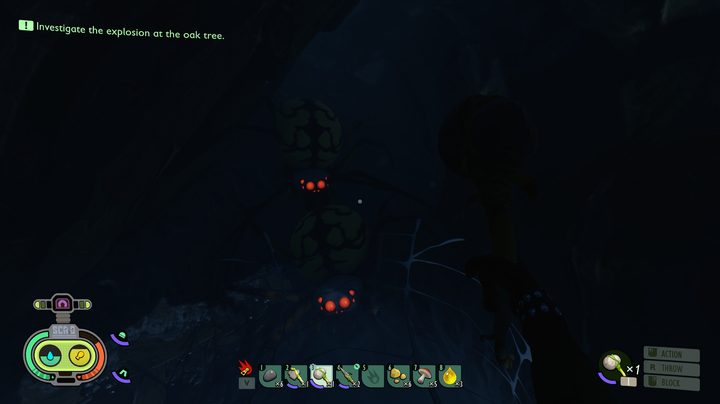
As for spiders … forget about it. They’ll chase you for miles and rip you apart before you get a chance to fight back.
Weapon-switching can make all the difference
It’s easy to get hurt out in the wild. Critters your size take quite a beating. Go too heavy on the offensive and you’ll take one too many blows and fall victim to your prey.
If you really want to avoid having to block between every other hit, think about using something like the hammer to stun your targets. Every weapon has varying degrees of the stun stat, but whacking an ant with a hammer is a good way to practice early on.
One swing from the hammer is all it takes to stun an ant long enough to beat down with a more powerful weapon. Just practice your weapon cycling and you should be able to take these things on without much trouble.
Make some armor before taking on bigger targets
With the hammer technique, beating up ants shouldn’t be too difficult. But if you’re after larger prey — like the ladybug or whatever that flat cicada-looking thing is — you’re going to want to craft some armor at your Workbench.
You can craft different types of armor with various benefits using materials from things like ants, grubs, and mites early on. You just need to analyze them first.
If you’re not confident with your combat skills, lawn mites and grubs should be your main targets. Defense stats are the same as the ant gear, but you’ll run far less risk crafting them. With something covering your legs, chest, and head, you should be poised to take on slightly larger targets and work your way up from there.
Ways to lessen the stress
Lost items aren’t lost forever
For those of us who grew up with games like Runescape, oftentimes losing equipment on death meant they were either gone for good or had a despawn timer slapped on them, creating a rush to retrieve them before they were truly lost.
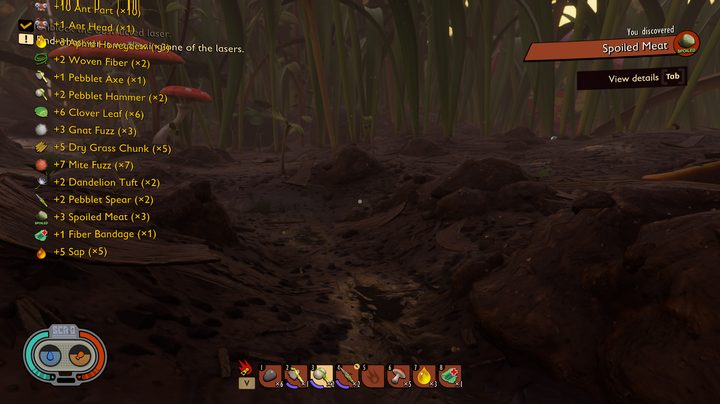
Grounded doesn’t really tell how it’s going to play out one way or the other, but the fact of the matter is that your lost items are exactly where you left them. Forever. A backpack icon on-screen will show you exactly where to go to retrieve your sack of goods. Die again, and you’ll see two. You should probably stop trying if you see three, but the good news is that whenever you decide you’re well and truly ready, your quest for revenge may eventually reward you with the goods you once thought were valuable.
You can’t starve to death
If the sound of depleting meters triggers you into damage control, we’re going to tell you to calm down right now. Resource management in Grounded is hard. Water is out to make you hungry, and food is out to poison you. It’s a vicious cycle if you’re panicking too much to worry about what you put into your body.
But the thing is, neither meter can outright kill you. Water doesn’t seem to do an awful lot, and failing to fill your belly means losing health over time. Both are going to run dry while you head to the kitchen to make a real-life sandwich, but unless a nosey gnat comes to finish the job, you won’t die from running on fumes. You’ll just be as close to death as possible. Don’t worry about it.