
On the surface, a steam-powered satellite sounds like something straight out of steampunk, the retro-futuristic twist on science fiction that adds a healthy dose of 19th-century steam-powered machinery to the usual sci-fi trappings.
In fact, it’s the serious suggestion of Howe Industries, a Scottsdale, Arizona-based company that develops space-based power systems, and has previously received grants from the likes of NASA and the Defense Advanced Research Projects Agency (DARPA). Its ThermaSat engine, which flash-boils distilled water into super-hot steam via a thermal condenser, could have a big impact on the CubeSats (a type of miniaturized satellite used for space research) of the future.
Troy Howe, founder and president of Howe Industries, described it as a “simple and safe propulsion system.” It could be particularly game-changing for CubeSats because, unlike big satellites, CubeSats don’t have the room to carry thrusters or enormous amounts of propellant on board, which is where this alternative propulsion system could prove useful. The proposed ThermaSat, weighing just 5.4lbs, would carry only a small amount of water, but expelling this in the form of steam would be enough to give it the means to maneuver when required — whether to avoid collisions, deorbit, or fly in formation with other CubeSats.
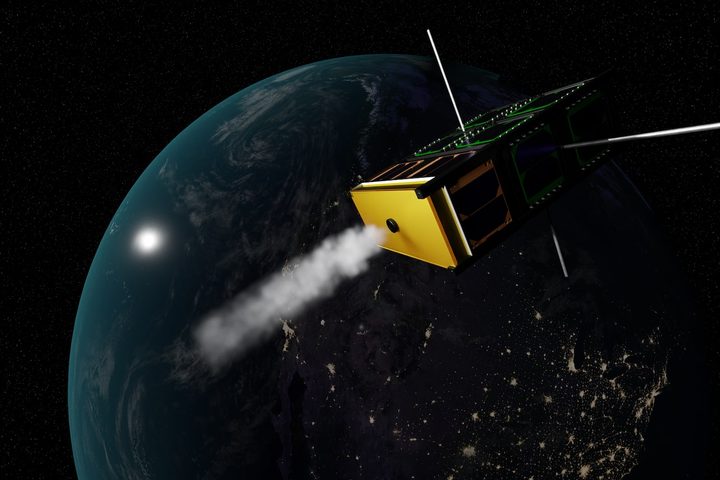
“Using water as propulsion is not necessarily a new idea, but the way we use it with such high performance and low power needs is,” Howe told Digital Trends. “Our concept uses an optical system which reflects the infrared portion of sunlight but absorbs the visible and ultraviolet wavelengths. We collect that heat from the sun in molten salts so we can heat the propellant later. As [the] absorber heats up, it tries to radiate away heat, but the same optical system which stopped the sun’s infrared light from passing also stops that radiated light. [It] ends up getting extremely hot, which allows for the high-performance operation with superheated steam. The end result is a propulsion system without pressurized tanks, without combustible fuel, and without big awkward solar panels.”
So far, Howe said that the team has carried out theoretical modeling to show that the systems works. This has helped it create a “pretty solid final design.” The team is now hoping to continue development on to the next phase of the project: Testing the system.
“So far, it looks like everything should work just as we expect, and we even have a bit of margin worked in, just in case,” he said. “We’ve also put in proposals for some alternative designs for really high-performance ThermaSat systems, smaller systems, and super-low-altitude systems. So it seems like there are all sorts of uses for this technology — and hopefully we can provide some good solutions for those people who need more space propulsion.”
Between steam power and wooden satellites, the future of satellites is certainly looking a bit different than the one we imagined.


