1. Home
  2. Computing
  3. Legacy Archives

Consumers Prefer Ads to Paying for Online News

Add as a preferred source on Google

Traditional print news media like magazines and newspapers have been struggling to adapt to the online world: as print advertising sales plummet and a growing number of newspapers scale back or close down entirely, there’s been growing momentum in the industry—spearheaded by News Corp’s Rupert Murdoch—to take online news content behind so-called “paywalls,” where only paid subscribers will be able to access content. Now, the Pew Research Center’s Project for Excellence in Journalism “State of the Media” report finds that while Americans like online news, few are willing to pay for it.

Image used with permission by copyright holder

The survey polled some 2,259 American adults at the end of 2009 and the beginning of 2010; according to the report, some 71 percent of Internet users—translating to 53 percent of all American adults—get news online. However, of those users, only 35 percent report having a “favorite” online news site, and of that 35 percent—who would seem to be the most likely customers for a paid-subscription model—only 19 percent said they would be willing to pay to visit their favorite online news site.

Recommended Videos

“Because so few online news consumers even have a favorite site,” the report noted, “this translates to only seven percent of all people who get news online having a favorite online news source that they say they would pay for.”

The report also found that 79 percent of online news consumers had never or only rarely clicked an online ad. According to the report, consumers don’t particularly mind the ads, but simply tune them out.

Currently the only major newspaper behind a paywall is New Corp’s Wall Street Journal, which has found some success putting its specialized business content behind a paywall and attracting subscribers. The New York Times has announced it plans to convert to a paywall model in 2011.

The report found that so-called “traditional media” still provides the bulk of original reporting. Many so-called “new media” outlets such as blogs mere link to original work from mainstream sources; the New York Times was the most linked-to traditional media outlet with 28.7 percent of all blog links; CNN followed with 18.9 percent and the BBC with 17.6 percent.

Geoff Duncan
Former Contributor
Geoff Duncan writes, programs, edits, plays music, and delights in making software misbehave. He's probably the only member…
Google’s new Magic Pointer Play Store listing reveals a Gemini shortcut built for Googlebooks
The unannounced app turns the cursor into a contextual AI tool for search, image creation, and shopping
Plant, Text, Business Card

Google has quietly published a new Play Store listing for Magic Pointer, an unannounced app built for Googlebooks. Updated on July 10, the app turns the cursor into a Gemini shortcut that can act on whatever a user selects on screen.

Magic Pointer can send an image to Lens, generate a related image, or surface a shopping action without forcing users to open a separate chatbot. Regular Android devices currently show as incompatible, so the listing offers an early preview rather than a broad release.

Read more
You can stop using AI, but this new report says you probably can’t escape it
A UK survey found that most people feel AI exposure is unavoidable, raising harder questions about consent, privacy, and whether opting out is still realistic
AI Chatbots

More people are trying to use less AI, but avoiding it altogether may already be impossible.

A survey of 2,055 UK adults found that 42% deliberately limit how much AI they use. Another 70% said avoiding AI exposure would be difficult or impossible, even when they actively wanted less of it.

Read more
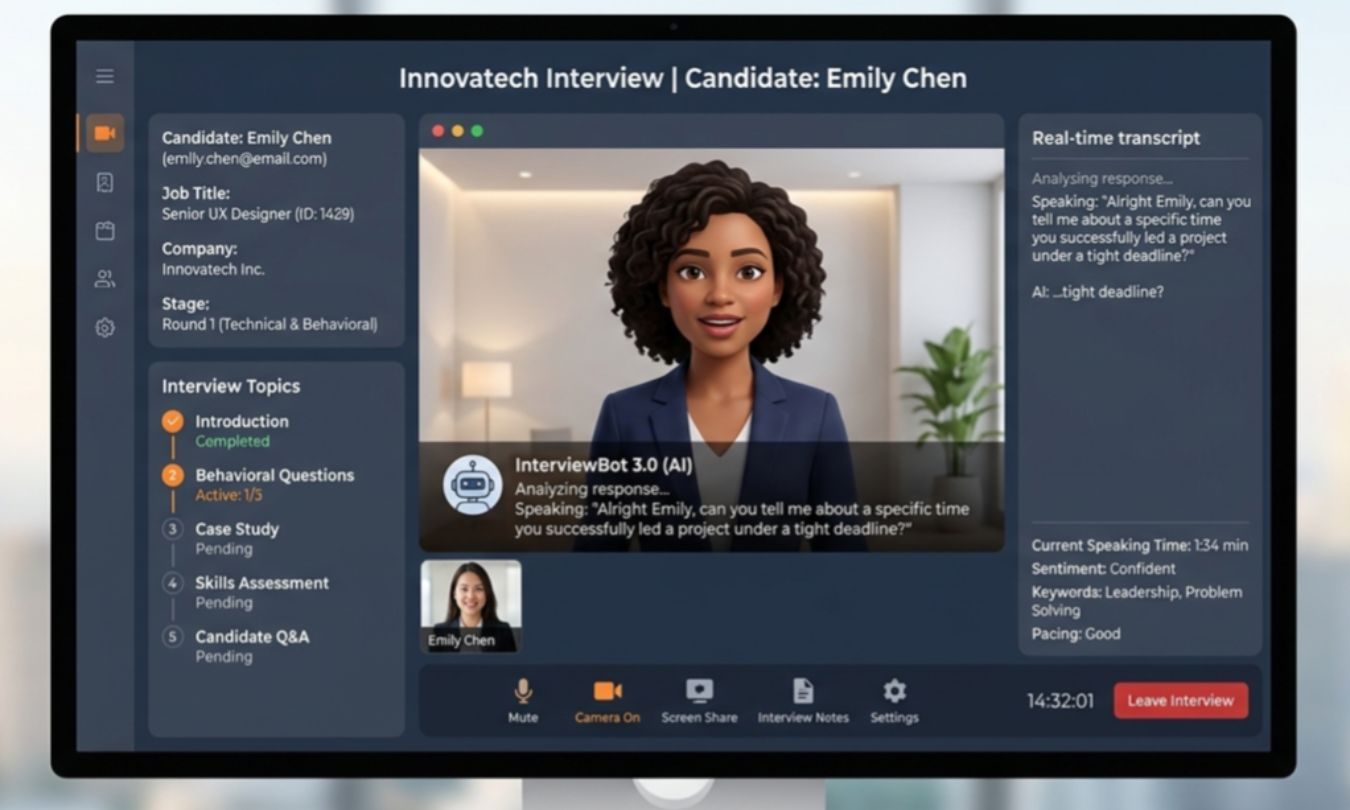
The face on an AI interviewer may matter as much as the decision it makes
Researchers found that race and gender matching changed how fairly rejected applicants viewed an automated interview, even though everyone received the same outcome
File, Computer Hardware, Electronics

An AI hiring system can treat every applicant the same and still leave some people feeling targeted. Researchers found that rejected candidates judged an automated interview differently depending on the race and gender of the avatar delivering the result.

Around 220 participants completed a simulated interview for a fictional customer support role with one of four photorealistic AI avatars. Everyone was rejected, yet perceptions of fairness shifted with the interviewer’s appearance. An algorithm audit could miss that reaction because candidates don’t experience the system as raw code. They experience a face asking questions and judging their answers.

Read more