
  1. Home
  2. Computing
  3. Mobile
  4. Legacy Archives

Verizon: Reports of Google Neutrality Pact “Incorrect”

Add as a preferred source on Google
Image used with permission by copyright holder

Just yesterday, The New York Times, The Wall Street Journal, and news outlets like Bloomberg were bristling with reports that Internet giant Google and telecommunications operator Verizon had inked a deal on network neutrality: Verizon would agree to leave its wireline services open, but would be able to prioritize mobile traffic. The reports triggered an outcry from consumer rights and net neutrality advocates…and now both companies are trying to distance themselves from the reports.

“The New York Times article regarding conversations between Google and Verizon is mistaken,” Verizon wrote in a brief statement. “It fundamentally misunderstands our purpose. As we said in our earlier FCC filing, our goal is an Internet policy framework that ensures openness and accountability, and incorporates specific FCC authority, while maintaining investment and innovation. To suggest this is a business arrangement between our companies is entirely incorrect.”

Recommended Videos

Google has also been denying the reports, telling selected press outlets that it is not in talks with Verizon about paying for priority treatment on Verizon’s network. “We have not had any conversations with Verizon about paying for carriage of Google traffic. We remain as committed as we always have been to an open internet,” a Google spokesperson told the UK’s The Guardian.

Google and Verizon are two parties involved in a long-running series of hearings being held with by the FCC with the intention of laying the groundwork for regulation of Internet traffic. Google has consistently argued for open policies and network neutrality; Verizon and other telcos have argued that not being able to offer priority services eliminates business opportunities and discourages private investment in broadband infrastructure. Other attendees have included Public Knowledge, the Open Internet Coalition, Skype, the American Library Association, and the National Cable and Telecommunications Association, among many others.

Geoff Duncan
Former Contributor
Geoff Duncan writes, programs, edits, plays music, and delights in making software misbehave. He's probably the only member…
Android desktop mode made me miss my laptop in record time
I tried writing and publishing from Google’s phone-to-monitor setup, and the future of mobile computing immediately started sweating.
Computer, Electronics, Laptop

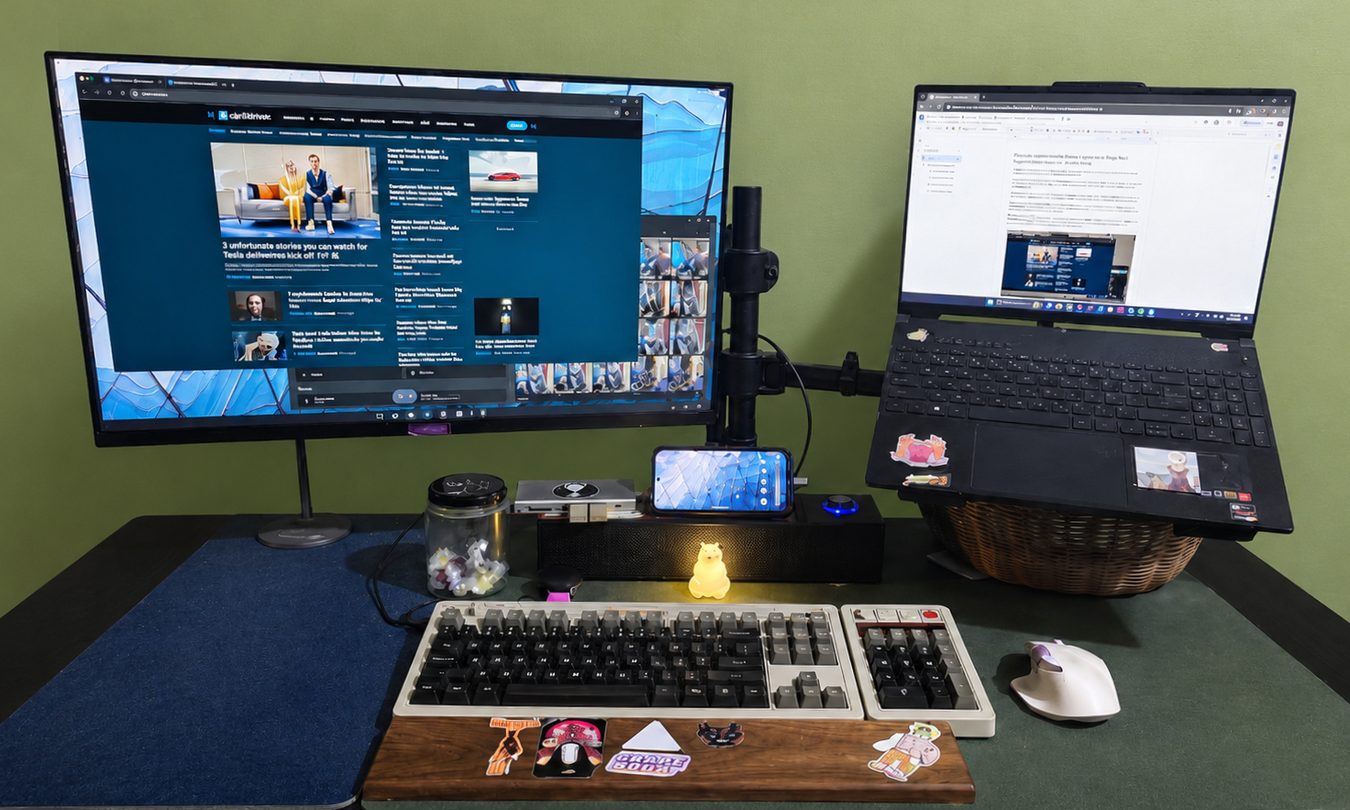
Android 17 desktop mode has a very simple pitch. Plug your phone into a monitor, add a keyboard and mouse, and watch the slab in your pocket pretend to be a computer. I wanted to give that pitch a fair shot, so I tried using it for an actual workday instead of a cute demo.

The goal was boring on purpose: write an article, edit it, build the page in WordPress, upload whatever needed uploading, and publish the thing without running back to my laptop like a coward.

Read more
As AI turbocharges digital abuse, UK agencies urge parents to limit who sees kids’ photos online
The National Crime Agency and Internet Watch Foundation are asking parents to tighten privacy settings as AI-generated abuse material rises.
Social Media

Parents who post pictures of their kids online are being told to rethink the habit. The UK's National Crime Agency and the Internet Watch Foundation have issued new guidance urging families to lock down their social media accounts, warning that publicly shared photos are increasingly being pulled and altered by AI tools to create child sexual abuse material.

The two organizations say most parents have no idea this is happening. Criminals no longer need to contact a child directly to generate such material. They can scrape an ordinary photo and run it through widely available nudify apps.

Read more
I used ASUS’ dual-screen laptop as a portable creative station, and my desk PC started collecting dust
The Zenbook Duo might be the creator setup I wanted in college
Computer Hardware, Electronics, Hardware

With laptops, brands are constantly in a balancing act between portability and workspace productivity. The ASUS Zenbook Duo UX8407AA tries to dodge that choice with a design that brings a whole setup in a compact form factor.

I used the Zenbook Duo as a creative machine, mainly with design apps, illustration work, writing, and multitasking. The model I tried runs on Intel’s Core Ultra 7 355, paired with 32GB of memory and a 1TB SSD. That gives it enough horsepower to handle Photoshop and Animate, for sketches and animations, and a lot more without breaking a sweat.

Read more