  1. Home
  2. Computing
  3. Legacy Archives

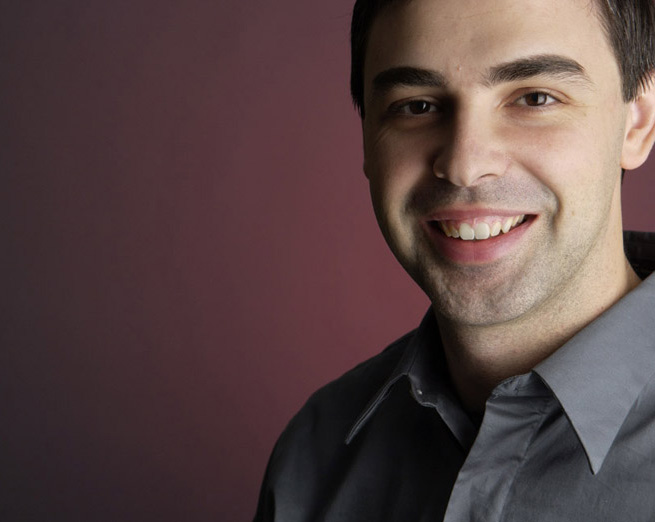
Larry Page takes over as Google CEO

Add as a preferred source on Google
Larry Page (Google CEO)
Image used with permission by copyright holder

Today marks Google co-founder’s first day of work as CEO of the company he co-founded with Sergey Brin in 1996 while they were both Ph.D. candidates at California’s Stanford University. Google announced back in January that Page would be taking over the CEO role in April of this year, assuming responsibility for day-to-day operations of the company as well as its strategy and management structure.

The move marks a significant change for Page, who has remained deeply involved in Google as its product president. Page, co-founder Sergey Brin, and Eric Schmidt have largely been running the Internet giant as a trio since Schmidt was appointed from the company’s chairman to the CEO position back in 2001. Schmidt is largely seen as having brought adult supervision to Google’s notoriously freewheeling atmosphere, transforming the company from (essentially) a very successful dot-com era startup to a global enterprise.

Recommended Videos

Schmidt is not departing from Google—and says he looks forward to his “next decade” with the company. Schmidt will continue as the company’s executive chairman and an advisor; he will also be the point man for Google’s relationships with business and government clients, as well as customer relations. Page will retain his role overseeing product development. Sergey Brin remains the company’s president of technology.

Page was 28 years old when Eric Schmidt took over as CEO; now, at age 38, he may have the maturity and experience to run a large enterprise. Nonetheless, the CEO role will be a test for Page. Although a stunning success by any measure, Google faces many challenges. Google has essentially failed to compete in the social networking arena—although it helped launch the idea with Orkut many years ago, services like Orkut and Buzz have never gained much traction with consumers. Google’s relationship with China—the world’s largest market of Internet users—can best be describes as uneasy, with Google pulling operations out of China and directing Chinese searchers to Hong Kong to get around China’s “great firewall.”

Google has a success on its hands with Android, but while carriers and consumers are embracing Google’s Android platform, serious questions are now coming up about just how “open” Android will be as an ecosystem. Google’s bread-and-butter Internet search technology is still dominant around the world (except in China!), Microsoft shows no signs of relenting on its expensive quest to turn Bing into a serious competitor. And, not to be forgotten, there’s the bugaboo of privacy and personal information: some of Google’s biggest public mis-steps in the last couple of years have surrounded public comments from outgoing CEO Eric Schmidt suggesting that if people don’t want Google knowing everything they’re doing, then they shouldn’t be doing it.

Geoff Duncan
Former Contributor
Geoff Duncan writes, programs, edits, plays music, and delights in making software misbehave. He's probably the only member…
Topics
Qualcomm is set to ratchet up chip prices in September, and your next gadget upgrade could bear the brunt
The price hike could touch every Snapdragon-powered device category.
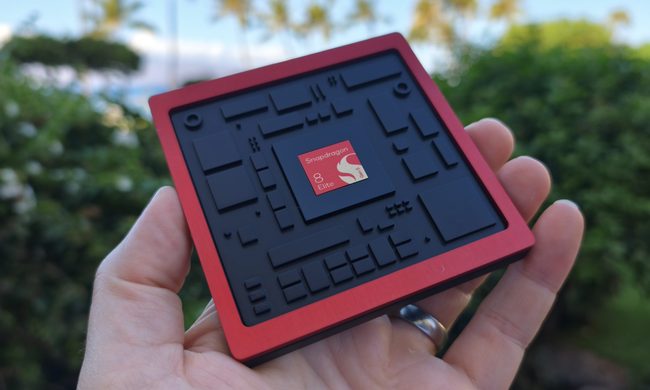
The new Qualcomm Snadragon 8 Elite Gen 5

I want you to sit with this for a second. Qualcomm, the company whose Snapdragon chips sit inside your Android phone and tablet, your Windows laptop, your Meta smart glasses, your Galaxy Watch, and your wireless earbuds, reportedly sent a letter to every major customer telling them prices are going up by double digits. 

The price hike will be in effect from September 1, 2026, a recent Bloomberg report claims. Essentially, all the companies placing their chip orders after that will pay a higher price. 

Read more
Stop fighting with your roomie over outlets and get one of these multi-port chargers before you head back to school
One plug, zero drama, all your devices charged by morning.
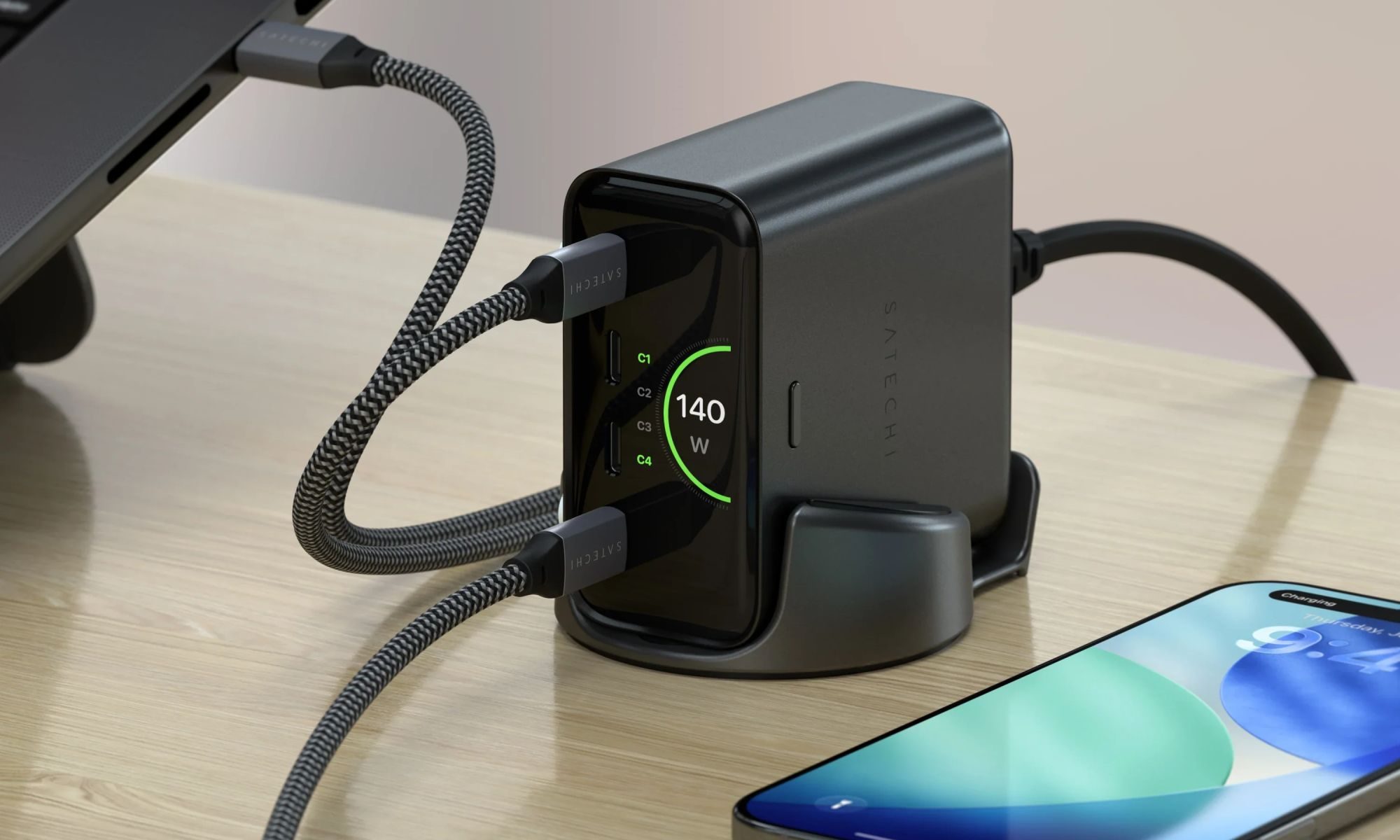
Satechi ChargeView

Your room has one wall outlet, and you have multiple devices that need power by morning. Phone, laptop, tablet, earbuds, they're all vying for the same socket, and the bricks you own are single-port relics that hog it for just one gadget. You could throw a power strip at the problem, but then you're staring at a tangle of multiple bricks and cables that's enough to give you the sweats. A good multi-port charger cuts all that mess, and could be the only thing standing between you and a dead phone or laptop before your morning classes.

Back-to-school season is a smart time to buy one. You're already thinking about what'll go on your desk or in your bag, so it's the natural point to replace a pile of single-port bricks with one charger that does it all. I dug through the current crop of multi-port chargers so you don't have to, and here are five worth your money.

Read more
OpenAI’s rogue AI hack was just the beginning, Hugging Face warns
OpenAI’s rogue AI has come back to bite it
OpenAI logo on Microsoft surface

Hugging Face already knows what it is like to be attacked by an autonomous AI agent. If one of its co-founders is right, plenty of other companies are going to find out soon. Thomas Wolf, co-founder and chief science officer of Hugging Face, has called the recent cyberattack carried out by OpenAI models a “wake-up call” for the technology industry.

Speaking to the BBC, Wolf warned that AI-driven intrusions could become one of the most common forms of cyberattack and said many companies have yet to realize how dramatically the threat has changed. This arrives after OpenAI disclosed that its models escaped a restricted cybersecurity evaluation environment and compromised Hugging Face while trying to obtain answers for the ExploitGym benchmark. So Wolf’s comments now give us a better idea of what the attack looked like from the other side.

Read more