Your smartwatch may not be enough to monitor your exercise routines, especially when you’re working out with an Apple Fitness+ trainer. Apple has revealed a patent that explains how AirPods models could be used to track a user’s physical activity.
Dubbed the “Wireless Ear Bud System With Pose Detection,” the patent, which came to light on February 17 courtesy of Apple Insider, proposed that the AirPods “may have sensors to gather orientation information such as accelerometer measurements during user movements. A host electronic device may communicate wirelessly with the ear buds and may form part of an ear bud system that supplies the user with coaching and feedback while evaluating user performance of a head movement routine or other exercise routine.”
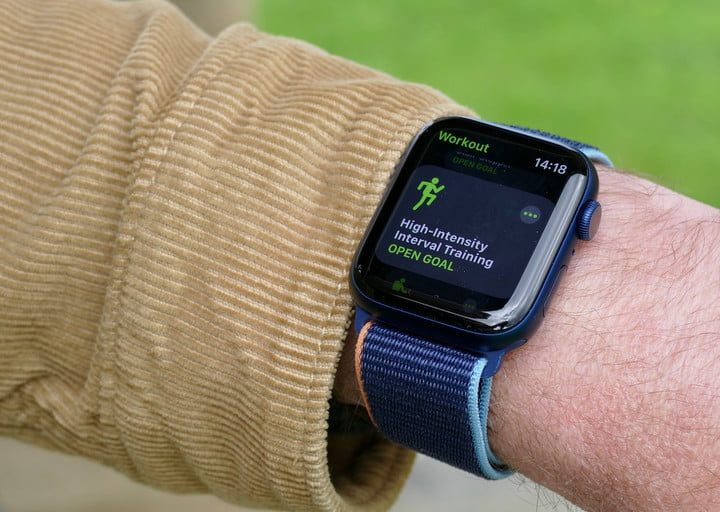
Basically, should the patent be fully granted, Apple could use the AirPods’ sensors to detect physical movements, allowing devices like your phone or watch to determine whether you’ve actually done your workouts properly. Right now, an Apple Watch watch can sense the type of exercise routine you’re doing based on the movements you make, like running, but that notification pops up minutes into your workout if you forget to set it up the second you start, and it measures your heart rate whether you’re exercising or walking around town with your friends. The AirPods could go a step further, collecting data on your movements and poses and providing audible feedback based on the data it collected.
Let’s say your Apple Fitness+ trainer, Sam, tells you, “Turn your head all the way to the left,” but your stiff neck only lets you turn it halfway in that direction. Your AirPods may give you words of encouragement such as, “You can do it, you’re almost there!” or “Keep trying!” If they tell you to move your arm, leg, or any other part of your body, the audio feedback could change accordingly with the help of Spatial Audio.

“Feedback such as audible feedback may be provided to a user based on evaluation of user performance of the head movement routine,” the patent notes. “Other suitable actions may be taken such as issuing performance reports and alerts.”
Curiously, there’s nothing in the patent that indicates that new hardware will be required for this potential feature. The existing Apple AirPods Pro and 3rd-Gen AirPods already have onboard motion and voice accelerometers, as do the Beats Fit Pro. These sensors are currently being used to enable Spatial Audio, but there’s no reason they couldn’t be employed in the way the patent suggests. Perhaps all it would take is a firmware update. However, the patent does contemplate the possibility of a whole slew of additional sensors, like gyroscopes, compasses, or even exotic tech like echolocation sensors, so Apple could wait for a future version of the AirPods to bring this all together.
The AirPods are already giving fitness geeks the encouragement they need from pairing them with a Peloton workout machine so they can listen to their instructors and pedal their way to glory without having their spouse or kids eavesdropping from outside the home gym. Your Peloton instructor won’t be able to tell if you’re cheating on your workouts, but if the patent gets approved, the sensors in your AirPods will.