  1. Home
  2. Cars
  3. Legacy Archives

BMW testing ultra-bright laser headlights

Add as a preferred source on Google
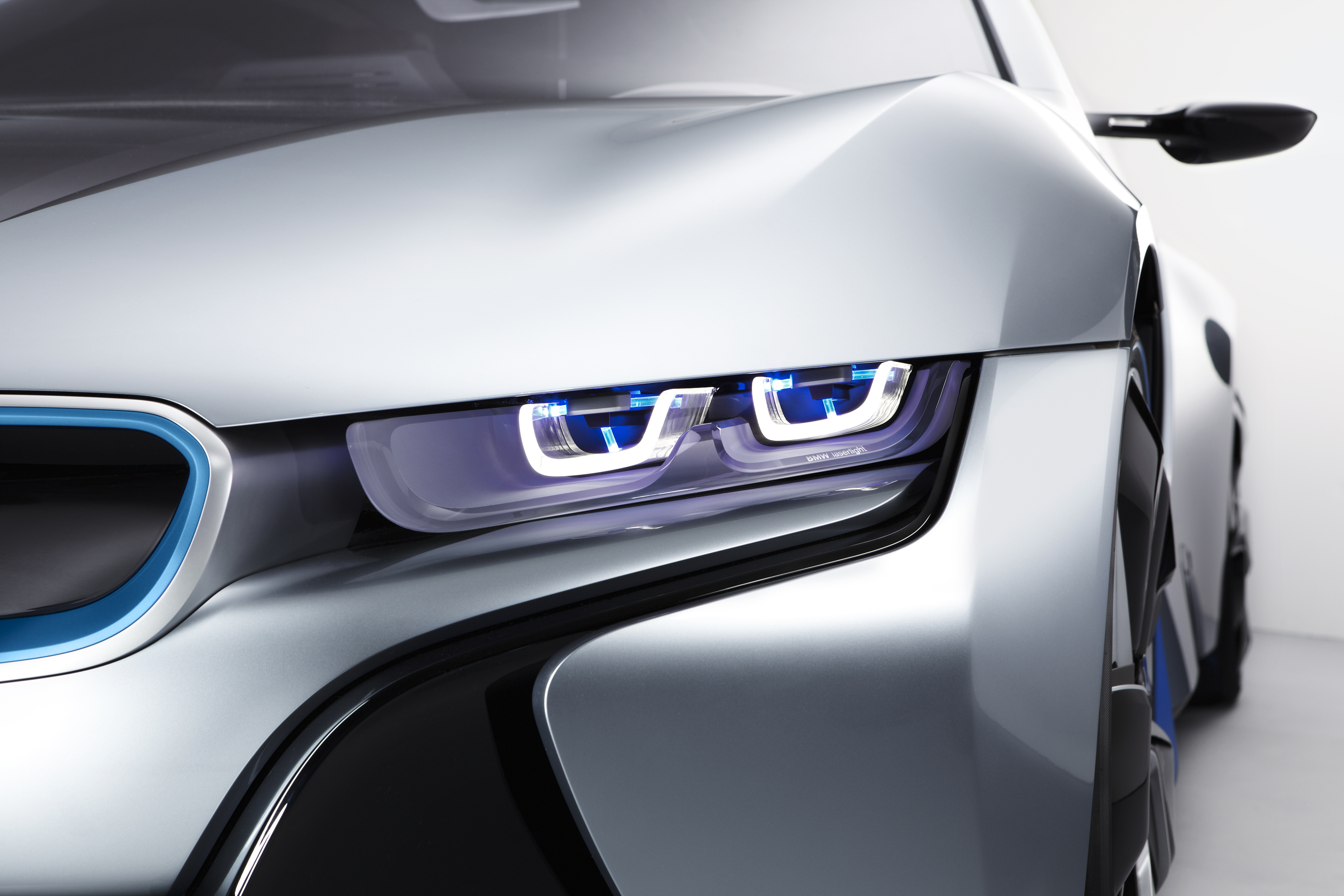
BMW i8 Concept with BMW Laserlight
Image used with permission by copyright holder

BMW has announced that it is actively testing laser headlights to replace the LED bulbs that it currently uses. The German luxury car manufacturer says that lasers are, obviously, the “next logical step” in the evolution of headlights, and reportedly have the capability to shine up to 1,000 times brighter than LEDs.

According to the press release, BMW believes laser technology could usher in “entirely new light functions for even more safety and comfort and at the same time contribute significantly through its higher degree of efficiency towards a saving in energy and fuel respectively.”

Recommended Videos

Now, if you’re one of the many drivers out there who still use conventional headlights (pre-LED), then you’re probably thinking, “Great, now I will be even more blind when one of these new laser-cars drives around a bend.” Not so, says BMW.

“The intensity of laser light poses no possible risks to humans, animals or wildlife when used in car lighting,” reads the release. “Amongst other things, this is because the light is not emitted directly, but is first converted into a form that is suitable for use in road traffic. The resulting light is very bright and white. It is also very pleasant to the eye and has a very low energy consumption.”

We hope the “very pleasant to the eye” part is more apparent than the “very bright and white” part because, if you ask us, LEDs are already too bright, and these new laser lights have the potential to be exponentially brighter. In other words, their “poses no possible risks to humans” bit sounds hard to believe.

Fortunately, BMW says the next-generation headlights are still a “few years” from going into production. The first vehicle that will sport laser beams will reportedly be the consumer version of their i8 concept car, which you can check out here.
 

Andrew Couts
Features Editor for Digital Trends, Andrew Couts covers a wide swath of consumer technology topics, with particular focus on…
Mazda chief says the MX-5 Miata could go electric
2019 Mazda Mazda3 AWD review

For years, the idea of an electric Mazda MX-5 Miata felt almost impossible. The little roadster has always been celebrated for one thing above everything else: keeping things light. Add a heavy battery pack into the equation, and many enthusiasts assumed the Miata's trademark driving character would disappear along with it.

Mazda, however, appears to have changed its mind. In an interview with German publication auto motor und sport, Mazda CEO Masahiro Moro confirmed that the next-generation MX-5 is being developed with the possibility of an all-electric version in mind. It doesn't mean the iconic roadster is abandoning gasoline anytime soon. Still, it does suggest Mazda wants the Miata to survive in a future where internal combustion engines may no longer be an option.

Read more
Mercedes-Benz reveals the 2028 GLA in two flavors and plenty of cool tech
The 2028 GLA debuts in electric and hybrid form, featuring Gemini, ChatGPT, and up to 408 miles range.
2028-Mercedes-Benz-GLA-SUV

Mercedes-Benz just gave its smallest SUV a serious glow-up. The automaker unveiled the redesigned 2028 GLA, its entry-level compact SUV, arriving in both fully electric and hybrid form. Like the recently redesigned CLA sedan, the GLA now rides on Mercedes' next-generation MMA platform.

What's new with the 2028 GLA's design and powertrain?

Read more
Hongqi says its new EV tech can charge a battery in just eight minutes, beating BYD
Hongqi EH7 car in green

It seems that every other month, a new company is coming out with battery-charging tech that’s defying our expectations. A few months back, BYD, the Chinese EV maker, impressed everyone with its “flash charging” system that could take its car from 10% to 97% in nine minutes. Now, Chinese automaker Hongqi has beaten that record. 

How fast is Hongqi's new battery?

Read more