Finnish brand Withings is moving beyond wearables and smart scales. At CES 2023, the company is expanding into the at-home urine analysis segment — and the lineup looks quite impressive.
Now, the concept of urine analysis is not exactly novel, as it forms the backbone of at-home pregnancy tests. Withings, however, is building up on the formula in a major fashion with the U-Scan. This pebble-shaped device dangles by your toilet bowl and scans your urine for a bunch of biomarkers such as hydration and ketone levels.
Filling a key health assessment gap
The core promise here is that urine contains thousands of metabolites that are indicative of your general health. But unlike heart rate monitoring or general skin care, we don’t actively analyze our urine unless a doctor tells us to do so.
That’s quite an oversight because we pay so much attention to heart-related activities with readily-available smartwatches, but none tailored for urine, which is a goldmine for health analysis.
Withings wants to change that with the U-Scan, which performs chemical analysis of urine and shares the results with a connected smartphone app over Wi-Fi. Unlike a fitness wearable like the Apple Watch Series 8 or Oura Ring, the U-Scan can identify different users and accordingly catalog their urine test results.
I talked to Dr. Arif, a resident at King George Medical University, about the possibilities; he said that the “Withings U-Scan sounds quite promising, and it fills a critical gap in healthcare, especially for folks that need frequent urine testing but don’t have the luxury of visiting a hospital every time for it.”
How at-home urine analysis works
At the heart of the puck-shaped “Home Urine Lab” are replaceable cartridges, which are essentially miniaturized kits tasked with studying the chemical composition of urine. Each cartridge is good enough for three months’ worth of urine analysis.
Right now, Withings has created two kinds of cartridges — one for period cycle tracking, and the other one for general body wellness stats like hydration levels and vitamin C concentration, among others.
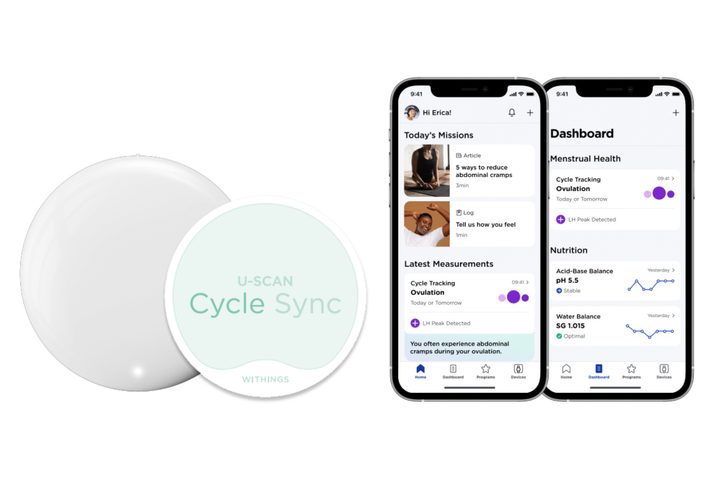
The first one is the U-Scan Cycle Sync. It studies the hormone samples in urine to predict the phases of an individual’s menstrual cycle, determines the ovulation window, and also informs about hydration levels.
The first two are important because you won’t find any FDA-approved app-based solutions out there. Plus, smartwatches use an entirely different metric for predicting menstrual cycle changes, such as temperature, while the Withings U-Scan goes with the more reliable urine chemical analysis route.
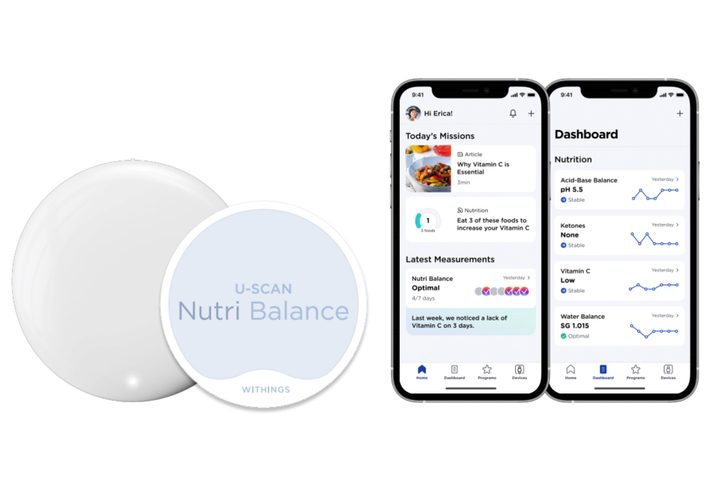
Withing’s second cartridge is the U-Scan Nutri Balance. It tells you about your body’s water balance, how acidic or alkaline your diet is, ketone levels that are directly linked to body metabolism, and vitamin C levels.
Identifying the pee signature
More importantly, the Withings U-Scan is capable of identifying each individual using their “unique urine stream signature,” thanks to a low-energy radar sensor fitted inside the Withings U-Scan. This might sound outlandish, but just like other body identifiers, urine signatures are unique.
It reads the unique urine jet signature of each person.
“The thickness of each person’s urethra is different. Plus, as we age, the muscles controlling the urinary movements also lose their strength,” explains Dr. Arif. “As a result, the intensity of urine discharge for every person is different. In fact, congestion of the urinary tract is indicative of infections and other problems.”
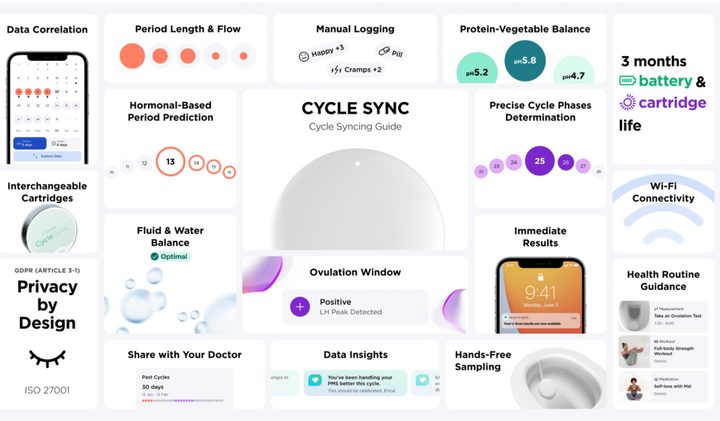
Notably, Withings is also working on custom cartridges with healthcare professionals to expand what can be achieved with the U-Scan platform. Two such applications are already in development for addressing renal lithiasis (aka kidney stones,) and another for “monitoring and ovarian cancer relapse.”
Notably, research published earlier this month also found that urine can be sampled for multi-cancer early detection (MCED), covering nearly 14 types of cancer. The research paper has been published in the Proceedings of the National Academy of Sciences and talks about a promising non-invasive method of detecting cancer that could save a lot of lives.
“The non-invasive nature of the device and the ease of sharing urine analysis data with your doctor remotely is a big step forward,” remarks Dr. Arif. It not only helps with monitoring the current state of your health but also helps with identifying any worrying signs that might evolve into more serious problems down the road, he explains.
U-Scan is also a good advice buddy
Another huge advantage is that in addition to test results, Withings U-Scan also offers actionable insights to fix any abnormalities related to water composition, the acid in your diet, and vitamin C in your body systems, among others.
The companion app, called U-Scan Nutri Balance, will suggest workouts, dietary changes, and even recipes to help normalize metrics like ketone, vitamin C, pH levels, and more.
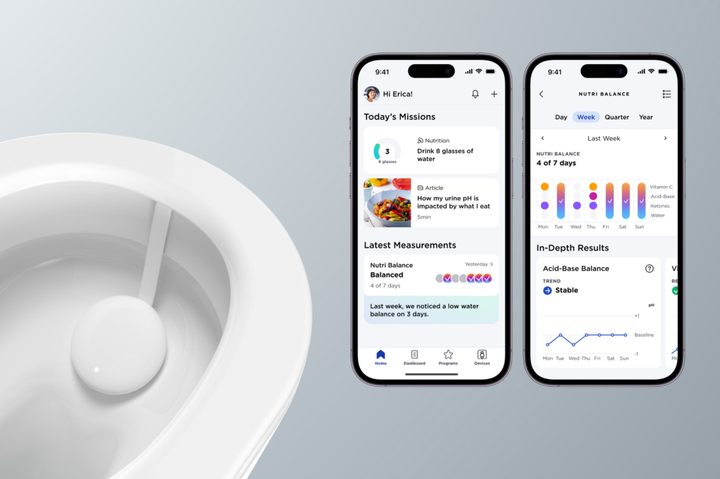
The device is rechargeable with an average life of three months, the same as the cartridges. It automatically activates when the thermal sensor at the top detects urine and cleans itself with every flush.
Withings U-Scan is ready for a debut in Europe, but it is currently awaiting FDA clearance before it goes on sale in the U.S. Priced at 500 euros for a kit with the U-Scan reader and a single cartridge of your choice, Withings’ latest offering will hit the shelves in 2023’s second quarter.