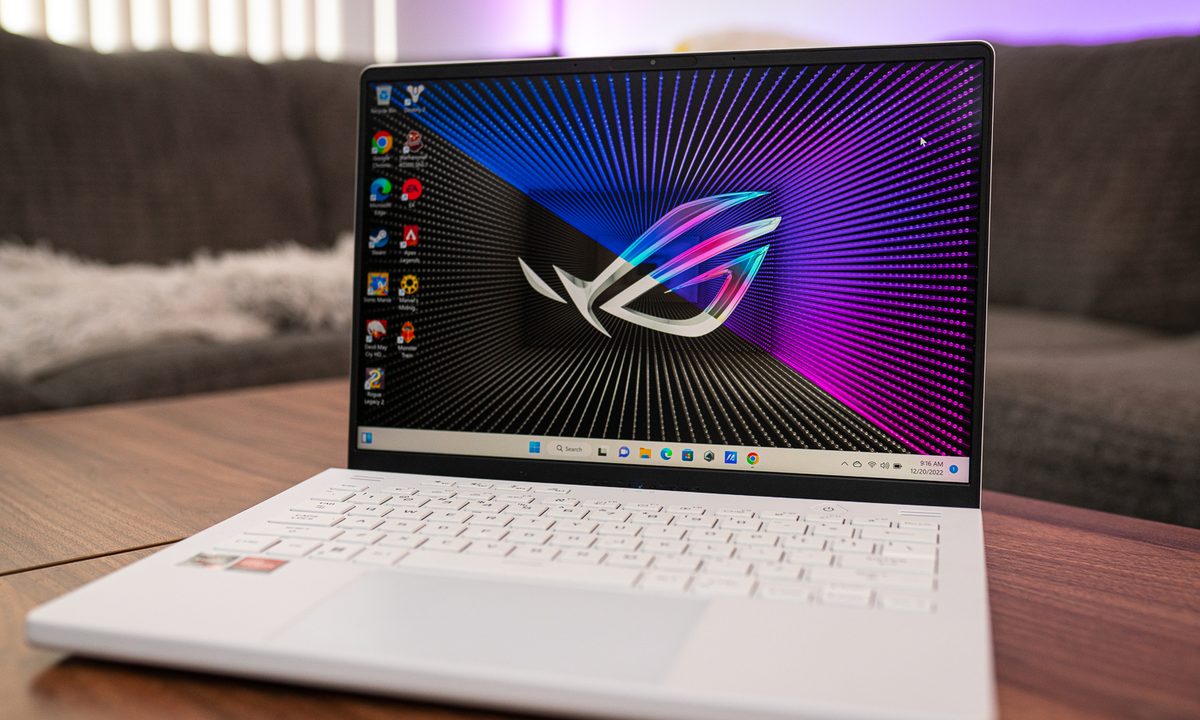
There are two laptops that have been battling for the top slot on our best gaming laptops roundup: the Razer Blade 14 and Asus ROG Zephyrus G14. And with new models for 2023, the battle between them has never been more fierce.
Even after writing my Razer Blade 14 2023 review, though, the Zephyrus G14 still holds up. I expected Razer to run away with the battle, but with some pricing changes and improvements from Asus on its latest Zephyrus G14, the choice isn’t as cut-and-dried as you might think.
A clear value winner
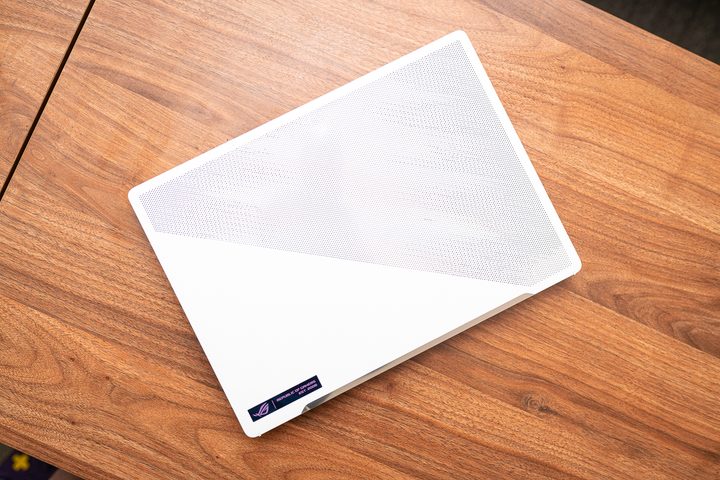
The biggest difference between the Razer Blade 14 and Asus ROG Zephyrus G14 is pricing. The Zephyrus G14 comes in cheaper for the same specs as the Razer Blade 14, and it has more configurations available, reaching all the way up to an RTX 4090.
The Razer Blade 14 has three configurations available. They all come with an AMD Ryzen 9 7940HS. There’s a model with an RTX 4060 for $2,400 and another with an RTX 4070 for $2,700. Razer is also offering a Mercury White configuration with an RTX 4070 and 32GB of RAM for $2,800.
The ROG Zephyrus G14 has similar configurations available. For an RTX 4060 with a Ryzen 9 7940HS, Asus is asking $1,600, and for an RTX 4070 with the same CPU, you’ll spend $1,850. Interestingly, Asus cut the storage space on the RTX 4060 model — all configurations across the Blade 14 and Zephyrus G14 come with a 1TB NVMe SSD, except for the RTX 4060 configuration on the Zephyrus G14, which is limited to 512GB.
Asus also scales the Zephyrus G14 higher, offering it with either an RTX 4080 for $2,500 or an RTX 4090 for $3,300, both with the same storage, 16GB of RAM, and the Ryzen 9 7940HS. Although I haven’t tested these models, I wouldn’t recommend going for them. As we’ve already seen with machines like the Asus ROG Zephyrus M16, cramming the powerful RTX 4090 in a small chassis is a recipe for wasted money and lost performance.
In the previous generation, you could have a discussion between the Razer Blade 14 and Zephyrus G14 on price, with the Razer machine coming in $300 higher for the go-to model, with some clear differences in build quality and specs. This time around, the Zephyrus G14 moved ahead.
For most people, the Zephyrus G14 is the way to go purely based on value. There are some advantages the Razer Blade 14 has, though, even if they don’t justify its price jump.
MacBook or gaming laptop?
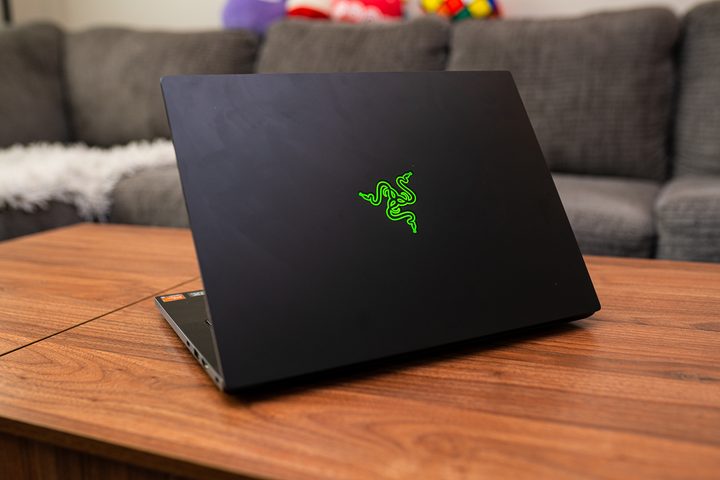
Where the Zephyrus G14 and Razer Blade 14 really differ is build quality. The Blade 14 is crafted out of CNC Aluminum and feels premium from top to bottom, while the Zephyrus G14 is mostly built out of plastic. There’s a clear gap in the feel of the laptops, but not one that adds up to justify a $700-plus difference in price.
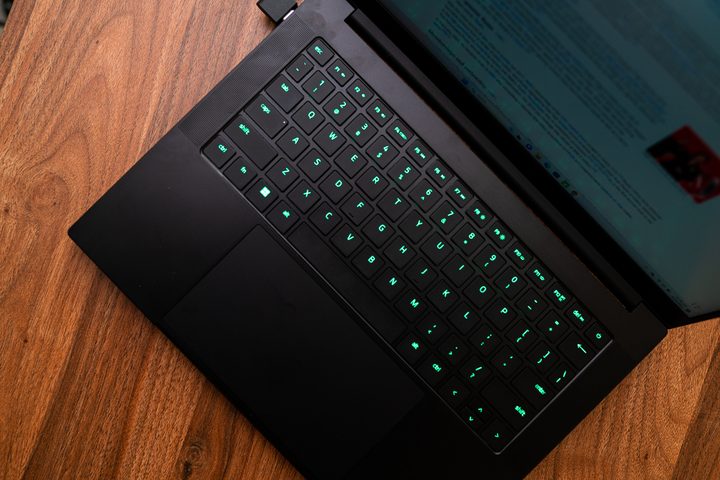
Both come with a large, spacious trackpad, though the Blade 14’s is slightly larger. They also both have excellent membrane keyboards. I prefer the Zephyrus G14’s keyboard due to its slightly longer travel, but it’s hard going wrong with either of them.
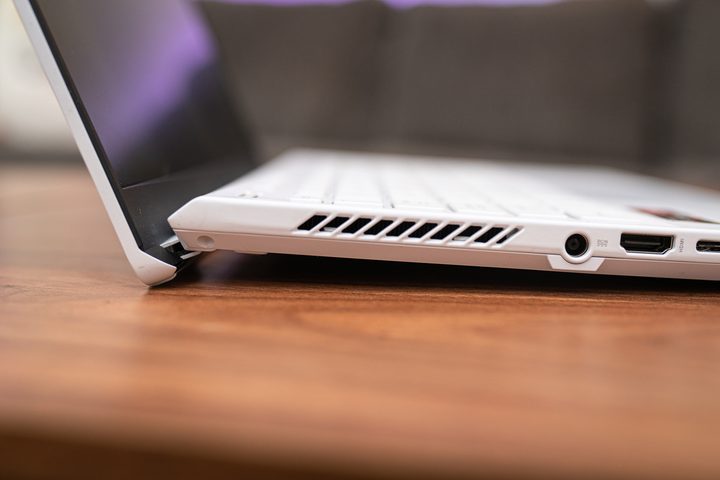
Another reason I prefer the Zephyrus G14 keyboard is the angle it sits at. The Blade 14 has a traditional clamshell design, while the Zephyrus G14 sits up at an angle, with the laptop resting on the bottom of the screen. In addition to offering better airflow, this also angles the keyboard for a more comfortable typing position.
Although the Blade 14 is undoubtedly built better, both laptops still feel premium. The build quality on the Blade 14 also means it comes in a bit heavier at just over four pounds, while the Zephyrus G14 comes in at 3.6 pounds.
A choice between quality and speed
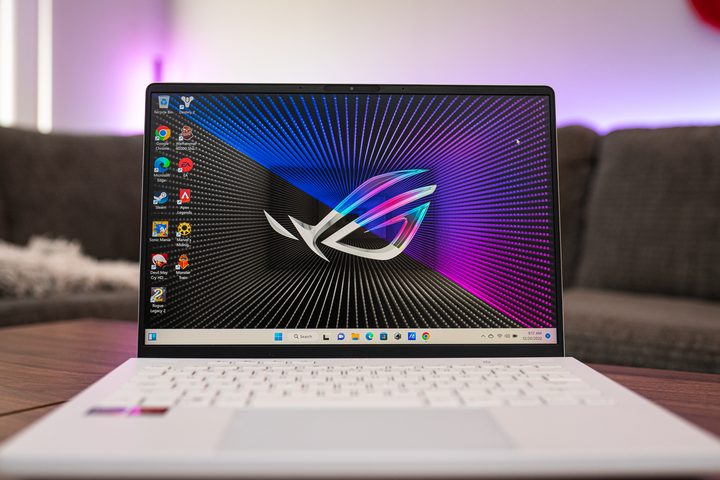
Another big area where the Blade 14 and Zephyrus G14 diverge are their screens. Both come with a 16:10, 2,560 x 1,600 screen, but between them, you have to choose between quality and speed.
The Blade 14 comes with a blisteringly fast 240Hz refresh rate. The Zephyrus G14, on the other hand, tops out at 165Hz, but it uses a mini-LED panel with 504 full-array local dimming zones. Both laptops use an IPS panel, but the local dimming on the Zephyrus G14 can do wonders for HDR, as we’ve seen with displays like the Cooler Master Tempest GP27Q.
Combined with DisplayHDR 600 certification, the Zephyrus G14 certainly has the better screen for media consumption. The Blade 14 isn’t far behind, though, and its screen is even set up well for media creation.
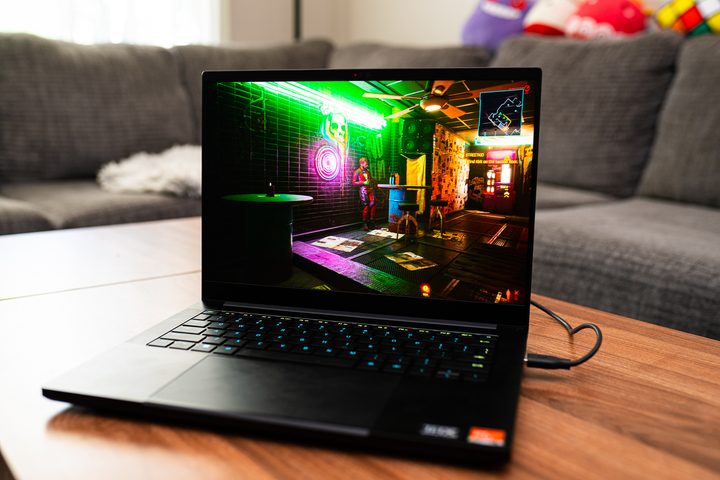
It topped out at 571 nits of peak brightness in my tests, and it showed a color error of less than 1. It’s one of the best laptop displays I’ve tested, short of an OLED panel like you find on the Asus Zenbook 14 OLED. It’s also faster, giving you a little extra speed for competitive games like Overwatch 2.
There isn’t a bad choice between them, and it ultimately comes down to what you want to do with your laptop. I would gravitate toward the Blade 14’s display because, although it doesn’t have local dimming, it’s faster and very color accurate out of the box.
Similar performance, important differences
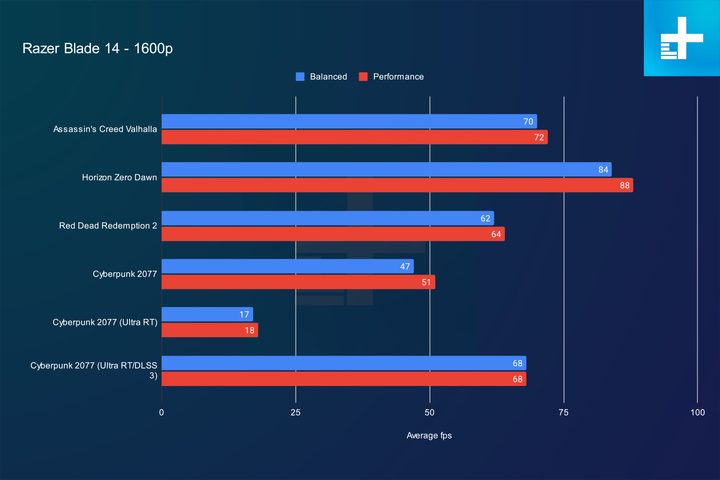
I haven’t had a chance to test the 2023 Zephyrus G14’s performance yet, though I suspect it will be very close to what the Razer Blade 14 offers. You can see how the Blade 14 fared at its native resolution above, offering above 60 frames per second (fps) in most games at maxed-out settings. If you step down the resolution to 1,200p, you can even cross 100 fps in a lot of games.
With the same configuration of a Ryzen 9 7940HS and RTX 4070 mobile GPU, you should expect similar performance out of the Zephyrus G14. However, there’s a very important difference between the two machines.
The Blade 14 comes with a full 140 watts for the GPU, while the Zephyrus G14 caps out at 125W, which is true across the RTX 4070 and RTX 4060 models. A difference of 15W shouldn’t add up to the Zephyrus G14 being far behind with an identical configuration, but there’s a good chance it will slightly trail the Blade 14 in most games.
Similar ports
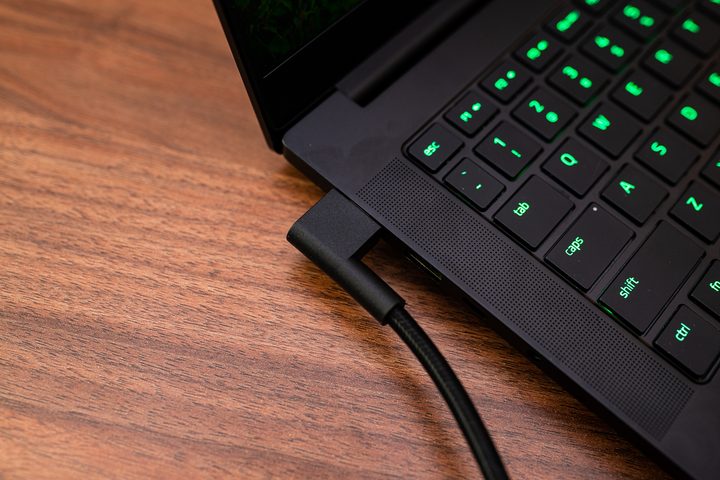
Both the Zephyrus G14 and Razer Blade 14 have a solid selection of ports, including dual USB 3.2 Gen 2 Type-A ports, dual USB 3.2 Gen Type-C ports, a full-size HDMI 2.1 port, and a 3.5mm headphone jack. There are only a couple of differences: the Blade 14 supports power delivery up to 100W on both of its USB-C ports while the Zephyrus G14 only supports it on one, and the Zephyrus G14 comes with a micro SD card slot.
What’s more important, for me, is the power connector. The Blade 14 uses Razer’s tired power connector, which sticks out at a right angle and comes attached to a bulky braided cable. The Zephyrus G14, meanwhile, places its standard barrel plug dead center on the left side of the laptop, feeling awkward no matter how you position it. Both laptops have issues on this front, and I would’ve liked to see one of them move to a rear power connector like on the Lenovo Legion Pro 5.
Between the two, I prefer the Zephyrus G14 slightly more simply due to its micro SD card slot. Both have a solid port selection, though.
One choice for most people
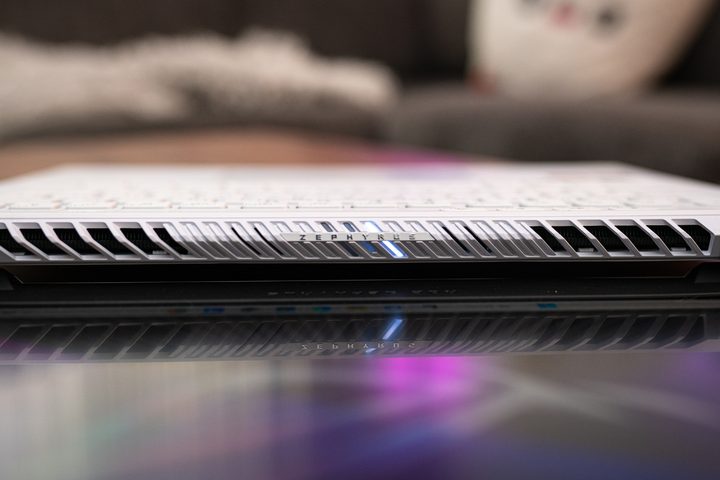
In the previous generation, it was easy to justify spending more on the Blade 14 given its better build quality and superior screen, but with an increased price for the Blade and a more competitive screen from Asus this time around, the upgrade isn’t quite so clear.
The Zephyrus G14 is the machine for most people, largely due to its price. It’s also a touch lighter, which is important for a highly portable gaming laptop.
The Blade 14 still has its place, particularly if you need a highly accurate screen for video or photo editing and want peak performance in games. The Zephyrus gets most of the way there for less, but for the most demanding users, the Blade 14 is still a great option.