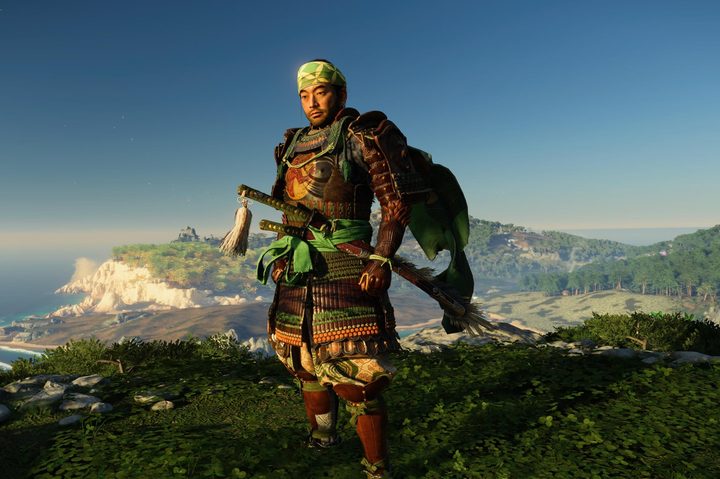
Sony detailed the features that will be available in the Ghost of Tsushima PC port on Tuesday, setting the stage for when the game launches on May 16. Despite some rocky PC ports from PlayStation Studios and porting studio Nixxes in the past, Ghost of Tsushima already looks impressive.
Ghost of Tsushima DLSS, FSR, and XeSS
It’s launching with all of the modern bells and whistles a PC gamer could want. That includes support for Nvidia’s DLSS 3 and AMD’s FSR 3, both of which support upscaling and frame generation. There’s also support for Intel XeSS, as well as native anti-aliasing modes for FSR and DLSS. This runs the game at native resolution but uses the anti-aliasing of the upscalers for improved image quality — read our explainer on Nvidia Deep Learning Anti-Aliasing for more on that.
There’s a treasure trove of features here that means virtually every PC gamer will have access to performance-boosting tech. FSR 3 support at launch is particularly noteworthy. Adoption of AMD’s frame generation tech has been slow, and although we’ve seen it in recent games, it usually isn’t available at launch.
Unfortunately, it looks like Ghost of Tsushima will miss out on AMD’s FSR 3.1 update at release, which promises vastly improved image quality compared to previous versions. This update should be available for developers soon, so it’s possible Nixxes will update the game with FSR 3.1 when it becomes available.
Outside of upscaling and frame generation, Sony says the PC version will support 21:9 and 32:9 aspect ratios for ultrawide displays, and even 48:9 aspect ratios and triple-monitor setups.
Ghost of Tsushima PC system requirements
Sony shared the system requirements for the game as well. It appears the game will have four graphics presets, comprising a wide range of supported hardware.
| Very Low | Medium | High | Very High | |
| Estimated performance | 720p at 30 fps | 1080p at 60 fps | 1440p at 60 fps | 4K at 60 fps |
| CPU | Intel Core i3-7100 / AMD Ryzen 3 1200 | Intel Core i5-8600 / AMD Ryzen 5 3600 | Intel Core i5-11400 / AMD Ryzen 5 5600 | Intel Core i5-11400 / AMD Ryzen 5 5600 |
| GPU | Nvidia GTX 960 / AMD RX 5500 XT | Nvidia RTX 2060 / AMD RX 5600 XT | Nvidia RTX 3070 / AMD RX 6800 | Nvidia RTX 4080 / AMD RX 7900 XT |
| Memory | 8GB | 16GB | 16GB | 16GB |
| Storage | 75GB | 75GB SSD | 75GB SSD | 75GB SSD |
There are a few key specs to pay attention to. First, storage. An SSD isn’t explicitly required to run the game, however Sony recommends playing the game off of one. We saw how a spinning hard drive can hurt PS5 games ported to PC with Ratchet and Clank Rift Apart, so you should plan on installing Ghost of Tsushima on an SSD.
In addition, the Medium preset calls for a GPU with 6GB of VRAM. We’ve seen a growing trend with VRAM issues in modern games like The Last of Us Part One, but that doesn’t look like a problem here. If you have an 8GB graphics card, you should be safe to run the game without issues, at least at lower resolutions.