Sonos can’t catch a break. It seems that almost every time the brand has geared up for a new product launch, someone has beaten it to the punch, leaking most of the key information beforehand. This time, the victim appears to be Sonos’ much-anticipated wireless headphones. And the culprit? A German Sonos parts dealer called Schuurman.
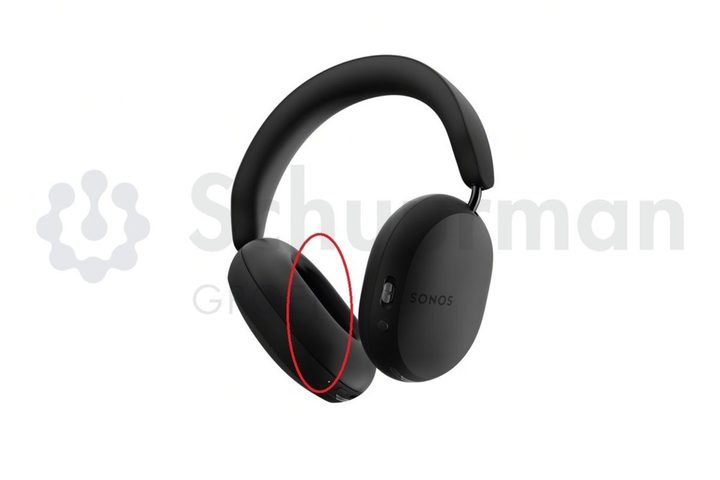
For a brief period — the page has since been taken down — Schuurman’s site listed the “Sonos Ace” along with a few photos and, perhaps most intriguingly, a price: 403.58 euros (approximately $534). The slipup was originally reported by The Verge’s Chris Welch, who has since released a follow-up article that claims to confirm many more details about the as-yet-unreleased Sonos product. Welch did not indicate his source for the information, but his previous Sonos reports have proven to be highly accurate.
First is the name — Sonos Ace. As the headphones were being developed, they reportedly received the code name Duke, but this has been swapped out for Ace. It’s believed that the actual price once the headphones are announced (which we expect will happen between now and June) will be $450.
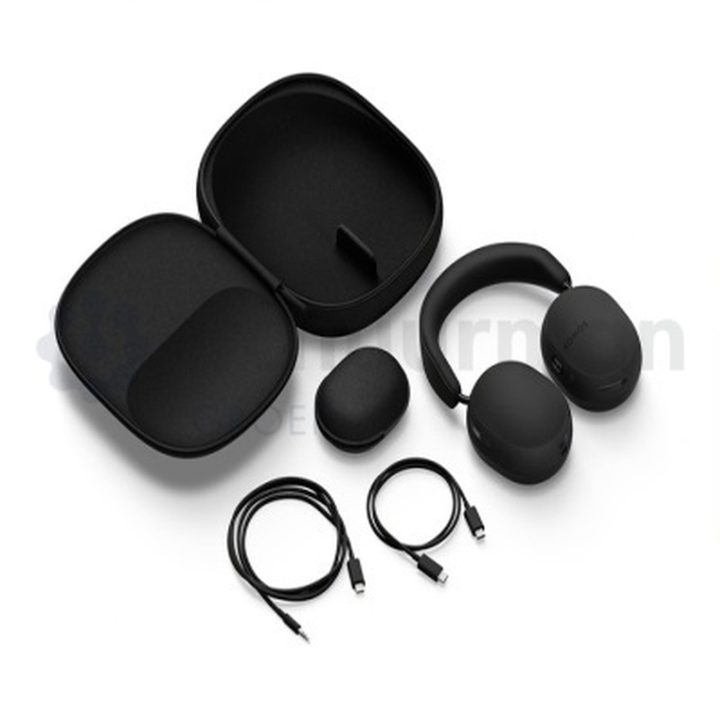
One of the images reveals a set of black headphones with visible Sonos branding on one of the earcups, along with a travel case, a pair of cables, and a mysterious small container, which may simply be a storage unit for the cables.
The USB-C-to-3.5mm will provide analog audio to the Ace, while Welch says that the double-USB-C cable will be used for charging and for digital lossless audio over USB-C like on the Beats Solo 4 and Studio Pro.
He further claims that the Ace will offer lossless audio over Bluetooth. For the moment, the only Bluetooth codec that can claim lossless CD-quality audio is Qualcomm’s aptX Lossless. The only way to support aptX Lossless is to use Qualcomm’s Snapdragon Sound audio platform, which requires Qualcomm chips.
This leads us to Welch’s next claim: The Sonos Ace will have active noise cancellation and transparency modes that “can rival the best of the best.” This will be an interesting claim to test — Apple, Sony, and Bose, (the current leaders in ANC) all use proprietary noise cancellation systems instead of relying on Qualcomm’s built-in ANC algorithms. Unless Sonos does the same thing, it may have trouble matching the performance we’ve seen from the big three.
Speaking of Apple, Sony, and Bose, the report claims the Ace will possess another feature in common with those companies’ flagship cans: head-tracked spatial audio. While the inclusion of this feature isn’t surprising, it remains to be seen how it works — the Apple AirPods Max, Sony WH-1000XM5, and Bose QuietComfort Ultra Headphones deploy the technology in different ways.
Welch says that the Ace will integrate with Sonos’ soundbars, which certainly gives us a clue about Sonos’ spatial ambitions. If it works the same way as Apple’s integration between the Apple TV 4K and the AirPods Max/Pro, it will provide a very convincing simulation of multichannel surround sound with support for Dolby Atmos.
A second image, showing just the headphones, includes a side view of one of the earcups, with visible buttons — one of which looks like a sliding switch with three positions. Welch says that, like the AirPods Max, the ear cushions will be magnetic.
Assuming for the moment that these images are indeed the as-yet-unreleased Sonos headphones, it’s clear that Sonos has taken inspiration from both Apple and Sony. The oversized headband is pure Apple AirPods Max, while the single pivot connection from the headband to the earcups is a design we’ve seen on both the AirPods Max and Sony’s most recent flagship, the WH-1000XM5. Just like both of these headphones, it looks like Sonos’ cans only fold flat for storage and transport.
Finally, Welch claims that the Ace’s battery life has been pegged at 30 hours. If that’s an ANC-on number, it’s likely the headphones can last longer when ANC is turned off.
On May 7, Sonos launched a revamped version of its software, along with a new web app. We’ll have to see if there are any hidden references to the “Sonos Ace.”