We always want what we can’t have, especially when it comes to our technology. Luckily, while technology presents plenty of drool-worthy gadgets we’ll never be able to afford, constant innovation means the next best thing is usually not that bad. Here are five awesome but unobtainable gadgets, along with five almost-as-good substitutes for the everyman.
Cinema-quality video camera
The Impossible – I have, for no good reason, wanted a RED Digital Cinema Camera since they first appeared six years ago. I’m not a filmmaker. I don’t have the software, hardware, or expertise to make proper use of a RED camera. But, still, I want one. Maybe it was because it was the endless media hype prior to the camera’s release.
Today, I want a RED camera because footage shot on a RED seems to always look phenomenal — see the below video from Sons of Huns. However, with an entry of $9,700 for the RED Scarlet-X body alone, it is unlikely that I will ever own one.
The Attainable – While I can’t afford a RED, HD video is now a standard feature for DSLR camera bodies.
Take Canon’s T3i, the recipient of a Digital Trends Editors Choice award when reviewed here. As David Elrich wrote, not only does the T3i offer “outstanding picture quality,” but also “top-notch” HD videos — all for a price starting at around $640. That is a crazy-low entry point for high definition video capture.
I can agree with Elrich’s assessment of the T3i’s video quality. The video below, for example, was shot entirely on Canon DSLRs, one of which is my Canon T3i. In 2007, I would have never thought that footage of this quality could be shot by anyone with $700. That it can be today makes me very excited for the future.
A plotter printer
The Impossible – There were not many positives to working the late shift for University Information Technology Services at Indiana University. The biggest may have been that it granted access to a 36-inch plotter printer.
IU’s policy was that you could print up to 10′ by 3′ for only $10 — or for $0 if your tech services buddy nixed the charge for you after it printed. Combine access to a large-format printer with a proliferation of high-resolution photos on the Web, and it became easy to adorn your wall with posters of your favorite indie artists, no matter how obscure they might be.
Don’t think a plotter printer is cool? Well, perhaps you haven’t seen my 51-by-36-inch poster of Ratatat posed before a Lamborgini — still probably my favorite ever press photo for a band. See also: the 1800+ square inches of Goonbase which hang in my house’s rear entryway.
Whenever I see a plotter printer at an office depot or print shop, especially one that doesn’t seem to get much use, I covet it.
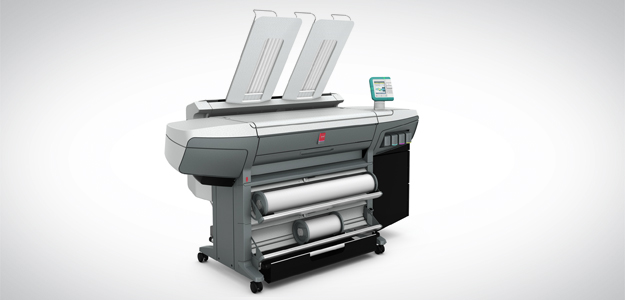 Wide-format plotter printers cost several thousand dollars, and would have no function in my life beyond amusement. While I think they are one of the coolest things in the world, the odds of me ever owning one are slight.
The Attainable – Fortunately, intrepid nerds have come to the rescue of those desiring massive wall art on a budget. The Rasterbator — now a standalone application after being offered for years as a web app at homokaasu.org — is the answer you have been looking for.
The Rasterbator creates multi-page raster files from the images you supply it. Feed the Rasterbator an image file, toggle a few settings, and it outputs a printable document. After a little trimming and gluing, you can have a piece of art on a truly massive scale.
Yes, assembly is required. But that’s part of the fun! How long has it been since you played with glue sticks?
Though, raster art is lower-resolution than that from a plotter printer, the images produced have a lo-fi charm and can scale to sizes far larger than is allowed by large-format printers. The Rasterbator remains a great option for creating custom wall art on a tight budget.
A professional recording studio
The Impossible – Since it’s been more than five minutes since I wrote about recording, I figure it’s time to get back to core values. I’ll keep this short, though.
Jackpot! Recording Studio is a wonderful place filled with wonderful things. Not only does it offer an incredible selection of audio equipment, that equipment is housed in a space purpose-built to produce excellent quality audio.
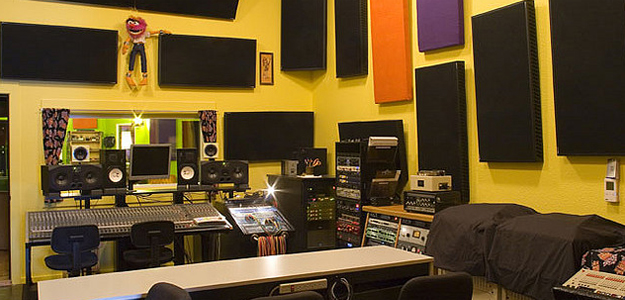 However, I don’t have the hundreds of thousands of dollars that it takes to design and construct an excellent acoustic environment, nor the priceless audio equipment so critical to the records that come out of Jackpot!
The Attainable – I do, however, have a Mackie Onyx 1640i, Pro Tools 9, and an array of homemade acoustic panels. My setup is nowhere near as nice as that provided by a studio like Jackpot!, but it is still effective for producing podcasts and live albums.
I have to record in a basement, not a purpose-built studio, but I can arrange acoustic panels to improve the acoustics of that environment (at least to some extent). I may not have a massive array of microphones and outboard gear, but the digital processing tools provided by Pro Tools are a great start — especially for an engineer of my middling experience.
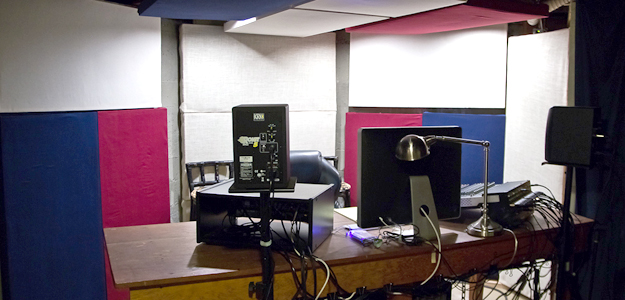 A very capable Mackie Onyx interface/mixer can be had for less than $1,000, and Logic Pro 9 is just $199.99. Further, acoustic panels are pretty easy to build with after a bit of planning. With the benefit of these resources, it’s never been easier to get started audio engineering.
A massive TV
The Impossible – I have always been a strong advocate for excellent-quality TV sets. I adore my 40″ Samsung LCD, which I purchased around five years ago for the exclusive purpose of playing Valve’s then-new The Orange Box.
However, my TV has already been repaired once, and now is out of warranty. It also has begun to make interesting popping noises, which reminds me: nothing lasts forever. Eventually, I will have to buy a new TV.
Luckily, there has never been higher quality television hardware available. As evidence, I invite you to witness the glory that is the Panasonic TH-152UX1. As large as nine 50-inch TVs, the TH-152 is an incredible 11.5 feet wide, 6.5 feet tall, and has a display four times as detailed as the 1080p TV on my dresser.
Unfortunately, such features are not without cost, and the TH-152 has a whopping $500,000 list price to go along with its massive dimensions. To put it mildly, this will put the TH-152 out of reach for most private homes.
The attainable – It’s a real shame, but I might just have to settle for Sharp’s new 80-inch Aquos. Its 80-inch frame is only about 25 percent as large as the Panasonic 152-inch display, but, at around $5,500, Sharp’s display can be had for just 1.1 percent of the Panasonic’s price tag. Sharp’s 80-inch AQUOS is no slouch on features, either. It offers support for apps like Hulu and Netflix, as well as built-in wifi. If, for some reason, eighty inches turns out to not be big enough? I can always sit a bit closer to the screen.
 A rugged laptop

The Impossible – Seen most often on battlefield or espionage dramas, rugged laptops like those from Getac have never seemed more prominent. Getac’s laptops aren’t just rugged, however, they’re fully-rugged — having passed a stringent group of tests issued by the US military. Getac’s B300, for example, boasts not just excellent battery life and an incredible array of ports, but also military-approved protection against environmental factors like humidity, dirt and grime, temperature changes, vibration, and drops.
Why don’t we see more of these in use by the general public, when so many of us accidentally destroy laptops by ill-timed fumbles or drink spills? Simple: their price tags. Getac’s B300 retails for $3,470, and the Getac A790 costs an astronomical $5,650. I could have an 80-inch TV for that price!
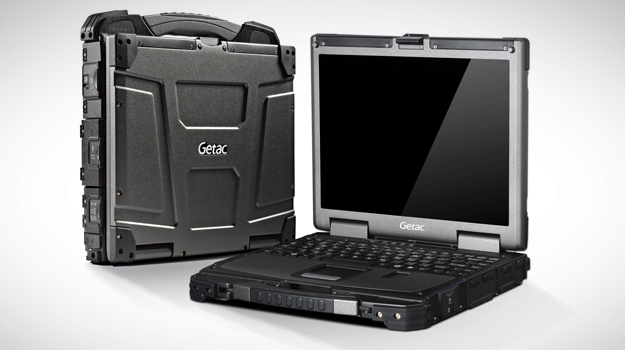 The Attainable – While Getac hardware will be out-of-reach for most, hardware makers have taken a cue from more rugged designs and are incorporating durability innovations into their own products. For example, recent offerings in HP’s Elitebook line offer features like Driveguard, which protects your hard drive, Duracase, a magnesium frame for rigidity, and a spill-resistant keyboard which funnels water through a hole at the bottom of the notebook.
This new “business-rugged” feature set may not be up to military standards, but durability features like these are bound to save many people a lot of stress and frustration from damaged hardware.
EliteBooks are much more affordable than Getac’s notebooks as well, starting at around $1,000, and have been recommended by DigitalTrends’ staff and users. With a strong feature set and excellent reviews, EliteBooks seem a great choice for those seeking a little more durability but not willing to spend $3,000 or more to get it.
Someday
Of course, if I ever attained any of these technologies, I would just start coveting new ones. If I owned a 36-inch printer, I would want a 44-inch one. If I owned a 44-inch printer, I would crave a 60-inch. Ditto TVs, recording gear, computers, and video cameras. It’s the nature of tech that, even if you purchase some perfect new product, a more perfect product to crave will be just around the bend.
It’s also the nature of technology that innovations become cheaper after their introduction. Though I can’t afford what I want now, I may be able to in the future. I look forward to finding out.