HDMI has been the main connector of choice for living rooms for decades. It connects TVs to consoles, to Blu-ray players, to A/V systems, and it’s even a great secondary connector for gaming PC owners who’d rather not use DisplayPort. But as much as HDMI has improved over the years, it’s also fallen behind some of the competition, namely coming out of China.
A new connector type, GPMI, was recently announced, and along with USB-C compatibility, it has options to more than double the available bandwidth of even HDMI 2.2, and it offers power delivery far in excess of anything else out there; USB4 included.
But while this new Chinese standard has the potential to steal the jewels from HDMI’s crown and run off with them into the sunset, it’s not likely to be competitive with HDMI any time soon; at least in Western markets.
What is GPMI?
GPMI, or the imaginatively named, General Purpose Media Interface connector and cable, was announced in early April and made a big splash when it did. Created by the Shenzhen International 8K Ultra High Definition Video Industry Collaboration Alliance (SUCA), this Chinse group is made up of major brands like TCL, Hisense, and the Western-ostracized Huawei.
Following the repudiation of Chinese brands’ involvement with major technological infrastructure projects like 5G, Chinese brands moved forward internally and looked to develop new, competing standards, and GPMI is just one of those attempts.

GPMI comes in two main flavors at the time of writing: GPMI Type-C, and GPMI Type-B. The former, is the more-universally designed, USB-C equivalent, with USB-C compatibility that is fully certified and legitimately supportive of USB-C connections. If you have a USB-C device, it should work just fine with GMPI Type-C.
That connector is the less impressive of the two, but still very capable, offering up to a 96 Gbps data transfer rate (equivalent to HDMI 2.2) and up to a 240W power delivery system, which is akin go the best USB4 connectors and allows for super fast charging. That’s something that HDMI doesn’t offer at all, and though it’s not something HDMI was designed for, power delivery is an increasingly useful capability for a cable connector, and one that gives USB-C and its equivalents (like GPMI) a significant advantage over HDMI in certain scenarios.
But that’s just the start with GPMI. The Type-B standard is proprietary, so lacks any kind of interchangeability with USB-C, but where it lacks that support, it more than makes up for it in its capabilities and shows that the Chinese companies behind it aren’t just looking to compete with HDMI, they’re hoping to one day supplant it.
If the specs are anything to by, that could be possible in the not-so-distant future. And it’ll give just about every other cable type a run for their money, too.
GPMI Type-B has a total bandwidth capability of up to 192 Gbps. That’s double what HDMI 2.2 can do, more than double what DisplayPort 2.1 can do, and more than double what the absolute best USB4/Thunderbolt 5 can manage. The 80 Gbps cables have only just started showing up for some of these models, and HDMI 2.2’s claimed performance isn’t even coming until later in 2025 for the cables, and early 2026 for the devices.
While GPMI Type-B isn’t widely available yet either, on the specs table it holds a lot of advantages which could give HDMI and others a real problem.
Whether Type-B or Type-C, too, GPMI was designed to offer a list of important features in one singular cable, addressing many of the outstanding issues with HDMI and many of its alterantives:
- Two-way, multi-stream data
- Bidirectional control
- Power delivery
- Compatibility with the USB ecosystem
- Ultra-fast transmission
- Fast wake-up
- Full-chain security
If it manages to achieve those goals when it becomes more widely available in the months and years to come, it’s going to be a serious contender in the A/V and Computing spaces.
GPMI vs HDMI
On the spec sheet, GPMI is way ahead of the game. Its Type-B bandwidth of up to 192 Gbps gives it a huge advantage over HDMI 2.1’s 48 Gbps, and even HDMI 2.2’s 96 Gbps. There’s more straightforward competition with the Type-C connector, but that USB-C compatibility gives GPMI an advantage again, and it’s not like there are any HDMI options when it comes to power delivery.
So where can HDMI compete? Features, widespread adoption, and mindshare. Where higher specifications are always nice, they do need to exist in the real world, not just in theory.
HDMI has a lot of features that have become part and parcel of the modern living-room entertainment experience. It supports all the main HDMI standards, it supports mainstream high refresh rates and resolutions, it supports display stream compression (DSC), it supports chroma subsampling, it has fully support for variable refresh rates and auto low latency mode for gaming, as well as quick frame transport and quick media switching for reduced wait times during media transitions. It also introduced source based tone mapping in HDMI 2.1a, and HDMI 2.2 will bring a new latency indication protocol (LIP) which will help improve audio and video synching between devices, especially when there is a more complex A/V system in use.
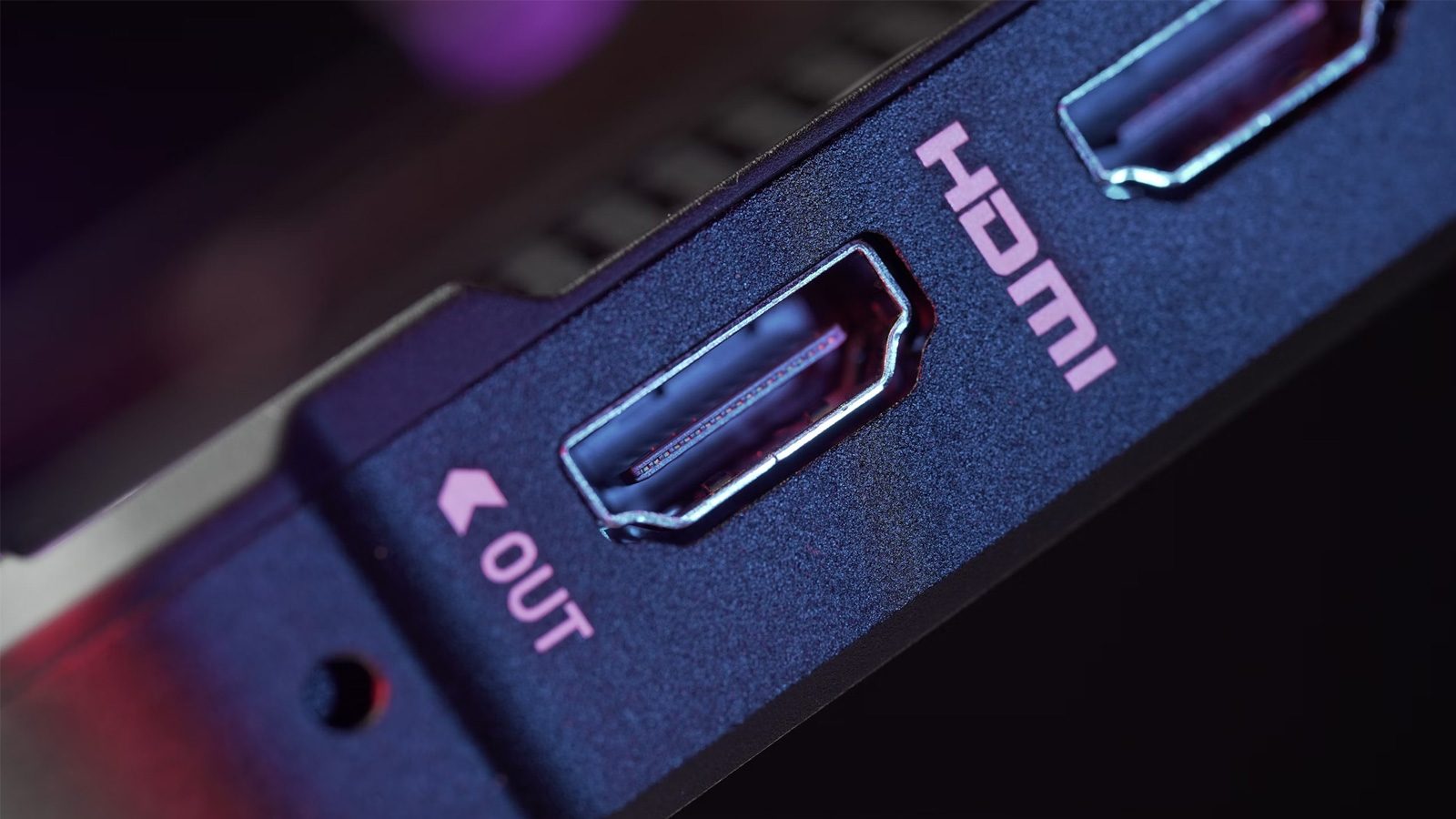
HDMI is also completely ubiquitous. It’s available in multiple versions and ports on every single modern TV, it’s in use by all the main games consoles, is present as a video output on most modern laptops, and every PC graphics card has one alongside DisplayPort and USB-C options. HDMI cables are also backwards compatible, and have been in use for over two decades on a range of devices.
HDMI is everywhere and has been for a long time, making replacing it about more than just beating it on the specs table.
Why specs aren’t enough
GPMI has everything going for it to become a real powerhouse connector; If it gets the support it needs. As it stands, popular Chinese brands like Huawei, Hisense, and TCL are behind its development and may well include these connectors on their future TVs and devices. But while these brands are giants in China and hold significant positions within Western markets, they don’t hold a candle to the proliferation of devices from Samsung, Sony, and LG. All of those brands use HDMI and won’t be keen to offer an incentive to drive up adoption for other brands and their proprietary connectors (or the USB-C compatible alternative).
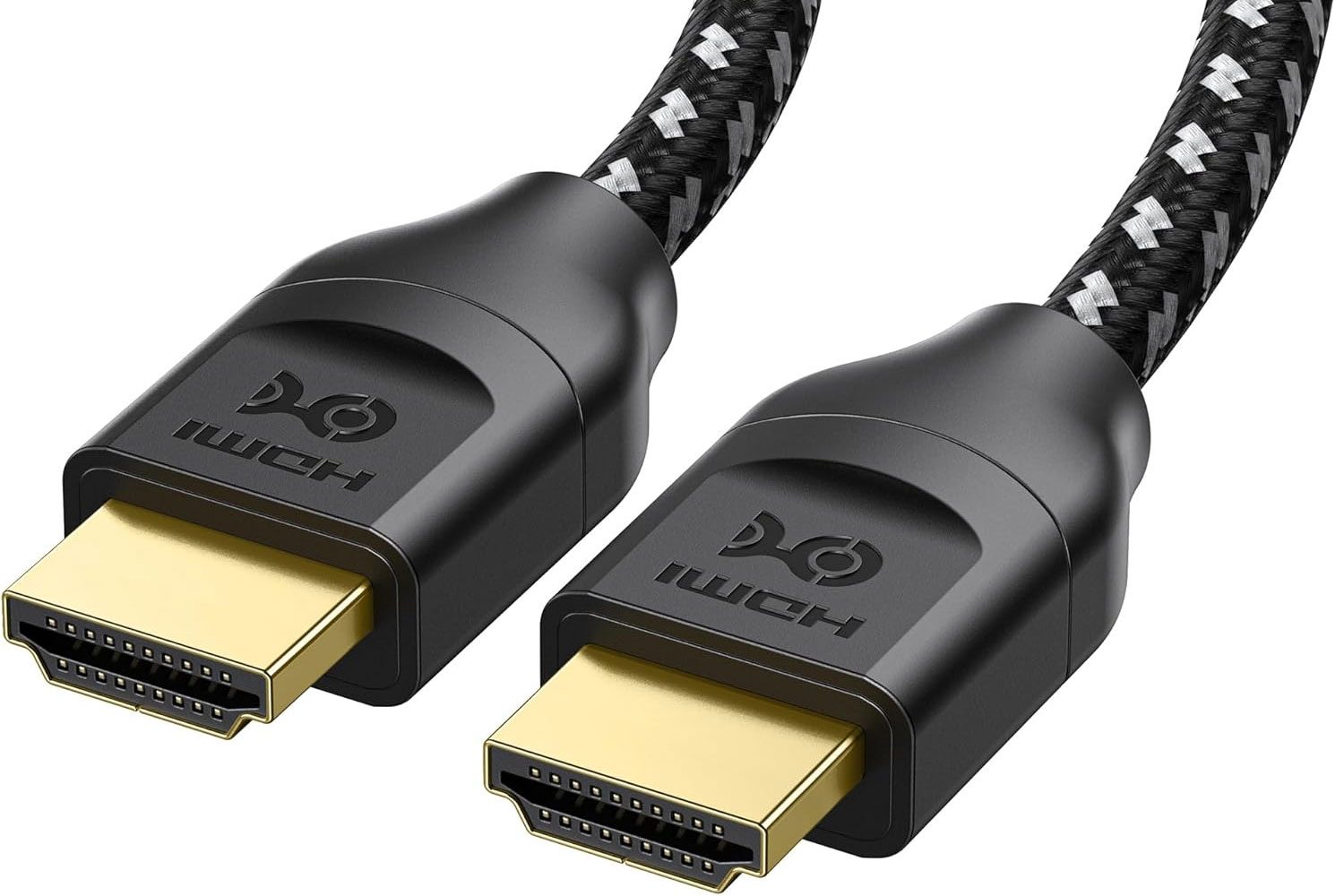
Then there’s the fact that no devices support it, yet. Let’s say LG does stick a GPMI port on its next-generation TVs in 2026. What will anyone connect to it? It’ll be used as a USB-C alternative if at all, and most people won’t even know what it does. There are no games consoles that can use it, no Blu-ray players that can take advantage, and no A/V systems that support it either.
But let’s assume an even more ideal scenario and that somehow in a few years time that there are both TVs and devices that support GPMI and there are cables available in physical retail outlets in Western markets, as well as increased coverage that makes it a realistic option for consumers who need a new cable. They’re choosing between HDMI and GPMI. There’s still no real need for all that bandwidth.
As it stands, HDMI 2.2 can handle 8K at over 120Hz, 4K at up to 480Hz, and resolutions at lower refresh rates up to 16K. Most mainstream TVs at this time are 4K 120Hz, as games consoles and gaming PCs don’t tend to be able to do more than that. 8K isn’t really taking off and even if it did, it won’t become mainstream for at least a decade. Higher refresh rates are useful but not really beyond a certain point.
Just what is GPMI actually going to offer to people that they couldn’t just get with HDMI, which is what they know and is backwards compatible?
The future
No one knows what the future will hold, but we can make some very strong guesses based on market conditions and history. My prediction? HDMI continues to dominate and while GPMI draws some success in Chinese markets and might even feature on the odd Western-sold TV, it never breaks into the market like it could and should, if all else were equal.
Techsponential lead analyst, Avi Greengart, told me that he feels GPMI will continue to develop and may see some success, but HDMI isn’t done evolving either.
“We’re increasingly seeing a split between China and the rest of the world, and Chinese companies including Huawei, TCL, and HiSense are leading backers of GPMI,” he told me during our conversation. “The good news with this standard is that it’s actually a standard – the specs are available for anyone to adopt. There are scenarios where GPMI can do things that the current version of HDMI can’t, but HDMI will continue to evolve, too. As of yet I haven’t seen any products with GPMI ports, but I would expect that GPMI will coexist with HDMI (and Thunderbolt and DisplayPort) for a long time, even inside China, to maintain compatibility with existing products in the market.”
And that’s the thing. No standard, even a better one, can sweep in and take over based on its spec sheet alone. These things take time. It’s a slow moving ship, but even if GPMI can change its direction a little, there’s too much history with HDMI to fully supplant it without considerable time and consistent effort.