  1. Home
  2. Cars
  3. Computing
  4. Emerging Tech
  5. Legacy Archives

Pioneer unveils heads-up, augmented reality display for use in vehicles

Add as a preferred source on Google
PioneerAugmentedRealityCar
Image used with permission by copyright holder

Augmented reality is a rapidly growing trend in the worlds of entertainment and gaming, but is it something you would want in your car?

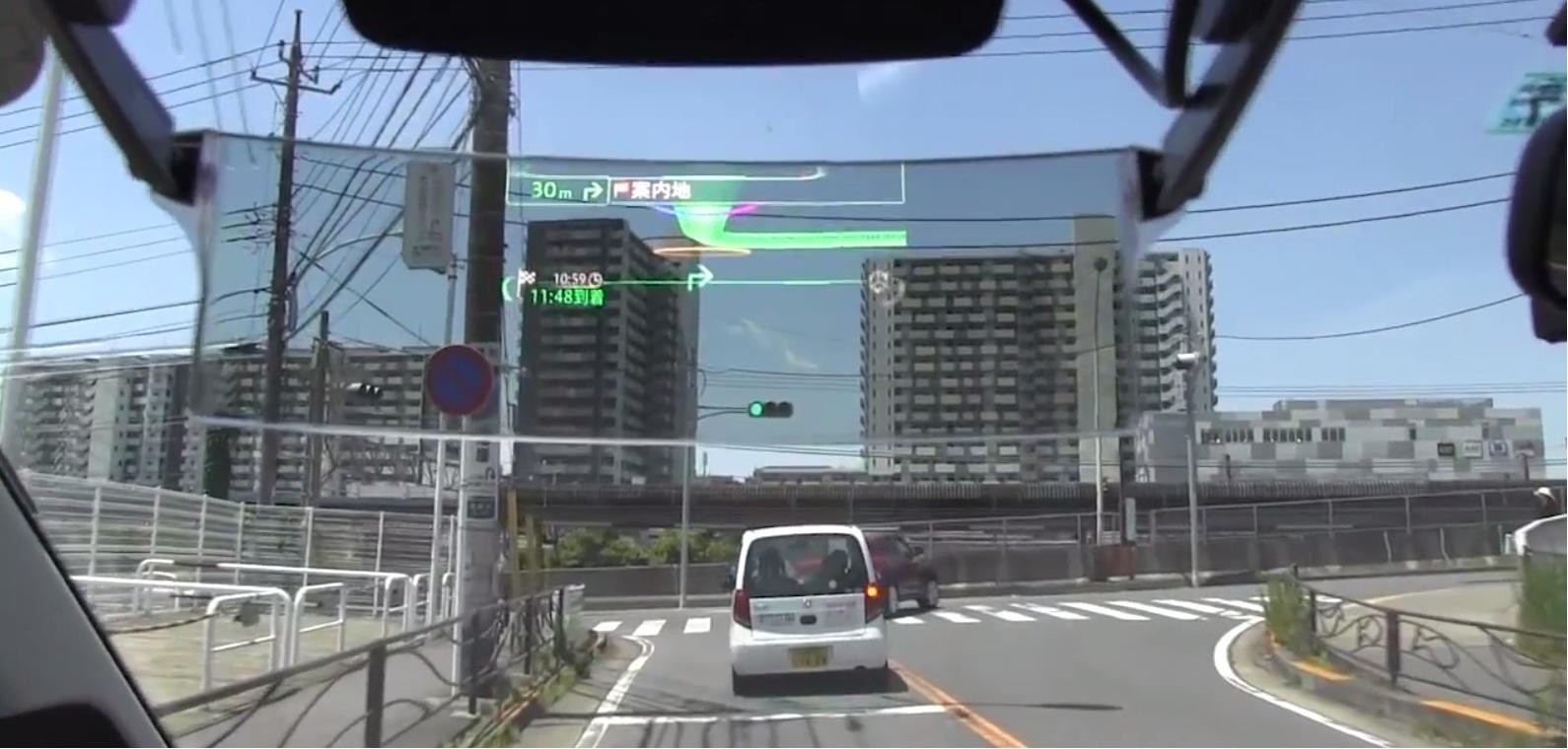
Developers at Pioneer aim to answer that question and, according to PC World, have unveiled an augmented reality, heads-up display for use in automobiles. The technology makes use of an LCD screen mounted into the dash (where a CD-player or navigation system would usually be), working in conjunction with a small camera mounted near the rear-view mirror. You’ll have to sacrifice your sun-visors, which are replaced by small screens that create the augmented reality effect.

Recommended Videos

Lasers display across these screens, causing images to appear as if they are “floating” a few meters in front of the vehicle. This effect gives you the feeling that you are seeing graphics outside of your vehicle, even though they are actually being displayed through the screens above. It’s a neat trick, and one that may actually aid in your driving experience.

According to the Youtube video below, you’ll see a wealth of information, all moving and interacting with the road. Augmented reality arrows will help guide you to a destination via GPS, and small “cartoon balloons” will mark important areas in the distance like gas stations, restaurants, and a variety of other locales. The camera will even feed you information regarding stop signs, yield signs, traffic lights, and a number of other important signage.

Although, if you’re not into the “virtual reality” aspect of the system, you can still turn your gaze down to the included LCD-screen, where you’ll see the same information. Although, from a design stand point, it’s probably a lot safer to see objects ahead of you, in real time, rather than having to avert your gaze from the roadway. There is a small amount of “camera delay” on the Youtube video, but the company promises that the real thing is instantaneous.

This system doesn’t come cheap, running at around $3,400 per unit. We are assuming that is just for the equipment and does not include instillation fees. We are also unsure if this setup is applicable on all vehicle types. Although, judging by the fact that it is simply a camera and screens, it is a safe bet that you could mount this on virtually any vehicle. It will be interesting to see how well this unit sells in the near future, and if Pioneer continues to develop augmented reality software for cars.

What do you think? Is this a smart development, or is it something you could – or should – do without?

Russ Boswell
Former Digital Trends Contributor
Russ Boswell is an aspiring video game and technology journalist from Colorado. He's been an avid gamer since he was old…
Waymo’s driverless cars keep getting parking tickets in Austin, and humans aren’t the only ones complaining
Waymo vehicles have collected $9,325 in Austin fines as repeated parking mistakes turn into a fleet-wide operational problem
A police officer investigating an empty Waymo car.

Waymo’s 83 parking citations in Austin don’t amount to a financial crisis. They do reveal what happens when the same driving decisions are repeated across an autonomous fleet.

City records obtained by The Wall Street Journal show that Waymo vehicles have accumulated $9,325 in fines since arriving in 2024. The company has paid most of them, but the more revealing detail is how often its cars have made the same mistake.

Read more
Google Maps’ biggest Android Auto upgrade is reaching more users
Google Maps is finally giving Android Auto users directions with a little more drama.
Electronics, GPS, Car

Google is widening the rollout of two long-awaited Google Maps features for Android Auto users: Immersive Navigation and a built-in live speedometer. After months of limited availability, reports suggest both features are now reaching a broader group of users, including people running stable versions of Google Maps instead of beta builds.

The update is part of Google's ongoing effort to modernize the Android Auto navigation experience. While the company unveiled Immersive Navigation earlier this year as one of the platform's biggest upgrades in years, the feature has been trickling out slowly, leaving many users without access. That appears to be changing, with more devices now receiving the update through a server-side rollout.

Read more
Tesla’s hidden door problem might end up fixing every car in America
This could permanently change how emergency exits are designed in American passenger vehicles.
Tesla Model Y Long Wheelbase Featured

Tesla's electronic door handles have been a safety talking point for years, mostly on Reddit threads and EV forums where people debate whether sleek design is worth the tradeoff when a car is on fire and power is out. 

Now the US government has formally weighed in (via The Washington Post). The outcome, I’d say, is bigger than most people think.

Read more