1. Home
  2. Cars
  3. Legacy Archives

Need some hard-to-find car parts? Well, the brits are 3D printing auto parts from titanium

Add as a preferred source on Google

3D printing can do some amazing things. Two brothers 3D printed a car. Heck, people have already used it to make guns. Clearly, the first thing to do with a sweet new technology is find out how to kill people with it. But not all 3D printing pioneers are Intent on mayhem. In fact, British company Mealysis is figuring out how to print car parts out of titanium.

The company’s pioneering technology makes use of titanium powder that has been processed from sand. That feat alone, in and of itself, is really impressive, and, if it works in the long-run, promises to make titanium much more affordable.

Recommended Videos

The 3D printing process that Metalysis has created isn’t quite ready for mass production, but it is already capable of turning out actual parts. So far, Metalysis has made turbo impellers for cars and parts of propellers for aircraft.

Machining parts like this from solid blocks of titanium is incredibly time consuming and expensive. 3D printing has the potential to make production simpler and cheaper, not to mention opening new possibilities.

I for one think that one of the most interesting uses for 3D printing when it comes to cars is classic car restoration. Anyone who has ever owned an old car knows that finding parts can be excruciating. When someone I knew had to replace the gas tank in their Triumph TR6, the price and the difficulty suggested that it was the last TR6 gas tank in existence.

Just imagine how nice it would be to order your own fresh custom made titanium parts.

I for one will be excited to track the progress of Metalysis and await the day I can get a new rear wing for my car. 

(Main Photo Credit: Vagscene.com)

Peter Braun
Former Digital Trends Contributor
Peter is a freelance contributor to Digital Trends and almost a lawyer. He has loved thinking, writing and talking about cars…
A new sodium battery posts wild four-minute charging numbers, but don’t expect it in an EV yet
The breakthrough could improve fast charging and battery life, but the study hasn’t demonstrated those results in a production-sized pack
EV Charger

A new sodium-metal battery has posted a charging number that makes today’s EVs look painfully slow. In laboratory testing, the cell operated at a 15C rate, equivalent to completing a charge or discharge in roughly four minutes.

That doesn’t mean researchers plugged in an electric car and watched it fill up before the driver finished buying coffee. The result came from a small experimental cell using a new quasi-solid electrolyte, while the larger pouch-cell prototype delivered far less dramatic performance.

Read more
The Apple Car may be dead, but it became the foundation of Apple Intelligence
A decade of work on a canceled car project reportedly laid the groundwork for Apple Intelligence.
Apple Intelligence in Apple Car

The Apple Car may have never left the garage, but it apparently gave birth to Apple's AI ambitions. According to Bloomberg's Mark Gurman, Apple's canceled autonomous vehicle project, one that consumed more than a decade of work and over $10 billion before being scrapped in 2024, ended up laying the technological foundation for Apple Intelligence. In a rather ironic twist, one of Apple's most expensive failures may also become one of its most important long-term investments.

The Apple Car forced Apple to think like an AI company

Read more
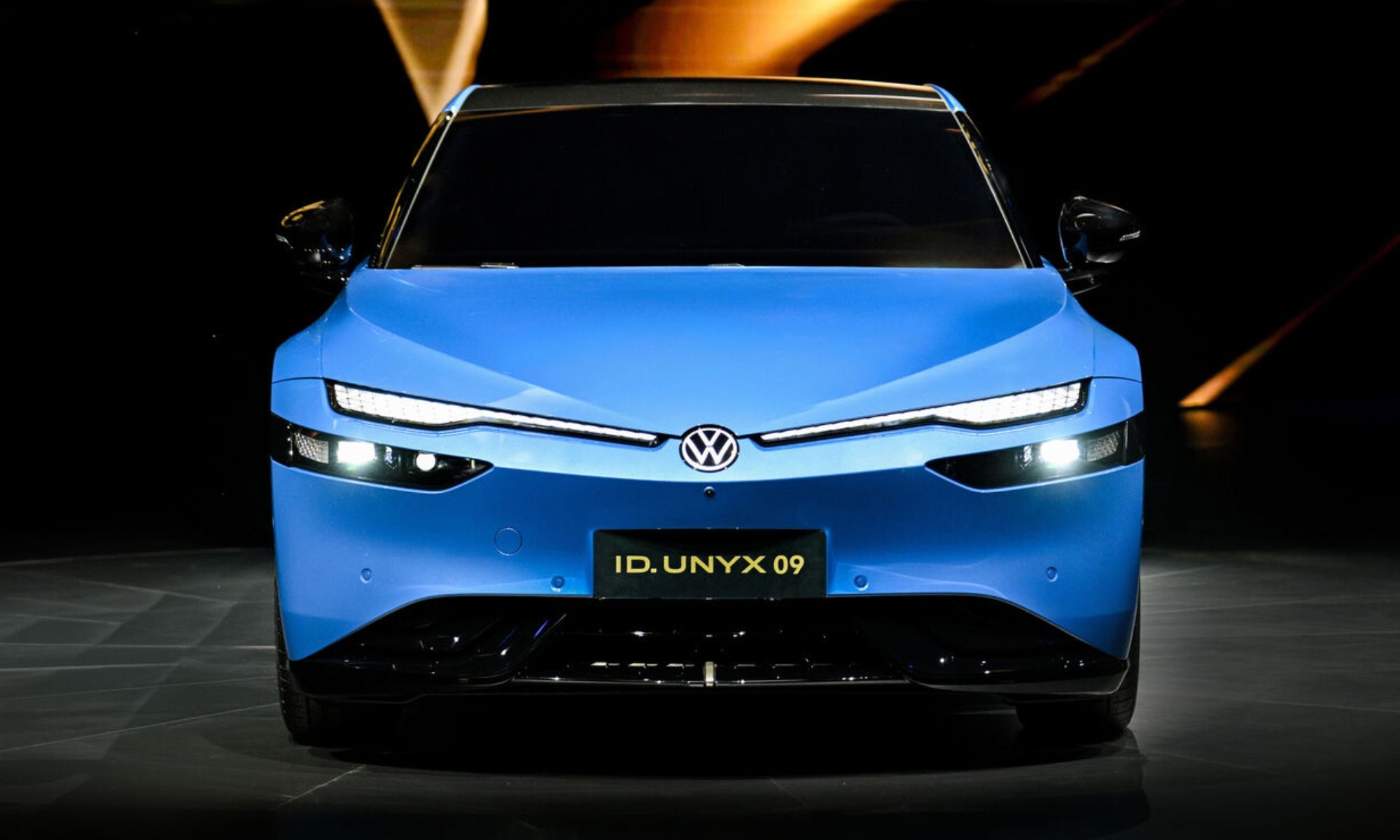
Volkswagen’s ID. Unyx 09 just leaked, and it’s the kind of EV I want to see in the US
VW's partnership with Xpeng is producing exactly what we hoped.
Bumper, Transportation, Vehicle

I've been watching Volkswagen's China lineup quietly get cooler for the past two years, but the ID. Unyx 09 might be the moment it finally gets exciting, not just for Chinese buyers, but for the rest of the world as well. 

Regulatory filings from China's Ministry of Industry and Information Technology, Batch 409, have exposed the full specs of the upcoming sedan ahead of its official launch later this year, and it looks nothing like any VW car I've seen before (via CarNewsChina).

Read more