1. Home
  2. Cars
  3. Legacy Archives

Unlike Jerry Garcia, Volkswagen’s Kombi Microbus isn’t dead … yet

Add as a preferred source on Google

Today marks not just the end of 2013 but the end of an automotive icon.

The Volkswagen Type 2 Microbus – also known as the Kombi – is well known as the vehicle of choice for hippies and surfers, and, despite being rendered obsolete decades ago, it’s been in production in Brazil clear through to today.

Recommended Videos

Safety regulations were supposed to finally kill the Microbus at the end of this year, but reports of its death may have been exaggerated.

According to Indian Autos Blog, Brazil is considering a regulatory exemption for the aged VW, which lacks modern safety equipment like airbags and anti-lock brakes.

Brazilian finance minister Guido Mantega argues that, since the Kombi/Microbus design dates back to the 1950s, it’s unfair to expect VW to equip with modern safety features; the design predates them, after all.

An exemption would essentially allow “grandfather” the van around the new regulations. This legal mechanism is typically exempts vehicles that are already on the road from new regulations, but it’s rarely – if ever – used to keep a dated design in production.

Volkswagen built what was supposedly the last Kombi on December 20, part of a run of “Last Edition” models meant to commemorate the Kombi’s 63 years in production.

While the 2013 Kombi retains the basic shape and rear-engined layout of its predecessors, there have been a few changes over the years. The current model lacks the clean styling of the original 1950-1967 version, and instead of an air-cooled boxer four, there’s a 1.4-liter water-cooled engine hanging over the rear axle.

Whether it gets a stay of execution or not, the Volkswagen Microbus has had a pretty good run.

But will anyone other than the ghost of Jerry Garcia miss it when it’s gone?

Stephen Edelstein
Stephen is a freelance automotive journalist covering all things cars. He likes anything with four wheels, from classic cars…
BYD’s new Racco is Japan’s first electric kei car with over 300 km range
The Racco also undercuts Nissan's Sakura on price before taxes and incentives, which packing in features rarely seen in the kei car segment.
BYD Racco

BYD has entered the Japanese kei car market with the Racco, an electric car built specifically for the country's compact car segment. Its top trim delivers 320 km of range, making it the first compact electric car in the market to pass 300 km, according to ITHome.

Kei cars are a Japanese vehicle class with strict size and power limits, and the segment has long been dominated by domestic automakers such as Honda, Nissan, Suzuki, and Daihatsu. The Racco is BYD's first attempt to compete in that space.

Read more
BMW could finally be building the electric convertible fans have always wanted
Good things come to those who wait, and apparently that means until 2028.
BMW convertible

There have been whispers about a two-door BMW i4 for years, and according to a new report from BMWBlog, at least one version is actually in the works. The outlet's sources close to BMW claim the automaker is readying an i4 Convertible under the internal codename NA3.

Why is BMW waiting until 2028 to launch it?

Read more
Waymo’s driverless cars keep getting parking tickets in Austin, and humans aren’t the only ones complaining
Waymo vehicles have collected $9,325 in Austin fines as repeated parking mistakes turn into a fleet-wide operational problem
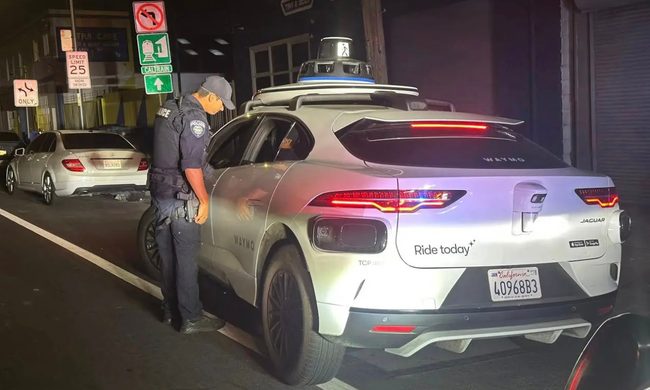
A police officer investigating an empty Waymo car.

Waymo’s 83 parking citations in Austin don’t amount to a financial crisis. They do reveal what happens when the same driving decisions are repeated across an autonomous fleet.

City records obtained by The Wall Street Journal show that Waymo vehicles have accumulated $9,325 in fines since arriving in 2024. The company has paid most of them, but the more revealing detail is how often its cars have made the same mistake.

Read more