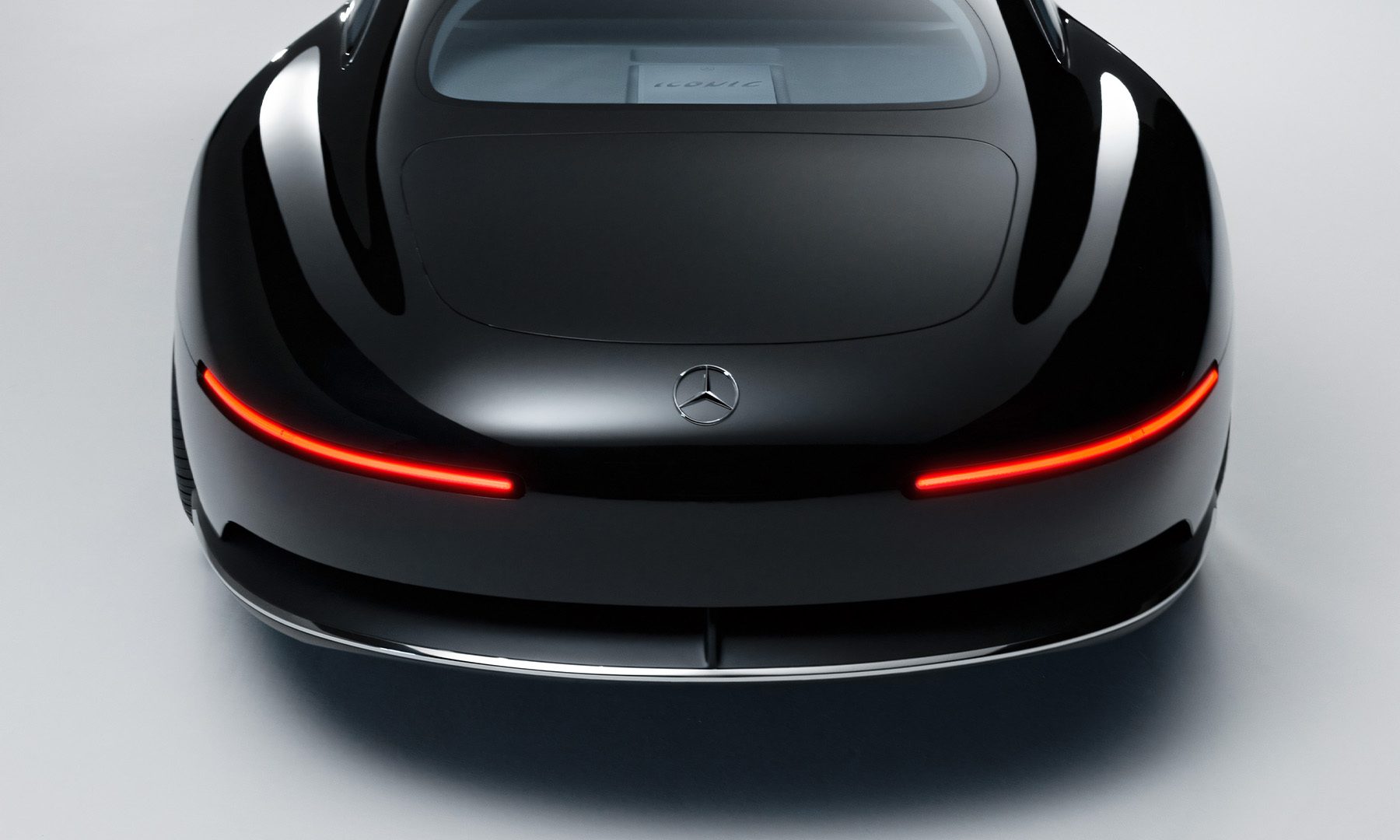
What’s happened? Mercedes-Benz has unveiled a show car that fuses nostalgia with next-gen innovation. The Vision Iconic concept, unveiled at Shanghai Fashion Week, celebrates the brand’s “new iconic era,” combining handcrafted Art Deco elegance with forward-thinking technologies such as solar paint, neuromorphic computing, steer-by-wire, and Level 4 automated driving. Inspired by the 1930s golden age of automotive design, the brand modernizes its signature grille for the EV era while introducing technology that feels as futuristic as it is poetic, much like what was showcased on the Vision V concept earlier.
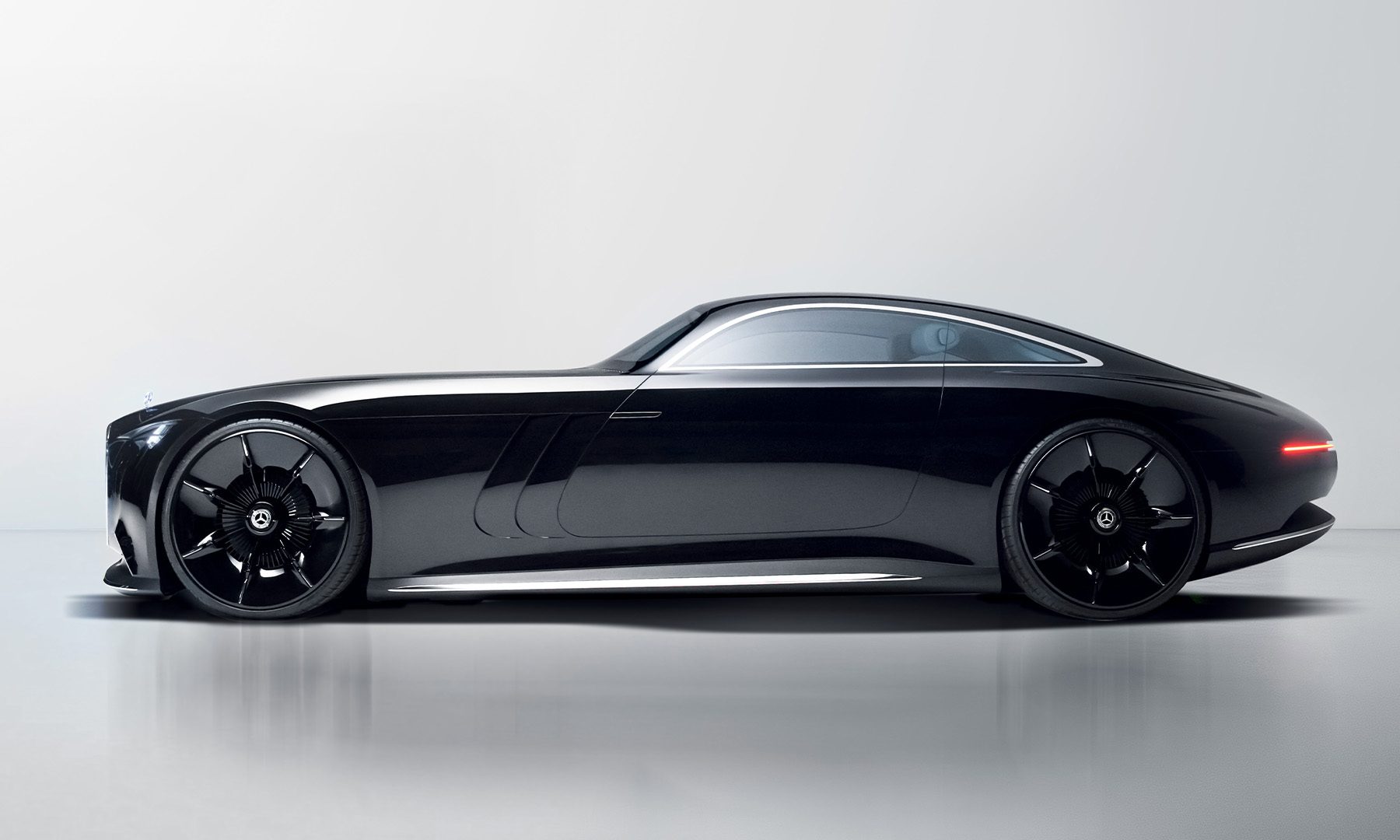
- A reimagined chrome grille with a smoked-glass lattice, contour lighting, and an illuminated standing star, which is a dramatic nod to Mercedes’ heritage.
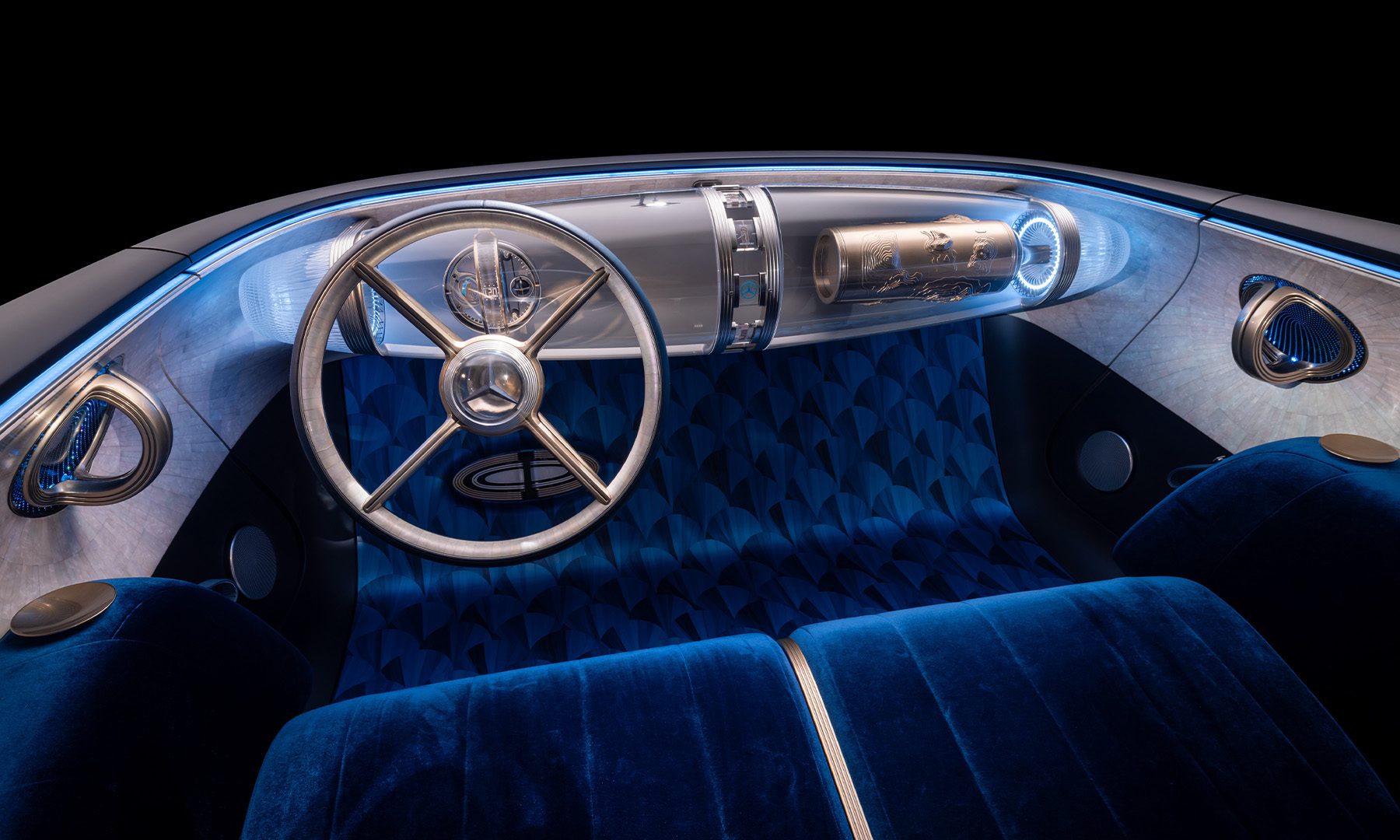
- A hyper-analog interior that blends digital instruments with hand-crafted elements, including mother-of-pearl inlays, brass details, and a deep-blue velvet bench seat.
- Solar paint acts as a photovoltaic surface, potentially generating up to 7,400 miles of additional electric range per year under ideal conditions.
- A neuromorphic computing platform mimicking the human brain promises up to 90% greater energy efficiency for automated driving tasks.
- Steer-by-wire technology replaces mechanical steering with an electronic system, improving handling, maneuverability, and freeing up cabin space for design flexibility.
- A focus on emotionalization through illumination, using lighting animations and pixel graphics to give the vehicle its own digital personality.
Why this is important: The Vision Iconic isn’t just a design exercise, but a statement about where Mercedes-Benz sees the future of mobility: emotional, intelligent, and unmistakably luxurious. The brand is doubling down on craftsmanship and character in a market increasingly dominated by minimal, screen-heavy EVs. In a world where tech often feels cold and functional, Mercedes wants to remind drivers that innovation can still have soul.
- Merges cutting-edge EV technology with old-world artistry, which is a rare balance in modern car design.
- Showcases neuromorphic computing, a potential game-changer for energy-efficient AI in vehicles.
- Pushes the brand’s identity forward while keeping iconic Mercedes hallmarks intact.
Why should I care? The Vision Iconic isn’t just another futuristic showpiece, but instead, it’s a glimpse at how luxury cars may soon look, feel, and even think. Mercedes is using this concept to test how technology can serve emotion rather than overshadow it. Features like solar paint, AI-driven driving systems, and tactile, handcrafted interiors all point toward a more personal, human-centered kind of innovation.
- Solar and neuromorphic technologies preview how cars might soon generate their own energy and think faster while consuming less.
- The emotional, lounge-like interior signals a shift away from cold digital minimalism toward luxury that actually feels alive.
- It’s proof that Mercedes wants the future of driving to feel beautiful, not just automated.
Okay, so what’s next? While still a concept, Vision Iconic embodies Mercedes’ design and technology playbook for the next decade. One can expect its elements, from the solar coating to steer-by-wire, to gradually make their way into future production EVs, once the tech proves road-ready. Meanwhile, the newly released Iconic Design Book cements this philosophy of craftsmanship-meets-computing, offering a deeper look at how Mercedes plans to blend heritage with high tech.