1. Home
  2. Wearables
  3. News

Your Apple Watch Might Soon Judge Your Sleep Like a Doctor

UMass scientists say your wrist might soon deliver EEG-level insights without the wires

Add as a preferred source on Google
Apple Wach hypertension
Apple

What’s happened? A team at the University of Massachusetts Amherst has developed an app called BIDSleep that transforms the Apple Watch into a research-grade sleep monitoring device. Built under the direction of Joyita Dutta’s Biomedical Imaging & Data Science Lab, the app combines heart-rate and motion data collected from the wrist with AI models to classify sleep stages. What’s interesting is that it reportedly produced results closest to the gold standard EEG-based sleep staging compared with other approaches.

  • The app uses instantaneous heart rate and motion signals to infer which sleep stage the wearer is in (light, deep, REM).
  • In benchmark testing, BIDSleep achieved ~71 % overall accuracy in sleep-stage classification, outperforming many standard models.
  • The researchers highlight the value of a wrist-worn device for multi-day, real-world tracking, unlike traditional one-night lab tests.

Why this is important: Sleep is increasingly recognised as a key health parameter, which is also linked to cognitive decline, cardiovascular disease, and overall wellness. Having a widely-worn device like the Apple Watch approaches research-level sleep staging, means more people can be monitored accurately outside the lab.

  • Earlier lab-based EEG systems were costly, complex, and typically limited to one-night snapshots.
  • With apps like BIDSleep, researchers (and potentially clinicians) could track sleep patterns across many nights, in realistic settings.
  • As a recent report for the American Heart Association noted, wearable sleep data may help flag heart-related risk earlier.
Recommended Videos

Long story short, if your watch can reliably tell when you’re in deep sleep or REM, it becomes a meaningful health tool, not just a step counter or a simple sleep tracker.

Why should I care? Sleep isn’t just about feeling rested. In fact, poor sleep quality is tied to heart disease, memory issues, mood disorders, and long-term cognitive decline. If a device as common as the Apple Watch inches closer to medical-grade sleep analysis, it could make early-stage detection far more accessible. Simply put, the tech many people already own could soon help surface meaningful health insights previously locked inside a clinical sleep lab.

  • Instead of just showing “hours asleep”, the Watch could report deep/REM sleep trends that actually matter to doctors.
  • For anyone dealing with insomnia, fatigue, or long-term health risks, multi-night tracking at home is far easier than booking costly studies.
  • Of course, it won’t replace hospital-grade EEG yet, but it could become an incredibly powerful first-line tool, especially for people who’d never go to a sleep clinic.

Okay, so what’s next? The UMass team plans head-to-head comparisons between BIDSleep and the Apple Watch’s native sleep-stage features, plus wider field testing among people with sleep disorders. Meanwhile, clinicians will be watching to see how this data can integrate with diagnosis workflows and whether regulatory frameworks around wearable health monitoring adapt accordingly. As the wearable market grows, expect more analysts, device makers, and healthcare providers to line up behind the notion that your wrist-watch today might be your sleep lab tomorrow.

Varun Mirchandani
Varun is an experienced technology journalist and editor with over eight years in consumer tech media. His work spans…
Qualcomm is set to ratchet up chip prices in September, and your next gadget upgrade could bear the brunt
The price hike could touch every Snapdragon-powered device category.
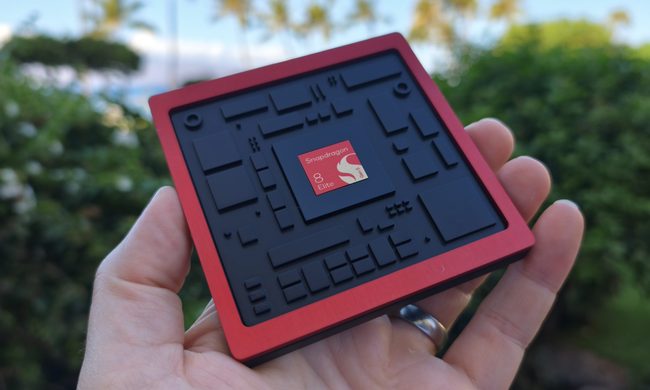
The new Qualcomm Snadragon 8 Elite Gen 5

I want you to sit with this for a second. Qualcomm, the company whose Snapdragon chips sit inside your Android phone and tablet, your Windows laptop, your Meta smart glasses, your Galaxy Watch, and your wireless earbuds, reportedly sent a letter to every major customer telling them prices are going up by double digits. 

The price hike will be in effect from September 1, 2026, a recent Bloomberg report claims. Essentially, all the companies placing their chip orders after that will pay a higher price. 

Read more
Slacked off all summer? Here are 3 fitness trackers that’ll help you stay accountable as you head back to school
Three trackers, three price points, three totally different approaches to keeping you honest about your own goals.
A person wearing the Whoop 5.0.

Summer break did what it usually does. Your sleep schedule drifted, workouts happened less often than you'd hoped, and by the time August rolled around, you were feeling it. You've got a plan to get back on track once the school year starts and your days have more structure, but you know how that usually goes. The first two weeks are solid, then the routine quietly slips.

A fitness tracker won't get you off your couch. What it will do is put a number in front of you every day, one that makes it obvious whether you stuck to your goal or slacked off. That small bit of visibility is often the difference between meaning to work out and actually doing it. Back-to-school season is a good time to buy in, since you're already resetting more than one part of your routine, and the overlap makes the habit more likely to stick. To keep the odds in your favor, here are three fitness trackers that can help you stay accountable and actually hit your goals.

Read more
Galaxy Watch 9 vs. Watch Series 11: Has Apple finally met its smartwatch match?
From AI-powered health coaching to outdoor fitness tracking, here's how Samsung's Galaxy Watch 9 stacks up against Apple's Watch Series 11.
Wristwatch, Arm, Body Part

These days, the real battleground between smartwatches is who can turn a wrist-worn, sensor-loaded device into something that resembles a personal fitness trainer, and this year's crop of flagship wearables takes that fight more seriously than ever. 

Samsung just refreshed its mainstream Galaxy Watch line with a new silicon and a batch of clinically-backed health tools, landing squarely on Apple's home turf of preventive wellness tracking. Apple, for its part, has spent the better part of a year letting its Series 11 sit as the reigning pick for anyone inside its ecosystem, propped up by a software catalog few rivals match feature-for-feature. 

Read more