  1. Home
  2. Computing
  3. News

Google’s Opal AI tool for making no-code apps is now widely available

Your app idea just found its shortcut.

Add as a preferred source on Google
google-opal-no-code-app-available
Google

What’s happened? As the trend of vibecoding grows, Google is expanding Opal to more than 160 countries, opening access to a tool that lets anyone build mini-apps without writing a line of code.

Big news: We’re expanding Opal, our no-code AI app builder, to 160+ countries!

From automating complex research to generating full marketing campaigns from one idea, builders are turning their ideas into mini-apps with natural language.

Show us what you build! See the details… pic.twitter.com/5oLCc84NUE

— Google Labs (@GoogleLabs) November 6, 2025
  • This no-code AI app builder allows users to create custom AI-powered apps just by describing what they want.
  • It connects with tools like Google Sheets, Drive, Cloud, and BigQuery, letting users automate research, build content pipelines, or analyze data with simple drag-and-drop workflows.
  • Google says the expansion follows huge demand from early users, who have been using Opal for everything from automating routine tasks to prototyping new AI ideas in minutes.

This is important because: Opal marks a big shift toward AI for everyone, not just developers, by making AI creation as easy as using a search bar. Users can build multi-step workflows that handle complex processes automatically. Some early examples include:

  • Research apps that pull data from the web, analyze it, and export results into Google Sheets.
  • Data analysis tools that generate reports and insights instantly.
  • Automated workflows for weekly newsletters, contract reviews, or even meal planning.

Why should I care? For individuals and small teams, Opal is a creative shortcut to automate work, test ideas, and ship tools without an engineering team.

  • Creators and marketers can use Opal for content generation, such as producing blog posts, ad scripts, and visuals, all from a single product concept.
  • The tool is pretty useful in creating mini-apps like language tutors, quiz generators, and custom travel planners.
  • For Google, it’s a smart way to keep users tied to its tools, from Apps to Sheets to Drive, by ensuring everyday workflows run through them.
Recommended Videos

OK, what’s next? Anyone in supported regions can visit the website to try the tool. Google plans to add more templates, deeper Gemini model integration, and new Workspace tie-ins soon.

Manisha Priyadarshini
Manisha Priyadarshini is a tech and entertainment writer with over nine years of editorial experience.
Google Earth’s AI misadventure lasted only a day. It was a tale of dangerous ignorance.
Nuclear reactors, tanks, and historical destruction on a life-like satellite map? Yeah, that's bad.
Nano Banana AI image generator representation.

Technology behemoths are clearly not reading the room, or they are just moving faster than they should when it comes to AI deployment. Google has already stuffed its Gemini AI in every corner of its software stack, from Android to daily productivity tools like Gmail that are used by hundreds of millions of users every day. AI is everywhere. Not all of it is bad, mind you. But in a few places, it just feels forced.

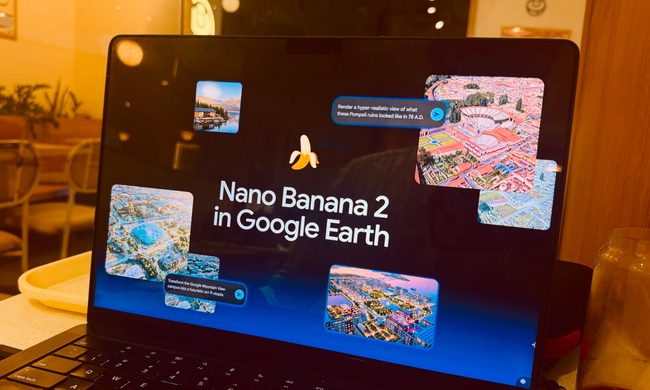
In its latest AI-fication experiment, the company targeted Google Earth. The idea was to let the audience use its Nano Banana 2 AI image generator and make images that can be placed on the map view. On paper, it's a cool idea. What would the Colosseum of Rome look like in your urban neighborhood? Yeah, fun stuff like that.

Read more
AMD is apparently gearing up to raise GPU prices right after Nvidia’s steep hike
AMD has reportedly told AIB partners about a price hike that goes into effect in. August.
AMD RX 7800

AMD is next in line to raise the asking price of its Radeon GPUs, merely days after the news of a similar hike coming for Nvidia graphics cards started making waves. As per ChannelGate on Weibo (h/t VideoCardz), AMD has informed its board partners that the price of GPU and memory bundles will go up by at least 10% in August.

Is a similar price hike coming for standalone graphics cards? I won't be surprised if that happens. The situation is so bad that AMD is planning to bring back graphics cards with 4GB of onboard memory. AMD just introduced the RX 9050 GPU, which costs $279. Notably, it's just $20 less than the RX 9060 XT that offers double the graphics memory.

Read more
Microsoft will make Windows work well with just 8GB RAM. We desperately need it
The dream of a reliable and affordable Windows laptop hinges on the next milestone at Microsoft.
Surface laptop on wooden table

The year 2026 has marked a huge course correction for Microsoft after years of frustrating users with plenty of confusing processes, unoptimized UI elements, and just the generous bloatware that can bring any Windows system to a crawl. Microsoft has finally shifted into a new phase. From fixing the right-click behavior to speeding up the Search system, the company has fixed plenty of papercuts.

The next major milestone is making Windows 11 run smoothly on Windows PCs with just 8GB of RAM. That directly means entry-level and budget laptops will at least get the basics right, even if that means sacrificing the on-device AI bells and whistles. Let's face it. The increasingly AI-first approach to computing on a Windows 11 machine is a little too taxing on the hardware at hand.

Read more