1. Home
  2. Cars
  3. Legacy Archives

How Google’s self-driving cars avoid plowing into cyclists

Add as a preferred source on Google

You know what? Those folks at Google are clever. Not only do they make it possible for us to find that pretzel recipe we wanted – no, that other one – they are also advancing the technology of autonomous cars faster than just about anyone else.

In fact, Google’s self-driving car is getting smarter by the minute. How is Google doing this? Through an odd combination of high- and low-tech solutions. Google techs spend hours at a time cruising around the company’s secret volcano hideout in Mountain View, Calif., in their autonomous cars. During this time, the techs pick out situations that the car will encounter in the real world and pass them back to the engineers for solutions that don’t involve flaming wrecks and crushed cyclists.

Recommended Videos

The results are impressive. Google’s autonomous car can now handle a wide array of real world situations, from navigating construction zones including lane offsets, stop train tracks, yield to pedestrians at cross walks and react and adapt to the unique challenge presented by cyclists.

As a Portland resident, I can say that sharing the road with cyclists can be an uneasy compromise. Cyclists can be unpredictable, and where bike lanes and other infrastructure is unavailable trying to integrate even the ruliest (opposite of unruly, let’s say) of riders can be difficult. So Google has its work cut out, but the solution is impressive.

The Google car can recognize cyclists, yield to them, and even interpret hand signals indicating turns. I am not sure if the car can recognize some other, more colorful hand gestures, but I am sure that Google is working on it. The footage of the car reacting and yielding to a cyclist as he makes decisions in real time is impressive; it reflects a car that is able to do more than just follow lanes and recognize stop signs and traffic lights.   

Developments like this show that we are not only close to a thrilling robot apocalypse, but also to being able to own cars that truly drive themselves, and we might just be buying them from Google. 

Peter Braun
Former Digital Trends Contributor
Peter is a freelance contributor to Digital Trends and almost a lawyer. He has loved thinking, writing and talking about cars…
Topics
WhatsApp’s new in-car experience is built around hands-free control
CarPlay and Android Auto users can now hear and reply to messages, view call history, and reach favorite contacts without touching their phone.
WhatsApp new CarPlay experience featured

Meta is overhauling how WhatsApp works in the car, giving CarPlay and Android Auto users a lot more to do than just sending texts and making calls. The company announced the change in a newsroom post today, alongside several other updates rolling out to the messaging app.

WhatsApp finally works hands-free in the car

Read more
Tesla’s Summer Update adds smarter Grok, personalized navigation, and Caraoke scoring
Grok gets chattier, caraoke gets judgier, and your Tesla gets a whole lot smarter.
Tesla

Tesla just confirmed its 2026 Summer Release is rolling out soon, and it's stacked with updates that make the car feel more like a companion than a machine. From a chattier Grok to a car that judges your singing, here's everything coming your way.

Grok becomes a more capable in-car assistant

Read more
Volvo is rolling out Apple Music to over 2 million cars with a simple OTA update
Your Volvo may soon get Apple Music without needing CarPlay
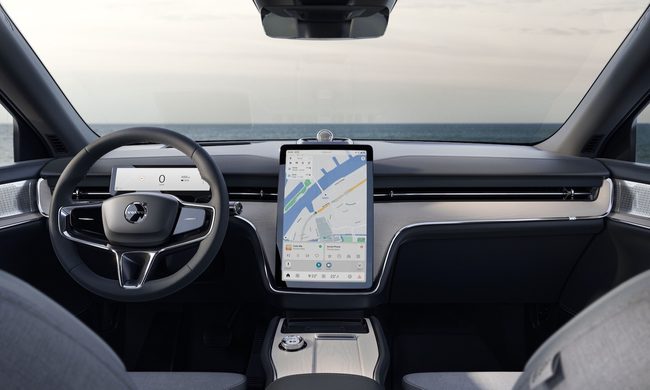
Interior view of the 2024 Volvo EX90.

The line between your smartphone and your car continues to blur. Volvo has announced that it is rolling out an over-the-air software update that brings Apple Music directly to the infotainment systems of more than 2 million vehicles worldwide. Instead of relying on Apple CarPlay or plugging in an iPhone, eligible drivers will be able to stream music natively from their car's built-in system, making Apple Music another integrated feature of Volvo's software experience.

The update is arriving for a wide range of Volvo models, including the EX90, ES90, XC90, S90, V90, XC60, S60, V60, XC40, EX40 and EC40, covering model year 2020 onwards. Availability, however, may vary depending on the vehicle.

Read more