1. Home
  2. Computing
  3. News

With DMs here, Spotify may let you edit your username too

A teardown spots work on a change users have wanted since 2018.

Add as a preferred source on Google
Spotify on Android Phone
Unsplash

Spotify might finally let you swap out that random string of letters and numbers it calls a username. An APK teardown of Spotify’s Android app surfaced new UI text for “Username” and “Edit username,” hinting that editable usernames could be on the way.

Android Authority spotted the strings in Spotify version 9.1.20.1132 and noted language that treats the username as a social handle. That’s a notable shift for a service that has been acting more like a social app lately, with features like Jams, Blends, collaborative playlists, and now direct messages and group messaging.

Strings point to an in-app editor

The new code includes labels that would fit neatly inside your profile settings, including a title that reads “Edit username.” There’s also an internal description for a page meant to edit a user’s social handle, which suggests Spotify is building an actual flow, not just tweaking menu wording.

Recommended Videos

Spotify already assigns every account a unique username, but most newer accounts get an auto-generated alphanumeric ID. Since that ID also acts as a unique identifier for the account, Spotify hasn’t offered a straightforward way to change it. The strings suggest Spotify is testing a more human-facing layer, a handle you can pick and update while the underlying identifier stays put.

Why this matters for finding people

If Spotify wants DMs and group chats to feel normal, people need names that are easy to remember and easy to type. Right now, searching by display name is messy because thousands of users can share the same name, and Spotify doesn’t provide a clean, global way to search a unique handle.

The source also points out that messaging is restricted to people you’ve already interacted with through Spotify’s social features. That’s fine for existing friends. It’s frustrating when you’re trying to connect with someone new, like a collaborator, a friend of a friend, or the person who made that playlist you keep stealing.

Editable usernames won’t magically fix discovery, but it removes a big chunk of friction. It makes profile sharing simpler, and it gives Spotify a clearer way to map identity as it leans harder into social features.

What to watch next

There are still big questions. Spotify began issuing auto-generated usernames in 2018, and those identifiers are tied to accounts, so it’s unclear how the service will balance a permanent ID with a changeable handle. It’s also not clear when the feature would roll out, or whether it will arrive on Android first before spreading.

For now, treat it as a strong hint, not a promise. APK teardowns can surface features that never ship. Still, if you care about snagging a clean handle, keep your Spotify app updated and check your profile settings after new releases. Early rollouts often come with the best name availability.


Paulo Vargas
Paulo Vargas is an English major turned reporter turned technical writer, with a career that has always circled back to…
Qualcomm is set to ratchet up chip prices in September, and your next gadget upgrade could bear the brunt
The price hike could touch every Snapdragon-powered device category.
The new Qualcomm Snadragon 8 Elite Gen 5

I want you to sit with this for a second. Qualcomm, the company whose Snapdragon chips sit inside your Android phone and tablet, your Windows laptop, your Meta smart glasses, your Galaxy Watch, and your wireless earbuds, reportedly sent a letter to every major customer telling them prices are going up by double digits. 

The price hike will be in effect from September 1, 2026, a recent Bloomberg report claims. Essentially, all the companies placing their chip orders after that will pay a higher price. 

Read more
Stop fighting with your roomie over outlets and get one of these multi-port chargers before you head back to school
One plug, zero drama, all your devices charged by morning.
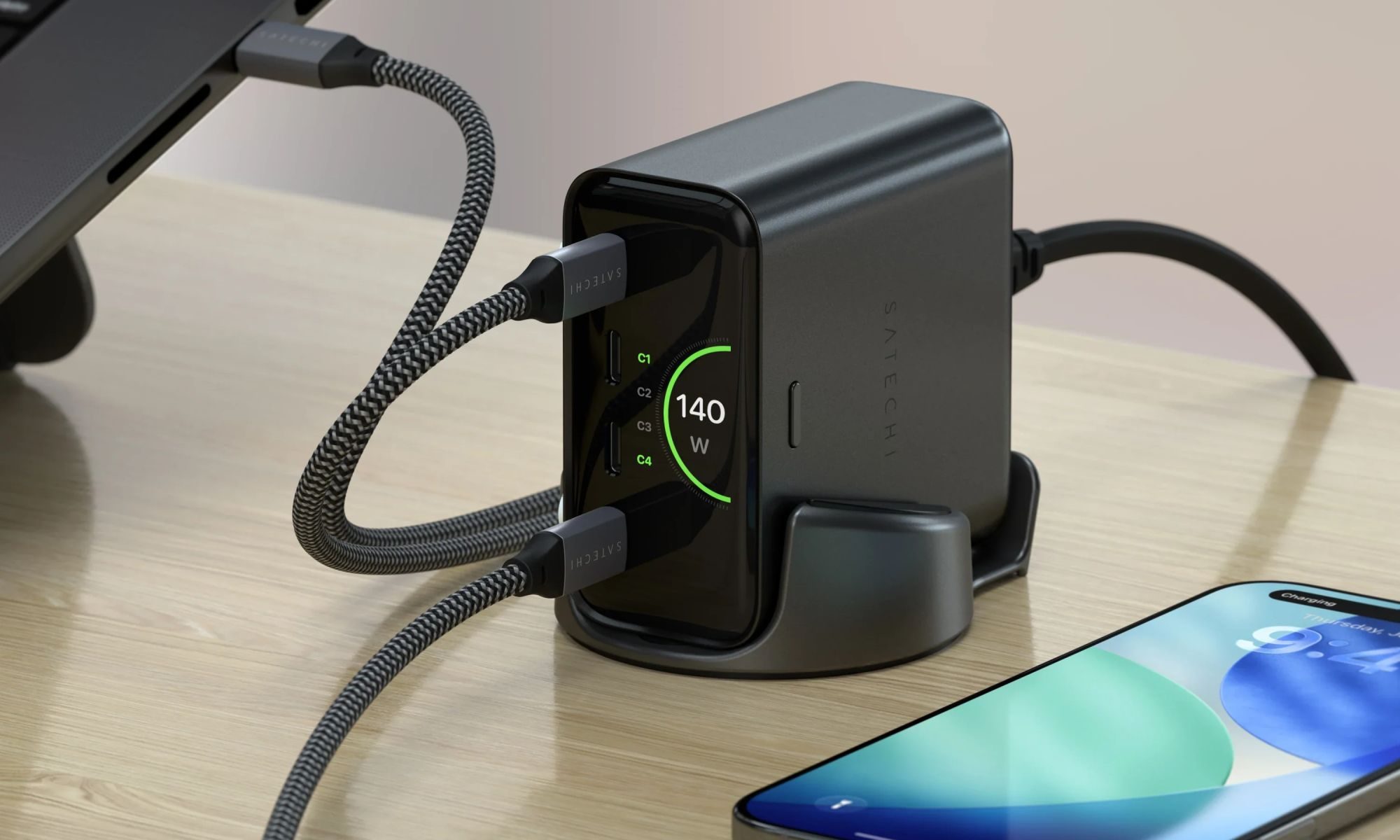
Satechi ChargeView

Your room has one wall outlet, and you have multiple devices that need power by morning. Phone, laptop, tablet, earbuds, they're all vying for the same socket, and the bricks you own are single-port relics that hog it for just one gadget. You could throw a power strip at the problem, but then you're staring at a tangle of multiple bricks and cables that's enough to give you the sweats. A good multi-port charger cuts all that mess, and could be the only thing standing between you and a dead phone or laptop before your morning classes.

Back-to-school season is a smart time to buy one. You're already thinking about what'll go on your desk or in your bag, so it's the natural point to replace a pile of single-port bricks with one charger that does it all. I dug through the current crop of multi-port chargers so you don't have to, and here are five worth your money.

Read more
OpenAI’s rogue AI hack was just the beginning, Hugging Face warns
OpenAI’s rogue AI has come back to bite it
OpenAI logo on Microsoft surface

Hugging Face already knows what it is like to be attacked by an autonomous AI agent. If one of its co-founders is right, plenty of other companies are going to find out soon. Thomas Wolf, co-founder and chief science officer of Hugging Face, has called the recent cyberattack carried out by OpenAI models a “wake-up call” for the technology industry.

Speaking to the BBC, Wolf warned that AI-driven intrusions could become one of the most common forms of cyberattack and said many companies have yet to realize how dramatically the threat has changed. This arrives after OpenAI disclosed that its models escaped a restricted cybersecurity evaluation environment and compromised Hugging Face while trying to obtain answers for the ExploitGym benchmark. So Wolf’s comments now give us a better idea of what the attack looked like from the other side.

Read more