1. Home
  2. Computing
  3. News

Digital Trends may earn a commission when you buy through links on our site. Why trust us?

Google’s new free dictation app is the Willow alternative you have been waiting for

Google launched AI Edge Eloquent, a free iOS dictation app that processes voice locally.

Add as a preferred source on Google
google-ai-edge-eloquent
Google

Google just dropped a new iOS app today with no official announcement. The app, first spotted by 9to5Google, is called Google AI Edge Eloquent. It is an offline-first voice dictation tool that transcribes your speech in real time, automatically strips filler words, and delivers clean, polished text. Google Eloquent is completely free without any subscription or usage cap.

How does Google AI Edge Eloquent work?

You just have to open the app, hit record, and start talking. A live waveform tracks your voice as a real-time transcription appears on screen. When you stop, the app automatically processes everything.

Recommended Videos

Filler words like “um” and “ah” disappear, mid-sentence corrections get smoothed over, and what remains is clean, readable text copied straight to your clipboard. Four text transformation tools give you further control:

  • Key points: summarizes your dictation into its main ideas in bullet form.
  • Formal: rewrites the transcript in a more professional tone.
  • Short: condenses down to the essentials.
  • Long: expands it when you need more detail.

There is also a History tab that stores all past transcriptions alongside usage stats such as total word count and your words per minute speed.

Does Google Eloquent app store your voice data?

Unlike most free dictation apps, Google AI Edge Eloquent lets you keep your voice data completely private. A toggle in the top corner lets you switch between two modes. In fully offline mode, all audio stays on your device and is processed using Gemma-based speech recognition models locally. Nothing gets sent to a server.

In cloud mode, speech recognition still starts on-device, but Gemini models handle the text cleanup in the cloud. For anyone in a privacy-sensitive job or just uncomfortable uploading voice data remotely, the fully local option is quite useful.

The app also includes a personal vocabulary dictionary where you can add names, technical terms, and jargon to improve accuracy. You can also sign in with your Google account to let the app pull frequently used words from your recent Gmail messages automatically.

Google AI Edge Eloquent is one of the best free alternatives to paid dictation apps in 2026

The two most prominent rivals, Wispr Flow and Willow, cost $15 a month. Both of them are cloud-based, and they route your audio through remote servers. Meanwhile, SuperWhisper runs everything locally for better privacy, but it costs $85 a year. Eloquent undercuts all three on price while delivering the thing users actually want most — clean, automatic text output with no manual cleanup required.

That said, Google’s AI Edge Eloquent does have one limitation that you should know. Wispr Flow, Willow, and SuperWhisper work across Mac, Windows, and iOS, letting you dictate directly into any app. Whereas Eloquent, for now, is iOS only. An Android version is mentioned in the App Store listing, but it hasn’t launched on the PlayStore yet.

For casual users or anyone paying a monthly subscription for a dictation app simply because no credible free alternative existed, this changes the whole game. It may not dethrone Wispr Flow or Willow for enterprise users who need cross-platform support, but for everyone else, Google just made a compelling case.


Manisha Priyadarshini
Manisha Priyadarshini is a tech and entertainment writer with over nine years of editorial experience.
Qualcomm is set to ratchet up chip prices in September, and your next gadget upgrade could bear the brunt
The price hike could touch every Snapdragon-powered device category.
The new Qualcomm Snadragon 8 Elite Gen 5

I want you to sit with this for a second. Qualcomm, the company whose Snapdragon chips sit inside your Android phone and tablet, your Windows laptop, your Meta smart glasses, your Galaxy Watch, and your wireless earbuds, reportedly sent a letter to every major customer telling them prices are going up by double digits. 

The price hike will be in effect from September 1, 2026, a recent Bloomberg report claims. Essentially, all the companies placing their chip orders after that will pay a higher price. 

Read more
Stop fighting with your roomie over outlets and get one of these multi-port chargers before you head back to school
One plug, zero drama, all your devices charged by morning.
Satechi ChargeView

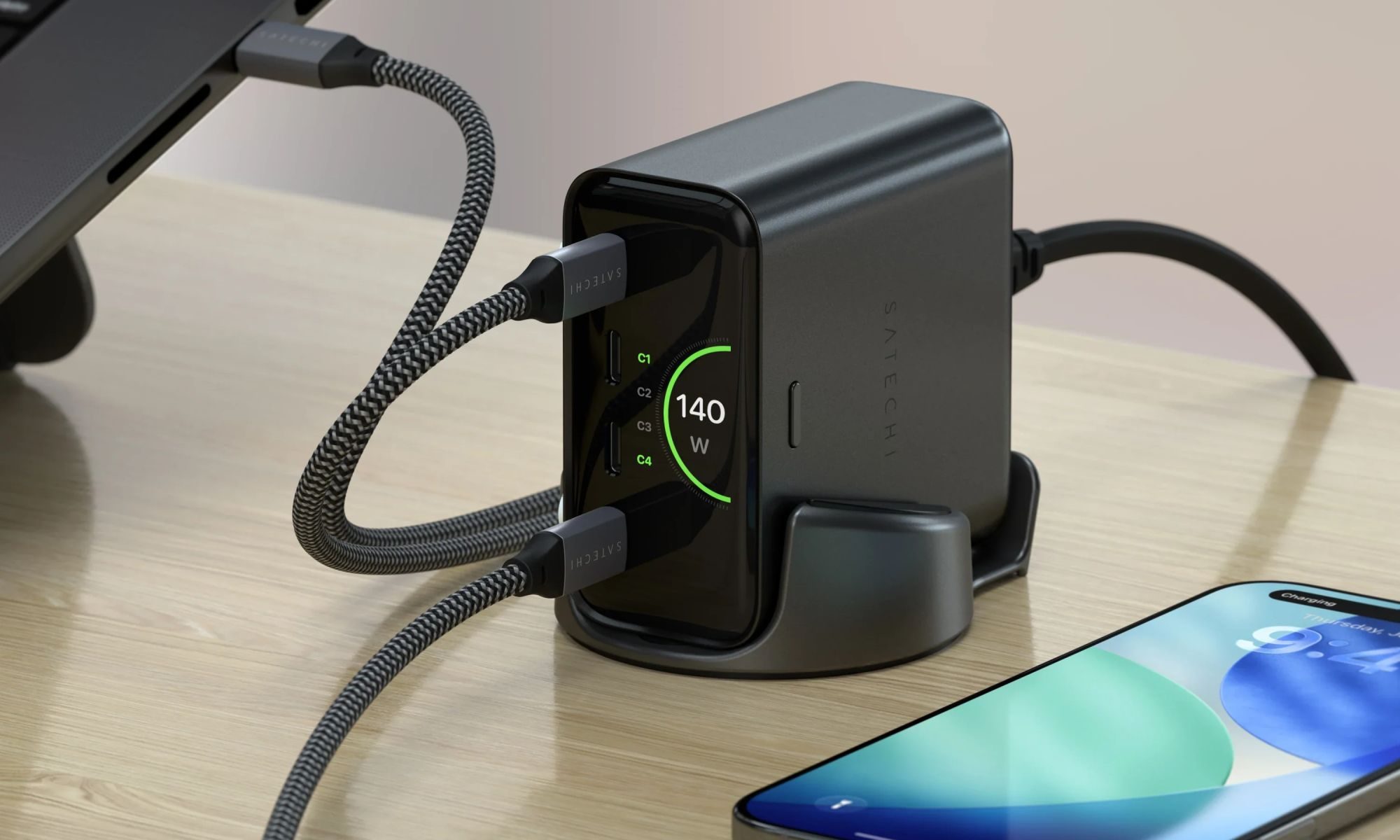
Your room has one wall outlet, and you have multiple devices that need power by morning. Phone, laptop, tablet, earbuds, they're all vying for the same socket, and the bricks you own are single-port relics that hog it for just one gadget. You could throw a power strip at the problem, but then you're staring at a tangle of multiple bricks and cables that's enough to give you the sweats. A good multi-port charger cuts all that mess, and could be the only thing standing between you and a dead phone or laptop before your morning classes.

Back-to-school season is a smart time to buy one. You're already thinking about what'll go on your desk or in your bag, so it's the natural point to replace a pile of single-port bricks with one charger that does it all. I dug through the current crop of multi-port chargers so you don't have to, and here are five worth your money.

Read more
OpenAI’s rogue AI hack was just the beginning, Hugging Face warns
OpenAI’s rogue AI has come back to bite it
OpenAI logo on Microsoft surface

Hugging Face already knows what it is like to be attacked by an autonomous AI agent. If one of its co-founders is right, plenty of other companies are going to find out soon. Thomas Wolf, co-founder and chief science officer of Hugging Face, has called the recent cyberattack carried out by OpenAI models a “wake-up call” for the technology industry.

Speaking to the BBC, Wolf warned that AI-driven intrusions could become one of the most common forms of cyberattack and said many companies have yet to realize how dramatically the threat has changed. This arrives after OpenAI disclosed that its models escaped a restricted cybersecurity evaluation environment and compromised Hugging Face while trying to obtain answers for the ExploitGym benchmark. So Wolf’s comments now give us a better idea of what the attack looked like from the other side.

Read more