1. Home
  2. Phones
  3. News

Smartphones are to blame for declining birth rates, as studies highlight the iPhone’s role

Two new papers link smartphone adoption to falling birth rates in the US and across 128 countries, though some economists say the case remains unproven.

Add as a preferred source on Google
Electronics, Mobile Phone, Phone
Shikhar Mehrotra / Digital Trends

The timing has long raised questions. Birth rates in the US and dozens of other countries began falling in 2007, the same year Apple put the first iPhone on sale. Two new academic papers, highlighted by The New York Times, now argue that the overlap is not a coincidence.

What the research found

Economist Caitlin Myers and her student Ezekiel Hooper from Middlebury College built their case around a structural quirk: the original iPhone only worked on AT&T‘s network. That gave them a natural experiment. Counties with strong AT&T coverage got early smartphone access, while counties without it largely did not.

Comparing fertility data across those two groups, the researchers concluded that iPhone access drove as much as half of the US birth rate decline between 2007 and 2011, with the strongest effect in the 15-to-24 age group. As for the reason behind the drop, the researchers point to a shift away from in-person socializing, greater access to pornography, and better awareness of contraception and abortion options as possible explanations.

Recommended Videos

A separate study took a wider view. Hernan Moscoso Boedo, an economics professor at the University of Cincinnati, and Nathan Hudson, a PhD student, examined World Bank data covering 128 countries and found that teenage fertility rates fell sharply once smartphones became mainstream, regardless of differences in healthcare systems, religion, or economic conditions. In the US, they found counties with faster broadband and 4G coverage saw steeper declines in teen birth rates.

A contested conclusion

The research has not settled the debate. Baruch College economist Theodore Joyce points out that teen birth rates were already falling before 2007, and says the smartphone hypothesis, while plausible, remains unproven.

The studies arrive as governments in the US, Europe, and East Asia grapple with the long-term economic consequences of shrinking populations. If smartphones are a meaningful driver, that complicates any policy response. Unlike recession or housing costs, screen time is not something lawmakers can easily legislate away.

Pranob Mehrotra
Pranob is a seasoned tech journalist with over eight years of experience covering consumer technology. His work has been…
Spotify meets Snap Map in Snapchat’s latest update
The new Now Playing feature adds real-time music sharing with customizable privacy controls.
Now Playing on Snap Map Spotify Snapchat featured

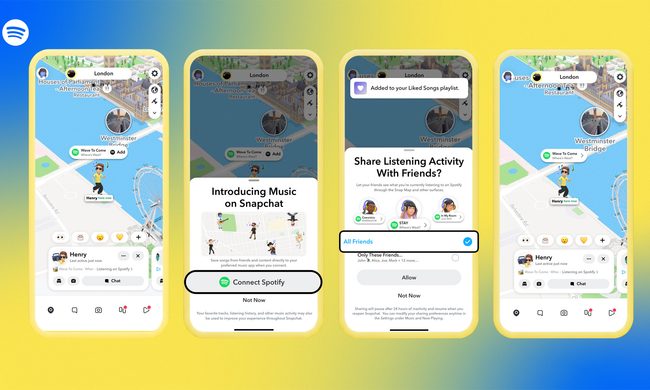
Snapchat is giving Snap Map a musical makeover. The company has announced Now Playing, a new feature that lets users share the music they're listening to in real time directly on Snap Map. Launching first with Spotify, the integration allows friends to discover each other's favorite tracks, save songs, and jump straight into Spotify without leaving Snapchat. The feature is rolling out now in regions where both Snapchat and Spotify are available, with Canada set to receive it soon.

How Now Playing works

Read more
OnePlus is building another flagship monster for a shrinking audience, and its expected to launch in October
OnePlus 16 could launch in October, but it may not leave China
Rear shell of OnePlus 15.

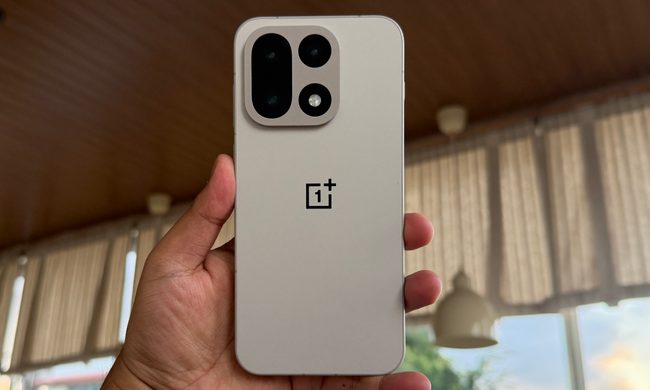
While OnePlus may have exited the US and Europe, the brand is still alive in its home market and is already working on its next flagship smartphone. A fresh leak from Chinese tipster Digital Chat Station has now revealed more details about the OnePlus 16, including its design and a revised launch timeline.

The tipster previously claimed that the phone would arrive in September 2026, but the latest information points to an October launch in China (via Gizmochina). The global picture is far less clear, and there is now even some doubt over whether the OnePlus 16 will make it to India, which remains the company’s biggest market.

Read more
Samsung has another wild foldable phone lined up for 2027 and it will excite screen connoisseurs
Samsung wants another giant OLED folding inside your pocket
Samsung Galaxy TriFold unfolded

Samsung just gave foldable fans a wider 4:3 canvas with the Galaxy Z Fold 8. But that still isn't enough screen for the company. Samsung has reportedly begun early development of a successor to the Galaxy Z TriFold, its dual-hinged phone that unfolds into something much closer to a proper tablet.

According to Korean publication ETNews, Samsung has already shared information about the next-generation project with suppliers, but its final specifications have yet to be decided. One detail should immediately grab the attention of anyone who buys a foldable primarily for its display. A source familiar with the project told ETNews that Samsung is currently targeting a screen size similar to the original TriFold.

Read more